Reference decision: cc • No. 16-13.953 • 2017-04-27 • View the decision →
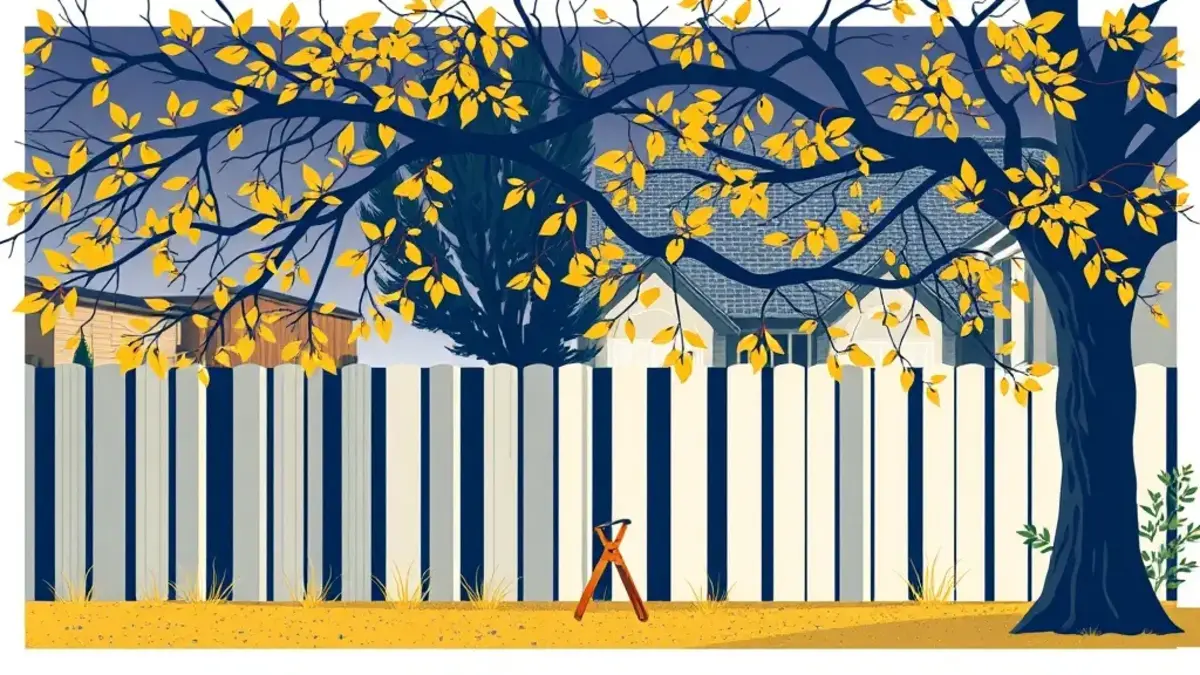
Imagine yourself in Saint-Vincent-de-Tyrosse, in your beautiful house in the Landes. A maritime pine planted by your neighbour twenty years ago has grown, and its branches now significantly overhang your land. They shade your vegetable garden, dirty your resin terrace, and for years you've been wondering: 'Do I still have the right to request pruning? Hasn't time extinguished this right?'
I hear this question regularly in my Mont-de-Marsan practice. Property owners hesitate, fearing neighbour disputes or thinking that after so many years, they must endure the situation. But what is the reality? The answer comes from a Cour de cassation decision that clarifies the rules of the game.
In 2017, France's highest judges delivered a judgment (court decision) that changes the situation for all property owners facing this problem. They recalled a fundamental but often little-known principle: your right to have branches cut back that encroach on your property is imprescriptible (meaning it never expires through the mere passage of time). But be careful: this right is not absolute, and local planning regulations, such as those applying in Dax or in the Saint-Vincent-de-Tyrosse area, may impose prior formalities. Let's see together what this means in practice for you.
The facts: a story that happens every day
The story begins like so many others in our region. Mr Dupont, owner of a house in Saint-Vincent-de-Tyrosse, has seen for several years the branches of an oak tree planted by his neighbour, Mr Martin, gradually invade his garden. The roots? No, that's not the issue here. But the branches, yes: they almost touch his roof, obstruct light in his living room, and dead leaves accumulate in his swimming pool every autumn.
Mr Dupont first tried the amicable route. He politely asked Mr Martin to carry out the pruning (cutting back the branches). Polite but firm refusal: 'These trees have been there for twenty years, you didn't say anything before, it's too late now.' Mr Martin invoked prescription (the extinction of a right through time), a widespread but mistaken idea in this context.
Faced with this impasse, Mr Dupont applied to the Mont-de-Marsan tribunal judiciaire. He simply requested that his neighbour be ordered to cut back the branches overhanging his property. The court ruled in his favour at first instance, but Mr Martin appealed. The Pau cour d'appel confirmed the judgment, and Mr Martin contested again before the Cour de cassation, arguing notably that pruning required planning permission which he had not obtained.
The twist? The Cour de cassation rejected his appeal (recours) and thus validated the appeal judges' decision. But that's not all: it used this case to recall essential principles that concern all property owners, including those in Dax where protected areas are numerous. A commonplace story, then, but with valuable lessons.
The court's reasoning — analysed
How did the judges reason? Their analysis rests on two pillars: civil law and planning law. First, they based themselves on Article 673 of the Civil Code. This article provides that 'the person on whose property the branches of the neighbour's trees, shrubs or bushes overhang may compel him to cut them back'. The Cour de cassation emphasised that this right is imprescriptible. In other words, it doesn't matter if the branches have been overhanging for ten, twenty or thirty years: you can still demand they be cut back. Mr Martin was wrong to believe time was on his side.
Next, the magistrates examined Mr Martin's argument concerning planning. He maintained that, since his plot was located in an area subject to prior declaration for tree cutting (under Article L. 130-1 of the Planning Code), pruning was prohibited without this formality. The cour d'appel, whose decision was validated, retained two crucial points. Firstly, it found that no evidence established that the requested pruning would be harmful to the conservation of the trees. Secondly, it recalled that the right to cut back branches does not entail an obligation to destroy them: they can be cut back without felling the tree, which limits the impact.
This reasoning shows a subtle evolution in the case law (the body of court decisions). Previously, some courts hesitated in the face of planning constraints. Now, the Cour de cassation indicates clearly: civil law takes precedence, but it must be verified whether pruning is compatible with local rules. In this case, since the pruning did not threaten the trees, it could be authorised despite the protected area. This is a confirmation rather than a reversal, but it strengthens property owners' legal certainty.
The parties' arguments were typical. Mr Dupont invoked his imprescriptible right and the daily prejudice. Mr Martin tried to hide behind prescription and planning. The judges swept aside the first argument and nuanced the second: yes, planning matters, but no, it doesn't systematically block pruning. A lesson for all to ponder.
What this changes for you — in practice
But what exactly does this change for you, property owner, tenant or real estate professional in the Landes? Let's take each profile. If you are a landlord (who lets a property), know that your tenant can demand pruning of the neighbour's branches, and it's up to you to act. undefined, I've encountered cases where a tenant in Dax obtained a rent reduction because the landlord hadn't had branches cut back that were darkening their accommodation.
If you are an owner-occupier, like Mr Dupont, you now have a solid weapon. Your right is imprescriptible: you can act even after years of tolerance. Concrete example: in Mont-de-Marsan, if plane tree branches have been encroaching on your land for 15 years, you can still demand they be cut back. Timeframes? A court procedure can take 12 to 18 months and cost €1,500 to €3,000 in lawyer and bailiff fees, but often, a formal demand (formalised letter) is enough to settle the dispute for a few hundred euros.
If you are a purchaser, carefully check vegetation encroachments before buying. An arboricultural survey can cost €300 to €500 in the Landes, but it avoids surprises. And if you are a co-owner, know that the rules also apply to common parts: branches of a tree belonging to the co-ownership that overhang a neighbour's property engage the liability of the managing agent.
Be careful, however: in Dax, where many areas are classified, a prior declaration at the town hall may be necessary before any cutting. How to react? If you are in this situation, you must first check the local development plan (PLU), then possibly submit a declaration, and only then demand pruning. An omission can lead to a fine of €1,500 per tree. What few people know is that this formality falls to the owner of the tree, not the person suffering the encroachment.
Four tips to avoid this type of dispute
To prevent conflicts, here are four concrete tips, drawn from my experience in the Mont-de-Marsan jurisdiction:
- Act early, but without rushing: As soon as you notice an encroachment, send a recorded delivery letter to your neighbour requesting pruning. Keep written evidence, even if the discussion seems cordial.
- Check local planning regulations: Consult your commune's PLU (available at the town hall or online) to know if your area is subject to prior declaration. In Saint-Vincent-de-Tyrosse, some wooded areas are.
- Document the prejudice: Take dated photos of the overhanging branches, and note the impacts (shade on the vegetable garden, dirt, etc.). This will serve in case of proceedings.
- Prioritise mediation: Before applying to the court, propose mediation via an accredited mediator (average cost: €200 to €400). In the Landes, this is often effective for preserving neighbourly relations.
In-depth analysis: related case law and developments
This decision fits into a broader jurisprudential trend. For example, a Cour de cassation judgment of 7 July 2010 (No. 09-13.316) had already affirmed the imprescriptible nature of the right to pruning, but without addressing the planning question as clearly. The 2017 decision therefore goes further by integrating this dimension.
Conversely, some earlier decisions, like a Mont-de-Marsan tribunal judgment in 2015, had sometimes refused pruning on the grounds that the trees were in a protected area, without sufficiently examining whether the cutting was harmful. The Cour de cassation corrects this approach: it now requires a case-by-case analysis. What this means for the future? Courts will now have to systematically verify whether pruning threatens tree conservation, and not just automatically invoke planning rules.
This evolution is positive for property owners, as it better balances rights. But it also imposes increased vigilance: it may be necessary to produce arboricultural expert reports (cost: €500 to €1,000) to prove the absence of harm. A trend to follow, especially in sensitive areas like around Dax.
Key points to remember
To summarise, here is a checklist of what to do if you are faced with overhanging branches:
- Check your right: Know that it is imprescriptible, so no time limit to respect.
- Consult the PLU: Check if your commune imposes a prior declaration for cutting.
- Document everything: Photos, letters, evidence of prejudice.
- Try the amicable route first: A recorded delivery letter may suffice.
- If needed, consult a lawyer: For a formal demand or legal action.
And if you're wondering: 'Do I have to pay for the pruning?' Normally, it's the owner of the tree who bears the costs, unless otherwise agreed. But in practice, negotiation can lead to cost-sharing, especially if relations are good.
Do you find yourself in a similar situation? A first 30-minute consultation with Maître Zakine (€45) can save you months of proceedings — and often much more. Book an appointment →
Useful resources on cecile-zakine.fr
📌 Does this apply to your situation? Maître Cécile Zakine, lawyer in French real estate law, practises throughout France.
→ Avocat servitudes & foncier |
→ Browse all our legal articles
