Reference Decision: cc • No. 15-26.646 • 2017-05-11 • View the decision →
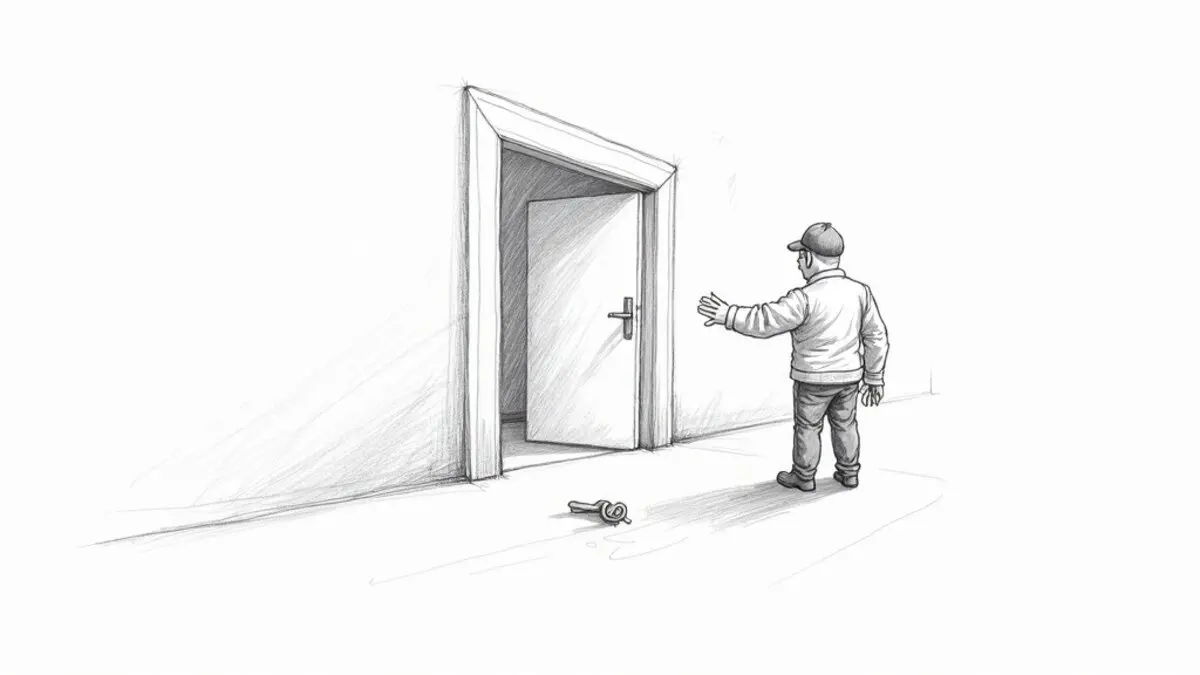
Imagine: you own a flat in Bandol, overlooking the sea. After months of unpaid rent, you obtain the eviction of your tenant. The bailiff intervenes, changes the locks and keeps the keys. Relieved, you think you can quickly re-let the property. But a few weeks later, when visiting the premises, you discover damage: a broken window, signs of breaking and entering, graffiti on the walls. Your reflex? Turn to the bailiff, who had the keys. After all, he was supposed to keep an eye on the property, wasn't he? This is exactly the question put to the Cour de cassation in its judgment of 11 May 2017. And the answer may surprise you.
In law, the bailiff (a ministerial officer responsible for service of process and evictions) has a right of retention (the right to keep an object to guarantee payment of his fees) over the keys of the evicted property. But does this right of retention make him the custodian of the property? In other words, is he liable for damage occurring after the eviction? The Cour de cassation answers no, for a simple reason: retaining the keys does not mean holding the property. The judges therefore rejected the landlord's claim for compensation, holding that there was no causal link between the retention of the keys and the damage.
This decision, handed down by the First Civil Chamber, is a lesson for every landlord. It reminds us that the bailiff is not a property caretaker and that caution is called for after an eviction. In this article, I will dissect the facts, the judges' reasoning, and above all give you practical advice to avoid finding yourself in a similar situation.
The facts: a story that happens every day
Mr X, owner of a property in Six-Fours-les-Plages (in the Var, near Toulon), obtained the eviction of his tenant for non-payment of rent. On 6 and 8 August 2003, then on 10, 11 and 12 September 2003, a bailiff carried out the eviction. In accordance with the law, the bailiff kept the keys to the property to guarantee payment of his costs (this is the right of retention provided for by Article 22 of the Decree of 12 December 1996).
A few days after the eviction, Mr X discovers damage to his property: a window has been forced, graffiti painted on the walls, and signs of breaking and entering are visible. According to him, this damage is the direct consequence of the bailiff's retention of the keys: if the bailiff had not kept them, Mr X could have secured the property and prevented intrusions. He therefore sues the bailiff for civil liability (claim for damages) before the Tribunal de grande instance of Toulon.
The tribunal dismisses Mr X's claim, holding that the causal link between the retention of the keys and the damage is not established. Mr X appeals. The Aix-en-Provence Court of Appeal upholds the judgment. Mr X then appeals to the Cour de cassation. The Cour de cassation, in its judgment of 11 May 2017, also rejects his claim. It holds that the right of retention over the keys does not entail possession of the property itself, and therefore the bailiff has no obligation to preserve the property. In short, the landlord cannot hold the bailiff liable for post-eviction damage.
The reasoning of the court — explained
The heart of the dispute lies in the interpretation of the bailiff's right of retention. This right, provided for by Article 22 of Decree No. 96-1080 of 12 December 1996, allows the bailiff to keep the keys and seized furniture until payment of his costs. But this right of retention presupposes physical possession of the thing (the object retained). Here, the thing retained is the keys, not the property.
The Cour de cassation recalls a fundamental principle: possession of the keys does not equate to possession of the property. The bailiff is therefore not the custodian of the property and has no obligation to ensure its preservation. Consequently, the landlord cannot rely on Article 1240 of the Civil Code (formerly 1382), which requires compensation for damage caused by one's fault, since there is no causal link between the retention of the keys and the damage. In other words, even if the bailiff had not retained the keys, the damage could have occurred (the property was unoccupied, without any particular surveillance).
This reasoning confirms previous case law: the Cour de cassation had already held that retention of keys does not confer on the bailiff the status of custodian of the property. There is therefore no change or reversal. The lower courts (tribunal and court of appeal) had correctly applied the law. Mr X's argument, that the bailiff should have returned the keys or ensured surveillance, was rejected. The Court considers that the landlord, once the eviction was carried out, should have taken his own measures to secure the property (changing the lock, alarm, etc.).
What this means for you — in practice
For landlord-owners, this decision is a warning: after an eviction, you cannot rely on the bailiff to protect your property. The bailiff has a right of retention over the keys, but this does not transform him into a property custodian. If damage occurs, you will be solely responsible if you have not taken the necessary measures.
Concrete example: you own a studio in Six-Fours-les-Plages (rent €500 per month). After an eviction for non-payment (6 months' rent, i.e. €3,000), the bailiff keeps the keys. You wait for him to return them, but in the meantime, squatters break in and cause €5,000 worth of damage. According to the judgment, you cannot claim this sum from the bailiff. You must act quickly: ask for a copy of the keys, change the locks, or install an alarm.
For tenants, this decision is neutral: it only concerns landlord-bailiff relationships. But it illustrates that the bailiff is not an insurer. For buyers of an evicted property, be vigilant: if the bailiff retains the keys, do not assume the property is under surveillance. If you are a co-owner, know that the management company cannot substitute for the bailiff either.
In practice, if you are in this situation, you should: 1) Contact the bailiff to arrange for return of the keys as soon as possible; 2) Have the condition of the premises recorded by a judicial officer (bailiff) upon repossession; 3) Take out non-occupier owner's insurance covering damage. Timing? The bailiff must return the keys as soon as his costs are paid. In the meantime, you can obtain a duplicate from a locksmith (subject to proof of ownership).
Four tips to avoid this type of dispute
- Anticipate the eviction: Before the bailiff even intervenes, prepare a plan to secure the property (change locks, alarm, contact a trusted neighbour). Do not rely solely on the bailiff.
- Recover the keys quickly: As soon as the eviction is carried out, ask the bailiff to return the keys to you. If he refuses due to unpaid fees, propose a staggered payment of his costs. If there is a deadlock, apply to the Tribunal d'instance for an order for restitution.
- Carry out a joint inventory of condition: As soon as you repossess the property, have a judicial officer record the condition of the premises (with photos). This will allow you to prove the extent of the damage and its date.
- Insure yourself: Take out non-occupier owner's insurance (PNO) covering damage, vandalism and squatting. The cost is modest (around €50 to €100 per year) compared to the risks.
Besoin d'un conseil personnalisé ? Contactez Maître Zakine — première consultation 30 min à 45€.
Further reading: related case law and developments
This decision is part of a consistent line of authority from the Cour de cassation. In a judgment of 9 July 2009 (No. 08-16.815), the Court had already held that the bailiff's retention of keys did not make him liable for damage occurring after the eviction. The solution is therefore settled.
However, a more recent decision (Civ. 1ère, 14 November 2019, No. 18-22.056) specified that the bailiff may incur liability if he retains the keys abusively, i.e., without legitimate reason or beyond what is necessary. For example, if he keeps the keys after being paid, he commits a fault. But in our judgment, the bailiff was exercising his right of retention lawfully.
The trend of the courts is therefore to limit the bailiff's liability to his strict mission (eviction, service of process). He is not a property custodian. For the future, there is no indication of a reversal, unless the legislator amends the 1996 decree. In the meantime, landlords must remain vigilant.
Key points to remember
Practical FAQ
1. Is the bailiff liable for damage after an eviction? No, unless he has committed a fault (e.g., abusive retention of keys). Mere possession of the keys does not make him the custodian of the property.
2. Can I recover the keys immediately after the eviction? Yes, if you pay the bailiff's costs. Otherwise, the bailiff may retain them until payment. You can ask a locksmith for a duplicate (on proof of ownership).
3. What should I do if the bailiff refuses to return the keys without reason? Apply to the enforcement judge (Tribunal judiciaire) for an order for restitution. You can also file a complaint for abuse of rights.
4. What recourse do I have against the damage? You can take action against the person who caused the damage (if identified) or against your insurance. The bailiff is not a recourse.
5. Should I take out specific insurance? Yes, non-occupier owner's insurance (PNO) is strongly recommended to cover risks after an eviction.
Are you in a similar situation? A first 30-minute consultation with Maître Zakine (€45) can save you months of proceedings — and often much more. Book an appointment →
📌 Does this apply to your situation? Maître Cécile Zakine, French real estate lawyer, practises throughout France.
→ Avocat droit immobilier & baux |
→ Browse all our legal articles
