Leading decision: cc • No. 07-13.846 • 2008-04-16 • View the decision →
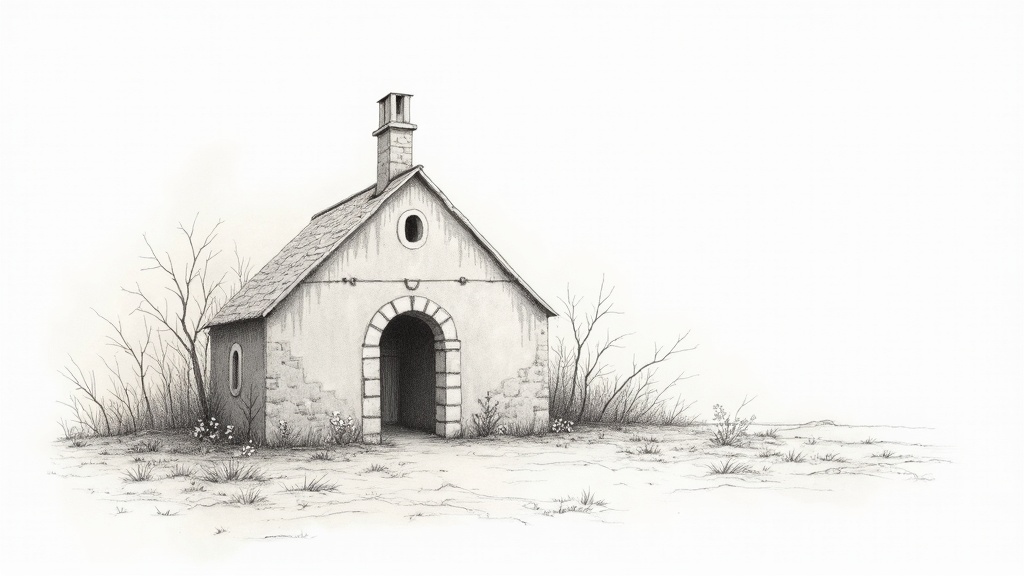
Imagine: you are the owner of a property in Saint-Doulchard. You grant a lease of an agricultural shed to a tenant. The tenant, without your consent, transforms the building, installs cubicles for his livestock, and builds a maize silo. You ask him to restore the premises to their original condition. He refuses, arguing that these installations were provided for in the lease. You sue him. But the court raises a procedural bar: you have not proved that these alterations exceeded the lease. You are sent away to provide evidence before even being heard. Absurd, right?
Yet that is exactly what happened in the case decided by the Rennes Court of Appeal, before the Court of Cassation set things straight. The question was simple: to bring proceedings, must you already demonstrate that you are right? The answer, clearly given on 16 April 2008, is a categorical no. 'The interest to sue is not conditional upon the prior demonstration of the merits of the action.' In other words, you can bring a claim before the judge as soon as you have a legitimate interest in doing so, without having to prove from the outset that your claim is well-founded.
This decision, delivered by the Third Civil Chamber, is a cornerstone of procedural law. It protects access to the judge, a fundamental principle of our rule-of-law State. Whether you are an owner, tenant, purchaser or co-owner, it concerns you: it prevents you from being met with a procedural bar on the ground that you have not yet adduced proof of what you allege. The merits, i.e. the well-foundedness of your claim, will be examined during the trial, not at the admissibility stage.
The facts: a story that happens every day
In 1996, Mr and Mrs François, owners in Aubigny-sur-Nère, granted a farm lease to Mr and Mrs Eric. The lease covered agricultural land, a shed, cubicles and a maize silo. Fifteen years later, in 2011, the owners noticed that the premises had been altered without their authorisation. The shed had been transformed, the cubicles moved, and the silo enlarged. They asked the tenant to restore the premises to their original state. He refused. The tenant claimed that these alterations were authorised by the lease.
Mr and Mrs François then sued Mr and Mrs Eric before the tribunal paritaire des baux ruraux of Bourges. They sought restoration of the premises. The tenant raised a procedural bar: according to him, the owners did not show that the installations exceeded the terms of the lease. In other words, they had to prove their right before the judge examined the merits of the case. The court dismissed their claim, holding that the interest to sue was not established.
Mr and Mrs François appealed. The Rennes Court of Appeal upheld the judgment: it considered that the owners had not demonstrated that the shed, cubicles and silo were not part of the lease. A new twist: Mr and Mrs François appealed to the Court of Cassation. The Court of Cassation quashed the appeal judgment. It recalled that the interest to sue is distinct from the merits of the action. It does not matter whether the installations were included in the lease or not: the owners have a legitimate interest in challenging the alterations they consider abusive. Proof of the contractual breach goes to the merits and will be debated later.
The reasoning of the court — explained
The Court of Cassation relies on a cardinal principle of civil procedure: the interest to sue (Article 31 of the Code of Civil Procedure provides that 'the action is open to all those who have a legitimate interest in the success or rejection of a claim'). It states that this interest is not conditional upon the prior demonstration of the merits of the action. In plain terms, to be admissible to bring a claim, it suffices to have an interest, i.e. a potential advantage that the judge could grant you. You do not need to prove from the start that you are right on the merits.
In this case, Mr and Mrs François had an obvious interest: they are owners and contest modifications to their property. Their action aims to restore the premises to their original state. This interest is existing and current. At this stage, it matters little whether the lease authorised these modifications or not. That issue will be decided during the examination on the merits. The Court of Appeal therefore confused admissibility (the interest to sue) with the merits (the right to obtain satisfaction).
This decision confirms consistent case law. The Court of Cassation has already held, for example, that the interest to sue is not conditional upon proof of the violation of a right (Civ. 3e, 27 March 2002, no. 00-18.202). Here, it reaffirms this principle forcefully. It censures the Court of Appeal for having required prior proof that went to the merits. The High Court thus reminds that the admissibility filter must not be an excessive obstacle to access to the judge.
The solution is logical: if one had to prove one's right before even being heard, no one could bring a claim, except by having irrefutable evidence from the outset. What would the trial be for? To confirm what is already proven? No, the trial is precisely the place where evidence is debated and the judge decides. Requiring prior proof would reverse the burden of proof and deprive those who have not yet had the opportunity to produce that proof of access to the judge.
What this changes for you — practically
Landlord owner: You grant a commercial or agricultural lease. Your tenant carries out works without your consent. You can sue him without having to demonstrate immediately that those works breach the lease. It suffices that you have an interest in challenging them (e.g., the depreciation of your property). Example: in Aubigny-sur-Nère, an owner saw his shed transformed into a repair workshop without authorisation. He was able to sue without providing the lease at the time of the claim. The judge ordered an expert report to determine the extent of the modifications.
Tenant: You are a tenant of a dwelling. Your landlord refuses to carry out urgent repairs. You can bring proceedings before the court without having to prove from the outset that those repairs are his responsibility. The interest to sue is your need to live in decent housing. The judge will then examine who must pay.
Purchaser of real estate: You buy a property and discover after the sale a hidden defect (e.g., an undisclosed damp problem). You can sue the seller without having to prove immediately that the defect was hidden and renders the property unfit for use. The interest to sue is the damage suffered. Proof will be provided during the trial, by expert report.
Co-owner: The managing agent carries out works without a vote at the general meeting. You can challenge this decision without having to demonstrate from the outset that the works were irregular. Your interest is to ensure compliance with the co-ownership rules.
Caution: this decision does not relieve you of proving your right during the proceedings. It only allows you to pass through the first door of the court. Once your action is declared admissible, you will have to convince the judge on the merits. Therefore, anticipate gathering evidence (lease, photos, witness statements, expert reports).
Four tips to avoid this type of dispute
- Draft a precise and exhaustive lease: Describe exactly the leased premises, their condition, and the works authorised or prohibited. A vague lease is a source of conflict. Have it drafted or checked by a specialist lawyer.
- Photograph the premises before handing them over: A photographic and written inventory, signed by both parties, is the best evidence in case of dispute. Keep it safe.
- Require a written document for any modification of the lease: If your tenant wishes to carry out works, require a written addendum specifying the nature of the works, their duration and the terms for reinstatement.
- In case of disagreement, consult a lawyer before suing: A lawyer will help you structure your claim, gather the necessary elements and avoid a procedural bar. A 30-minute preliminary consultation can save you months of proceedings.
Further reading: related case law and developments
This decision is part of a consistent line of the Court of Cassation. Already in 2002 (Civ. 3e, 27 March 2002, no. 00-18.202), it held that 'the interest to sue is not conditional upon the prior proof of the merits of the action'. More recently, in 2019 (Civ. 2e, 21 February 2019, no. 18-11.987), the Second Civil Chamber recalled that the interest to sue is assessed at the date of initiation of the proceedings, independently of the final outcome. The trend is therefore clear: lower courts must not require prior proof to declare an action admissible.
Conversely, certain earlier decisions, such as that of the Rennes Court of Appeal censured here, show that lower courts can sometimes confuse admissibility and merits. The Court of Cassation plays a regulatory role by recalling this fundamental principle. For the future, this case law strengthens access to the judge and limits abusive procedural bars. It also makes litigants responsible: an admissible action does not mean it will be won. You must always prepare your case on the merits.
Summary and next steps
FAQ:
- Can I bring proceedings if I do not yet have all the evidence? Yes, it suffices to have a legitimate interest. Evidence will be provided during the trial.
- What if the judge says my action is inadmissible? Check whether the inadmissibility is based on a lack of interest to sue. If so, you can appeal relying on the 2008 case law.
- What is the time limit to bring proceedings? In farm lease matters, the limitation period is 5 years from the date the owner became aware of the facts. For residential leases, it is 3 years.
- How much does a claim cost? In addition to lawyer's fees (variable), there are court fees (about €30 to €50) and bailiff's fees (about €70 to €100).
- Can I sue without a lawyer? Before the tribunal paritaire des baux ruraux, parties may represent themselves. But against an opposing lawyer, it is risky. It is better to be advised.
Are you in a similar situation? A 30-minute initial consultation with Maître Zakine (€45) can save you months of proceedings — and often much more. Book an appointment →
📌 Does this apply to your situation? Maître Cécile Zakine, French real estate lawyer, practises throughout France.
→ Prendre rendez-vous pour une consultation |
→ Browse all our legal articles
