Reference decision: cc • No 68-14.056 • 1970-10-29 • View the decision →
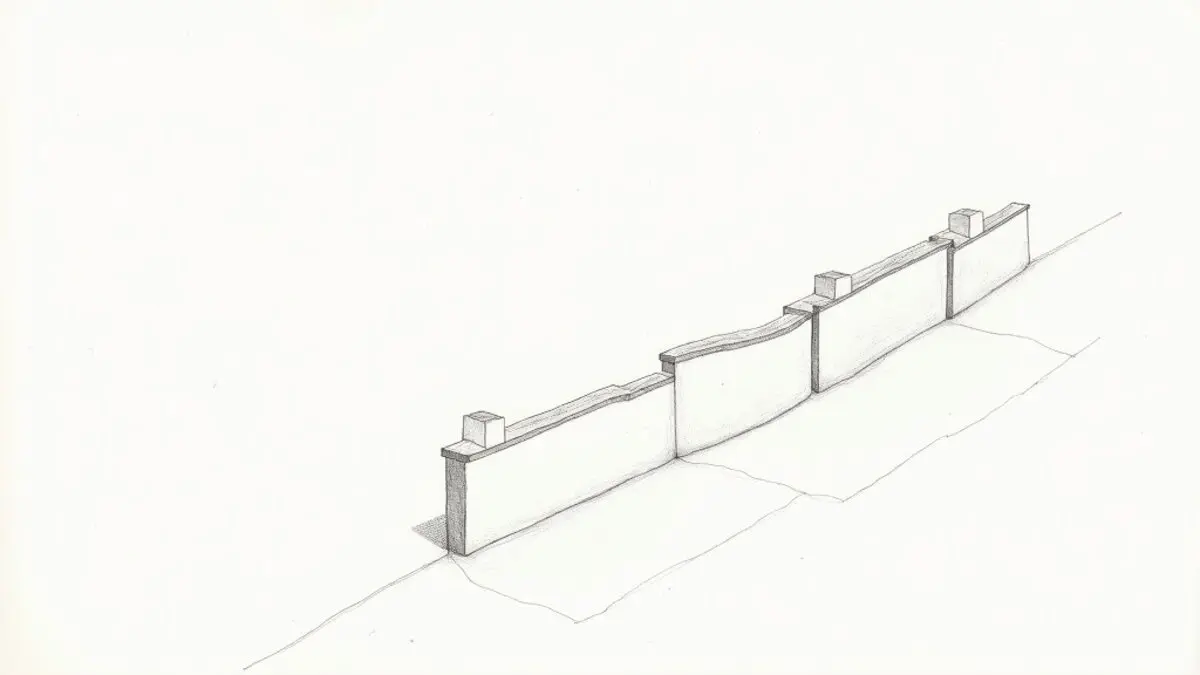
Picture the scene: in Bandol, in the Var, you have just bought a house with a lovely garden. Your neighbour decides to build a concrete block fence along the property boundary. But instead of building entirely on his own land, he places the wall astride the boundary line. Result: half the wall is on your land. You think to yourself: "Since this wall is partly on my land, I can use it, or even claim compensation to acquire party wall status (right of co-ownership of the wall)?" The answer, counter-intuitively, is no. The French Supreme Court, in a judgment of 29 October 1970 (No 68-14.056), ruled: Article 661 of the Civil Code, which sets the compensation for acquisition of party wall status, does not apply when the wall was not built entirely on the owner's land, but astride the boundary. In other words, if the wall encroaches on your land, your neighbour cannot demand compensation for you to become co-owner. Nor can you force him to sell you the part that is on your land under the party wall regime. A decision that seems common sense, but has important practical consequences for property owners in the coastal Var region.
The facts: a story that happens every day
The case begins with a Mr Grosse, owner in Six-Fours-les-Plages, who owns a plot of land by the sea. He decides to build a Bornage et limites de propriété">boundary wall to demarcate his property. But instead of building it entirely on his own land, he builds it astride the boundary line with the neighbouring land, belonging to Mr and Mrs Y. Result: the wall is half on the neighbour's land. The neighbour, seeing the wall, thinks he can take advantage of it. He then asks Mr Grosse to sell him the party wall status, i.e. the right to treat it as common property, in return for payment of compensation calculated according to Article 661 of the Civil Code. Mr Grosse refuses. The neighbour sues him to obtain this compensation. The first instance court rules in favour of the neighbour, holding that the wall is a party wall and that Mr Grosse must be compensated. Mr Grosse appeals. The appeal court upholds the judgment. But Mr Grosse appeals to the Supreme Court. He argues that Article 661 cannot apply because the wall was not built entirely on his land, but partly on the neighbour's land. The Supreme Court agrees with him: it quashes the appeal judgment and remits the case to another court. The reasoning is impeccable: Article 661 assumes that the wall was built entirely on the owner's land. However, in this case, the wall was astride the boundary. Therefore, the neighbour cannot claim compensation.
The reasoning of the court — explained
To understand this decision, we must go back to the texts. Article 661 of the Civil Code provides that "any owner of a party wall may end the party wall status by paying compensation to the neighbour". But this article applies when the wall was built by the owner on his own land, and the neighbour wishes to acquire party wall status. However, in the Grosse case, the wall was not entirely on the builder's land: it was astride. The Supreme Court concludes that Article 661 is inapplicable. Why? Because party wall status (the fact that a wall is common to both owners) assumes that the wall is located exactly on the boundary line. But the acquisition compensation is compensation for the owner who built the wall at his own expense. If the wall encroaches, the neighbour does not have to pay to become co-owner of a wall that is already partly on his land. In short, the builder cannot demand compensation for a wall he has misplaced. The Court also recalls Article 545 of the Civil Code (no one may be compelled to transfer his property): the neighbour cannot be forced to acquire party wall status if the wall is encroaching. This decision is part of a protection of the neighbouring owner against abusive constructions. undefined, I have come across cases where owners tried to "party-wall" a wall to regularise an encroachment. This case law closes that door.
What this changes for you — concretely
If you are a property owner in Bandol or Six-Fours-les-Plages, this decision has a direct impact on your rights. Landlord: if a tenant builds a wall astride the boundary, you cannot claim compensation from the neighbour for acquisition of party wall status. You will instead have to negotiate an easement (right of way or support) or bring an action for demolition for encroachment. Purchaser: before buying a property, check the position of party walls. If a wall is astride, know that you cannot claim party wall status without the neighbour's agreement. Co-owner: in a condominium, a wall separating two units may be a party wall. But if it was built astride, the same rule applies. Example with figures: in Six-Fours, a 20-metre long boundary wall costs about €200/metre, i.e. €4,000. If your neighbour paid for the construction and the wall is astride, you will not owe the €2,000 compensation he claims. On the other hand, you can demand demolition of the encroaching part. However, note: the action for demolition is subject to a limitation period (30 years under ordinary law). If you are in this situation, you must act quickly or negotiate an amicable resolution.
Four tips to avoid this type of dispute
- Have a boundary survey carried out before any construction: hire a chartered surveyor to mark the boundary line. This avoids walls being built astride.
- Build the wall set back: to be certain that the wall is on your land, provide a setback of at least 5 cm from the boundary. This eliminates any risk of encroachment.
- Draft a party wall agreement: if you and your neighbour want a common wall, sign a deed before a notary setting out the rights and obligations (maintenance, compensation).
- In case of dispute, favour conciliation: before going to court, propose a written agreement. For example, the neighbour transfers to you the strip of land where the wall stands in return for a lump sum. This avoids costs and delays.
Besoin d'un conseil personnalisé ? Contactez Maître Zakine — première consultation 30 min à 45€.
Further detail: related case law and developments
This 1970 decision is consistent. The Supreme Court has confirmed it on several occasions. For example, in a judgment of 17 May 1983 (No 81-15.767), it held that Article 661 also does not apply when the wall is built entirely on the neighbour's land. In other words, compensation is only due if the wall is entirely on the builder's land and the neighbour requests party wall status. On the other hand, if the wall is partly on both lands (mutual encroachment), the rules of compulsory party wall status may apply. Since 1970, the courts have remained strict: encroachment does not give rise to compensation under party wall status. What few people know is that this solution also protects the careless builder: if the wall encroaches, the neighbour cannot force him to sell the party wall status. Each party remains in their position. The future? With urban densification, party wall disputes are increasing. The trend is towards clarifying boundaries by survey and drafting agreements. The Grosse decision remains a reference to avoid abusive claims.
Frequently asked questions
Can I claim compensation from my neighbour if his wall encroaches on my land?
No, Article 661 does not allow a claim for compensation for acquisition of party wall status for a wall astride the boundary. However, you can demand demolition of the encroaching part or compensation for unlawful occupation.
What if my neighbour built a wall on the boundary without my consent?
You can go to court to have the encroachment recognised. But first, check the boundary survey. If the wall is astride, you can demand its removal or negotiate a transfer of land.
What are the time limits for action?
The action for demolition for encroachment is subject to a 30-year limitation period from the construction. If you do not react, you risk losing your rights.
Can I acquire party wall status of a wall built on the boundary?
Yes, if the wall is entirely on your neighbour's land and you want to use it. You must then pay compensation equal to half the value of the wall and the land.
What is the cost of a party wall procedure?
Lawyer's fees, expert fees and court costs can range from €2,000 to €10,000. Conciliation is often cheaper.
Are you in a similar situation? A first 30-minute consultation with Maître Zakine (€45) can save you months of proceedings — and often much more. Book an appointment →
📌 Does this apply to your situation? Maître Cécile Zakine, French real estate lawyer, practises throughout France.
servitude-droit-passage-avocat/" rel="dofollow">→ Avocat servitudes & foncier |
→ Browse all our legal articles
