Reference decision: cc • No. 75-11.905 • 1976-10-20 • View the decision →
Imagine the scene: you live in Le Bouscat, a nice townhouse with a garden. One morning, you hear pickaxe blows at your neighbour's. He is undertaking extension works. So far, nothing unusual. But very quickly, you realise that the construction encroaches on your land, or deprives you of a view or light. You ask him to stop. He refuses, arguing that his building permit is in order. What to do? Wait months, even years, for the court to rule on the merits? Or urgently ask the interim relief judge to stop the disturbance?
This question, crucial for any owner faced with a disputed construction site, was decided by the Court of Cassation in a judgment of 20 October 1976. At the time, the neighbours of Mr Lienhardt, who was extending his house in Bordeaux, had applied to the interim relief judge to obtain the suspension of the works. The judge agreed, and the Court of Cassation upheld his jurisdiction. The principle is clear: the interim relief judge can order the suspension of the works without ruling on the merits of the dispute, as soon as proceedings are already pending before the tribunal de grande instance (TGI).
This decision, although old, remains highly relevant today. It reminds us that the interim injunction is not a cut-price form of justice, but a powerful tool to stop a manifestly unlawful disturbance or imminent damage. So, how does this mechanism work? What are its limits? And above all, how to use it wisely? Let's dive into the story of this Bordeaux dispute.
The facts: a story like those that happen every day
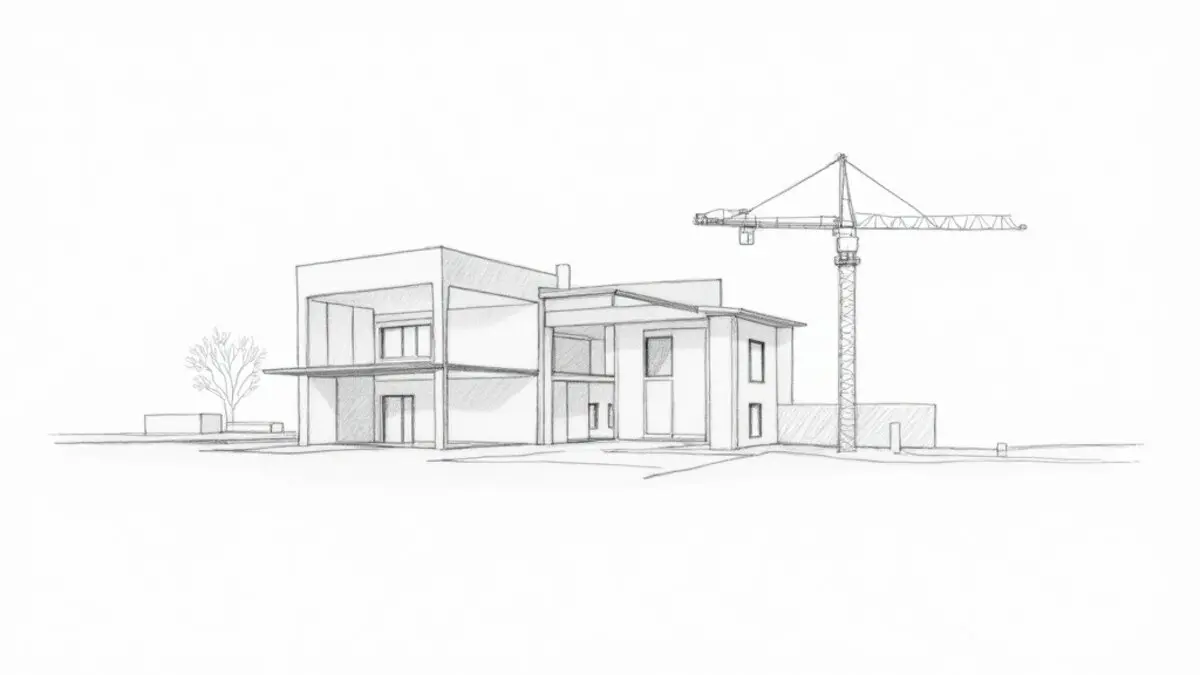
In the mid-1970s, in Bordeaux, Mr Lienhardt decided to extend his house. He undertook works which, according to his neighbours, infringed their rights. They did not sit idly by: they applied to the tribunal de grande instance (TGI) for demolition of the constructions and damages for abnormal neighbourhood disturbance. In parallel, they summoned Mr Lienhardt before the interim relief judge to obtain suspension of the works pending the decision on the merits.
The interim relief judge, ruling urgently, granted their request and ordered the construction site to stop. Mr Lienhardt contested this order before the court of appeal, which confirmed the measure. He then appealed to the Court of Cassation, arguing that the interim relief judge had exceeded his powers by ruling on a serious contestation that belonged to the merits. The Court of Cassation dismissed his appeal. It held that the interim relief judge had properly justified his jurisdiction by noting the existence of a pending dispute before the TGI and by refraining from ruling on the contestation submitted to it. In other words, the interim injunction does not prejudge the merits; it merely suspends the works to avoid aggravation of the damage.
This case perfectly illustrates the tension between the right to build and the right to respect for property. It also shows that the interim injunction is not a parallel remedy, but an indispensable complement to the main proceedings.
The reasoning of the court — dissected
To understand the judgment, we must go back to the applicable texts. Decree no. 71-740 of 9 September 1971, in its Article 73 (now codified in Article L. 511-1 of the Code de l'organisation judiciaire), gives the interim relief judge the power to order conservatory measures or measures for restoration, even in the presence of a serious contestation, when the existence of the obligation is not seriously contestable. But here, the interim relief judge did not rely on this last criterion. He merely noted that there was a pending dispute on the merits (before the TGI) and that his task was limited to taking provisional measures to avoid a manifestly unlawful disturbance or imminent damage.
The Court of Cassation approved this reasoning in two steps. First, it verified that the interim relief judge did not rule on the serious contestation — that is, the merits of the right to build or the encroachment. Second, it validated that the suspension of the works is a measure that does not encounter any serious contestation, in the sense that it is necessary to prevent the occurrence of damage. Concretely, the interim relief judge considered that the works, if continued, would create an abnormal neighbourhood disturbance (a concept based on Article 1240 of the Civil Code, which imposes liability for damage caused by fault, but also on the theory of neighbourhood disturbances, which is a no-fault liability).
This decision is a confirmation of consistent earlier case law. It is neither an evolution nor a reversal. It simply reminds us that the interim relief judge has a very broad power of injunction (to order to do or not to do), provided that he does not encroach on the merits judge. Mr Lienhardt's arguments, who claimed that the interim relief judge had exceeded his powers, were rejected because the court of appeal had properly distinguished the provisional from the final.
What this changes for you — concretely
This case law has immediate practical implications, whatever your profile.
If you are an owner (landlord or occupant): You can apply for an interim injunction to suspend works that cause you damage, even if the merits of the dispute are not decided. For example, your neighbour builds an extension that encroaches on your land or deprives you of sunlight. You must act quickly: apply to the interim relief judge of the tribunal judiciaire (formerly TGI) of your department. In Île-de-France, this could be Paris, Versailles, Nanterre, Bobigny or Créteil. Expect a few weeks to obtain an order. The cost? Count about €1,500 to €3,000 for a lawyer for an interim injunction procedure, but the immediate stoppage of the construction site can save you months of nuisance and much higher restoration costs.
If you are a tenant: You can also act if the works of the landlord or a neighbour cause you an abnormal disturbance (noise, loss of view, insalubrity). Caution: the tenant does not have a right of ownership in the land, but he has a right to peaceful enjoyment of the premises. You can therefore apply for suspension of the works by interim injunction, provided you demonstrate a direct damage.
If you are a buyer: Before buying, check whether there is any pending dispute concerning works by the seller or his neighbours. A pending interim injunction can be a source of future disputes. Do not hesitate to ask your notary to check ongoing actions.
If you are a co-owner: Works in a co-ownership (such as the creation of a terrace or modification of common parts) can be suspended by interim injunction if they are contrary to the co-ownership rules or cause a disturbance to a co-owner. For example, in Bordeaux, a co-owner who had undertaken works without authorisation from the general meeting could see his construction site stopped within days.
A concrete example: in Le Bouscat, an owner undertook to raise his house without respecting town planning rules. His neighbour, seeing his view obstructed, applied to the interim relief judge. In less than a month, the works were suspended until the tribunal de grande instance ruled on the legality of the building permit. The owner had to restore the premises at his own expense.
Four tips to avoid this type of dispute
- Before starting works, inform your neighbours in writing. A simple registered letter with acknowledgement of receipt explaining the nature of the works, their duration and the precautions taken can defuse many conflicts. Attach a copy of the building permit or prior declaration.
- Check the town planning and co-ownership regulations. In Bordeaux as elsewhere, the Local Town Planning Plan (PLU) may impose rules on height, footprint or distance. In co-ownership, the rules may prohibit certain works without agreement of the general meeting. Do not neglect these documents.
- Call a surveyor if in doubt about property boundaries. An amicable boundary marking can avoid years of litigation. If your neighbour refuses, you can ask the merits judge to order a judicial boundary marking, but this will take longer.
- In case of dispute, do not take the law into your own hands. Cutting off the water supply or blocking access to the construction site can expose you to criminal prosecution for assault. Prefer the judicial route: an interim injunction application is quick and effective.
Further reading: related case law and developments
This 1976 decision fits into a consistent line. For example, a judgment of the Court of Cassation of 14 November 1991 (no. 90-12.345) recalled that the interim relief judge can order the demolition of a construction built in violation of a building permit, if the disturbance is manifestly unlawful. More recently, the Law of 23 November 2018 (known as the ELAN Law) strengthened the judge's powers in matters of neighbourhood disturbances, but without modifying the principle established in 1976.
The trend of the courts is to favour conservatory measures to avoid aggravation of damage. Thus, even if the merits of the dispute are complex (for example, a contestation over ownership of the land), the interim relief judge can suspend the works if he considers that continuation of the construction site would create irreversible damage. This protective approach is particularly useful in dense urban areas like Le Bouscat or Bordeaux, where constructions are often adjoining.
For the future, we can expect interim relief judges to be increasingly solicited, particularly with the increase in high-rise constructions and energy renovations. The question of urgency (a key element of the interim injunction) will be at the heart of the debates.
Key points to remember
- When can I apply for suspension of works by interim injunction? As soon as the works cause you an abnormal neighbourhood disturbance or imminent damage, and the merits of the dispute are already pending before the tribunal de grande instance. You do not need to wait for the judgment on the merits.
- What is the difference between the interim relief judge and the merits judge? The interim relief judge rules urgently and takes provisional measures. He does not definitively decide the dispute (for example, he does not order final demolition). The merits judge, on the other hand, will render a final decision after full investigation.
- How long does an interim injunction procedure take? Generally, a few weeks between the summons and the order. This is much faster than a trial on the merits which can last one to two years.
- What are the risks if I continue the works despite a suspension order? You expose yourself to a daily penalty (sum of money to be paid per day of delay) and damages for non-compliance. The judge can also order restoration at your expense.
Besoin d'un conseil personnalisé ? Contactez Maître Zakine — première consultation 30 min à 45€.
Are you in a similar situation? A first 30-minute consultation with Maître Zakine (€45) can save you months of litigation — and often much more. Book an appointment →
📌 Does this apply to your situation? Maître Cécile Zakine, French real estate lawyer, practises throughout France.
servitude-droit-passage-avocat/" rel="dofollow">→ Avocat servitudes & foncier |
→ Browse all our legal articles
