Reference Decision: cc • N° 02-15.206 • 2004-02-05 • View decision →
Imagine a stormy afternoon in Martigues, the mistral wind blowing at over 100 km/h. Suddenly, a sinister cracking sound: several trees from the neighbouring land fall onto your property, crushing part of your garden, your crops, your installations. You are angry, helpless. Whose fault is it? The wind? The neighbour who failed to maintain his trees?
This question was asked by a property owner in the jurisdiction of Aix-en-Provence, and the Court of Cassation ruled in his favour in a judgment of 5 February 2004. But be careful: it is not all that simple. The judge does not automatically condemn the owner of the trees. He requires proof of an abnormal neighbourhood disturbance, that is, an imbalance in neighbourly relations.
In this case, the owner was held liable because he was fully aware of the condition of his trees and did nothing for over two years, despite a formal notice. So it is not the storm itself that is at fault, but the owner's negligence. Let us break down this reasoning and see how you can protect yourself.
The Facts: A Story Like Many That Happen Every Day
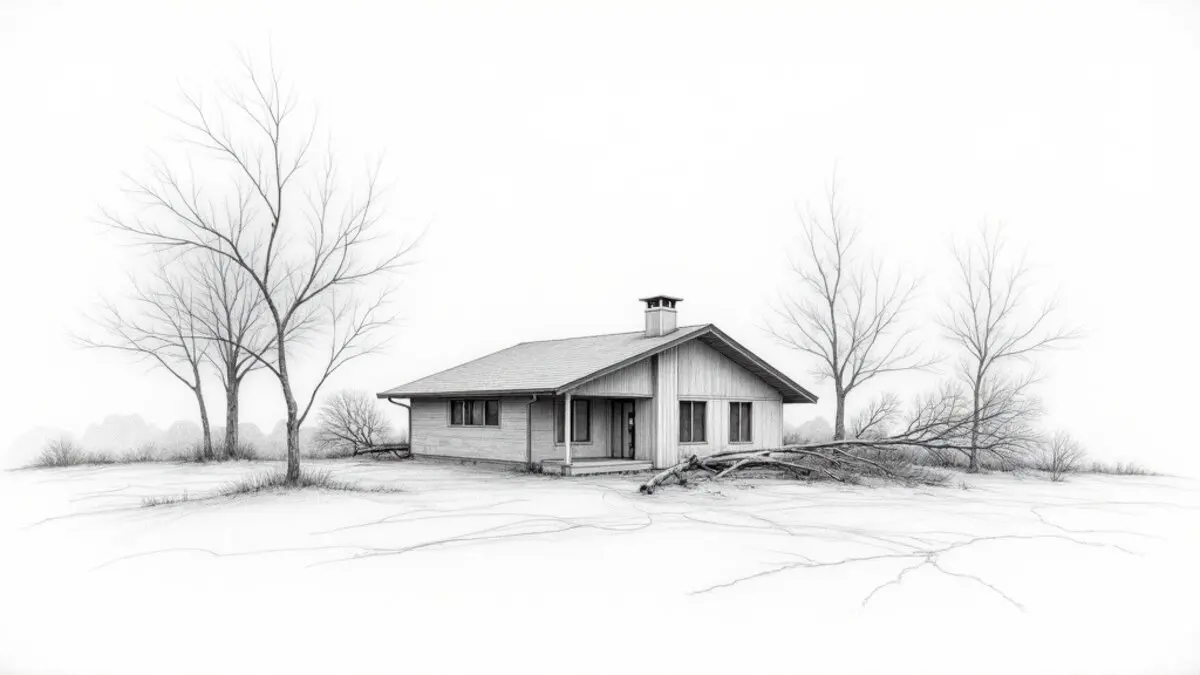
Mr X, owner of a wooded plot in Martigues, sees his trees fall onto the neighbouring plot operated by Mr Y. The storm caused considerable damage: over a length of one hundred and twenty metres and a width of twenty metres, the fallen trees covered Mr Y's land, rendering forty ares unusable. But that is not all: the trees are still rooted, others threaten to fall, grass has grown to a height of one metre, the soil is scorched. In short, a real disaster.
Mr Y formally notifies Mr X to clean his land and remove the fallen trees. Mr X does not react for over two years. Tired of waiting, Mr Y takes the matter to court seeking compensation on the basis of abnormal neighbourhood disturbance. The High Court rules in his favour: Mr X must remove the trees, restore the land, and take all measures to prevent the fall of still unstable trees. Mr X appeals, but the Court of Appeal upholds the decision. He appeals to the Court of Cassation, arguing that the storm constitutes a case of force majeure (an unforeseeable, irresistible, and external event) which exempts him from liability.
The Court of Cassation dismisses his appeal. It holds that the Court of Appeal justified its decision by finding that Mr X knew the condition of his trees and refrained from acting for two years, which excludes force majeure. In short, it is not the storm that caused the disturbance, but the owner's inertia.
The Reasoning of the Court — Analysed
The Court of Cassation bases its decision on Article 1382 of the Civil Code (now Article 1240), which provides that "any act whatever of man which causes damage to another obliges the person by whose fault it occurred to make reparation." But note, it is not a classic fault that is alleged against Mr X, but an abnormal neighbourhood disturbance. In law, abnormal neighbourhood disturbance is an autonomous theory: it is not necessary to prove fault, only an excess of the normal inconveniences of neighbourhood.
Here, the Court of Appeal characterised the abnormal disturbance by noting several elements: the extent of the damage (120 metres by 20 metres), the impossibility of exploiting 40 ares, the persistence of danger (trees threatening to fall), and above all, the prolonged inaction of Mr X despite his knowledge of the situation. The Court of Cassation validates this reasoning: the disturbance does not result from the storm (a case of force majeure), but from the owner's voluntary abstention.
What few people know is that force majeure is a defence often invoked in storm cases. But to be exonerated, the owner must prove that the event was unforeseeable, irresistible, and external. In this case, the storm was not unforeseeable: Mr X knew that his trees were old and unstable. He also did not take preventive measures (pruning, felling). Therefore, force majeure is not retained.
In other words, the Court of Cassation confirms a constant line of case law: the owner of trees has a duty of maintenance and supervision. If he neglects his duties, he incurs liability, even in the event of a climatic event.
What This Changes for You — Concretely
This decision has strong implications for owners, tenants, and real estate professionals. Here is what you need to remember:
For owners of wooded land: You must regularly inspect your trees, especially after a storm. If a tree threatens to fall onto a neighbour's land, you must act quickly. Prolonged inaction (more than two years in this case) exposes you to damages. For example, in Aubagne, an owner had to pay €15,000 in compensation after a century-old oak fell onto the neighbouring house.
For tenants: If you rent a property with trees, immediately inform your landlord of any danger. In the event of damage, your liability may be engaged if you did not report the problem. Keep written evidence (letters, photos).
For buyers: Before buying wooded land, have the trees inspected by an expert. An arboricultural diagnosis can reveal risks. Do not hesitate to include a suspensive condition in the sale agreement.
For co-owners: Trees located in common areas are under the responsibility of the syndic (management company). If branches threaten to fall, the syndic must act. In case of inaction, each co-owner may be jointly and severally liable.
undefined, I have encountered cases where an owner waited three years before cutting down a dangerous tree. The bill was doubled due to damage to the neighbour's fence and garden. Do not make the same mistake.
Four Tips to Avoid This Type of Dispute
- Inspect your trees every year: Use a professional arborist to assess the health of your trees, especially after a storm or drought. A diagnosis costs between €100 and €300, but can save you thousands of euros in damages.
- Prune regularly: Dead or diseased branches should be cut. Preventive pruning reduces the risk of falling. Budget €500 to €2,000 depending on the number of trees.
- React quickly in case of danger: If a tree threatens to fall, act without delay. A formal notice by registered letter is a good practice, but prevention is better than cure.
- Insure yourself: Check that your public liability insurance covers damage caused by your trees. In the event of an incident, declare it immediately. Some insurers offer specific extensions.
Further Reading: Related Case Law and Developments
This decision is part of a line of the Court of Cassation that strictly applies the theory of abnormal neighbourhood disturbance. For example, in a judgment of 20 November 1996 (No. 94-19.242), the Court held an owner liable for the fall of a diseased tree, even without a storm. The trend is therefore towards increased liability of tree owners.
Conversely, if the owner can prove that he maintained his trees and that the storm was exceptional (force majeure), he may be exonerated. But the bar is high: it must be shown that the event was unforeseeable and irresistible. In practice, the courts are demanding.
For the future, it is likely that judges will continue to sanction negligent owners, especially in the context of climate change where storms are increasing. If you are an owner, be proactive.
Checklist Before Taking Action
- What to do if a neighbour's tree falls on my land? Take photos, have the damage noted by a bailiff if necessary, and send a formal notice to your neighbour by registered letter. If nothing happens, take the matter to court.
- Can I cut branches that overhang my property myself? Yes, but only if they overhang your property and you cut them at the boundary. You must inform the neighbour. In case of dispute, an expert may be useful.
- What is the time limit for taking action? The action for abnormal neighbourhood disturbance is subject to a 5-year limitation period from the day the disturbance manifested itself. Do not delay.
- What is the cost of proceedings? Count between €1,500 and €5,000 for a standard procedure, excluding expert fees. Mediation may be less costly.
- Does my insurance cover the damage? Check your contract. Generally, public liability covers damage caused to others, but sometimes with exclusions. Do not hesitate to ask for an extension.
Besoin d'un conseil personnalisé ? Contactez Maître Zakine — première consultation 30 min à 45€.
Are you in a similar situation? A 30-minute initial consultation with Maître Zakine (€45) can save you months of proceedings — and often much more. Book an appointment →
📌 Does this apply to your situation? Maître Cécile Zakine, French real estate lawyer, practises throughout France.
servitude-droit-passage-avocat/" rel="dofollow">→ Avocat servitudes & foncier |
→ Browse all our legal articles
