Reference decision: cc • No 92-19.880 • 1994-05-16 • View the decision →
Imagine this: you live in Beaumont-de-Lomagne, in the Tarn-et-Garonne, a nice country house bought twenty years ago. One day, a farming neighbour expands his pig farm. The smells become unbearable, your terrace becomes unusable, outdoor meals are ruined. You ask yourself: "Are there no limits?" This question is asked by many owners and tenants. The decision of the French Court of Cassation of 16 May 1994 (No 92-19.880) provides a clear answer: yes, there are limits, and even agricultural activity can be condemned for abnormal neighbourhood disturbances if the nuisances exceed what is normally tolerable.
In short, this decision reminds us that no one has the right to cause excessive inconvenience to others, regardless of their activity or status. But what does this mean concretely for you? Let's delve into the details.
The facts: a story like many others
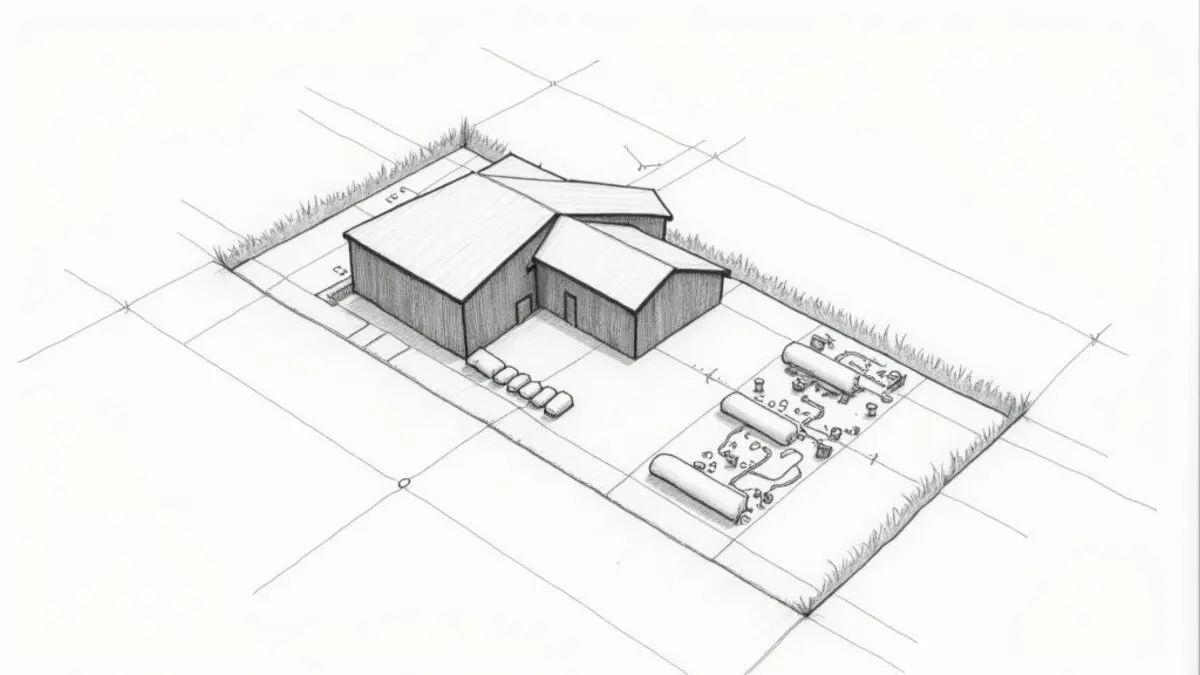
In Beaumont-de-Lomagne, an agricultural economic interest group (GAEC) operated a pig farm. Initially, the farm was modest, but over the years it turned into a large industrial pig farm. Several neighbours, owners of pre-existing houses located nearby, began to suffer increasingly strong olfactory nuisances. The foul odours invaded their gardens, their homes, making daily life difficult.
After unsuccessful amicable attempts, the neighbours sued the GAEC for compensation for their losses (damages). The court ruled in favour of the neighbours, ordering the GAEC to pay damages. The GAEC appealed, but the Court of Appeal upheld the conviction. The GAEC then appealed to the Court of Cassation (a remedy before the Court of Cassation to verify the correct application of the law).
The GAEC argued that the judges had not explained what constituted normal neighbourhood inconveniences, and that they had not specified why the nuisances were abnormal. In other words, according to the GAEC, pig farm odours are normal in the countryside; the neighbours had to put up with them.
The reasoning of the court — analysed
The Court of Cassation dismissed the GAEC's appeal, thus validating the reasoning of the lower courts. The legal basis of this decision is Article 1240 of the Civil Code (formerly 1382), which provides: "Any act of a person which causes damage to another obliges the person by whose fault it occurred to repair it." However, note: here it is not a question of fault in the strict sense, but of the theory of abnormal neighbourhood disturbances, which is a particular application of this article. In neighbourhood matters, one does not need to prove intentional fault; it is sufficient to demonstrate that the disturbance exceeds normal inconveniences.
The Court noted three key elements:
- The pig farm had gradually become a large operation (aggravation of nuisances).
- The minimum distances required by health regulations (distance between the farm and dwellings) had not been observed.
- The olfactory nuisances exceeded normal neighbourhood inconveniences.
In short, even if a pig farm is a legitimate agricultural activity, it cannot disregard health rules and the respect due to neighbours. Non-compliance with regulatory distances is a strong indicator of the abnormal nature of the disturbance. What few people know is that this decision did not create a new right, but simply applied constant case law: the theory of abnormal neighbourhood disturbances applies to all activities, including agricultural ones.
What this changes for you — concretely
For an owner in Caussade suffering from pig farm odours, this decision means you can take legal action to obtain damages, or even cessation of the nuisances. If you are a landlord and your tenant complains about olfactory nuisances, you may be required to stop them under penalty of rent reduction or lease termination.
For a tenant, you can ask your landlord to take measures, and if nothing is done, act directly against the author of the nuisances. Time limits? In neighbourhood disturbance matters, the limitation period is 5 years from the manifestation of the disturbance (Article 2224 of the Civil Code). Amounts? undefined, I have seen cases where compensation of €5,000 to €20,000 was awarded for nuisances over several years. Example: in Caussade, an owner obtained €8,000 for two years of unbearable odours.
If you are a buyer of real estate, check agricultural activities nearby before buying. A seller must inform the buyer of known nuisances, under penalty of hidden defects (a hidden defect rendering the property unfit for its use).
Four tips to avoid this type of dispute
- Before buying or building: Find out about nearby agricultural activities. Consult the Local Urban Plan (PLU) and regulatory distances (e.g., 50 metres for a pig farm with more than 50 animals).
- If you operate an agricultural activity: Scrupulously respect health distances and environmental rules. Anticipate the evolution of your operation.
- If you suffer nuisances: Start with a bailiff's report (approx. €200) to prove the odours. Send a registered letter to the author of the nuisances to attempt an amicable solution.
- Keep evidence: Photos, videos, neighbour testimonies, weather reports (odours are often stronger in damp weather). All of this will be used in court.
In-depth: related case law and developments
This decision is part of a constant line: the Court of Cassation has always protected neighbours against excessive nuisances. For example, a ruling of 4 February 1971 (No 69-12.978) had already condemned a pig farm for abnormal disturbances. More recently, the Court of Cassation extended this protection to noise or olfactory nuisances from any type of activity.
However, note: since 1994, environmental law has been strengthened with the Classified Installations for Environmental Protection (ICPE). Large pig farms are subject to prefectural authorisation. This does not prevent a lawsuit for neighbourhood disturbances, but provides an additional regulatory framework.
The trend of the courts is to consider that the pre-existence of dwellings is an important factor: if the houses were there before the expansion of the farm, the nuisances are more easily deemed abnormal. Conversely, if the farmer was there first, newcomers must accept a certain level of nuisances (theory of prior occupation).
Summary and next steps
FAQ:
1. What is an abnormal neighbourhood disturbance?
An inconvenience that exceeds what one should normally tolerate in a neighbourhood, considering its nature, duration and intensity.
2. Can I take action if I am a tenant?
Yes, you can act directly against the author of the nuisances, or ask your landlord to intervene.
3. What are the time limits for taking action?
5 years from the first nuisance. But it is better to act quickly to avoid prescription.
4. How much does a lawsuit cost?
Lawyer's fees vary, but an initial consultation at €45 (like Maître Zakine's) allows assessment of the case. Bailiffs and expert reports may cost a few hundred euros.
5. What if the author of the nuisances is insolvent?
You can request measures to stop the nuisances (injunction), and not only damages. Sometimes a municipal order may be sought.
Are you in a similar situation? An initial 30-minute consultation with Maître Zakine (€45) can save you months of procedure — and often much more. Make an appointment →
📌 Does this apply to your situation? Maître Cécile Zakine, French real estate lawyer, practises throughout France.
→ Prendre rendez-vous pour une consultation |
→ Browse all our legal articles
