Reference Decision: cc • No 74-10.378 • 28 April 1975 • View the decision →
Imagine: you live in Cambrai, in a family home built fifty years ago. Next door, a factory is set up, then expands. Over the years, the noise of the machines becomes deafening. You can no longer open your windows, nor sleep peacefully. Your home, once your haven of peace, loses its value. What can you do?
This question was put to the courts by a property owner, and the Supreme Court ruled on it in 1975. The judgment commented on here lays down a simple principle: a neighbour, even an industrial one, must compensate for the nuisance it causes if it exceeds the normal inconveniences of neighbourhood life. No need to prove fault: simply exceeding a tolerance threshold is enough.
This decision, handed down nearly fifty years ago, remains relevant today. It serves as the basis for many disputes throughout the country, from Valenciennes to Marseille. So, if you are suffering from excessive neighbourhood disturbances – noise, odours, vibrations – this article explains how case law protects you.
The Facts: A Story That Happens Every Day
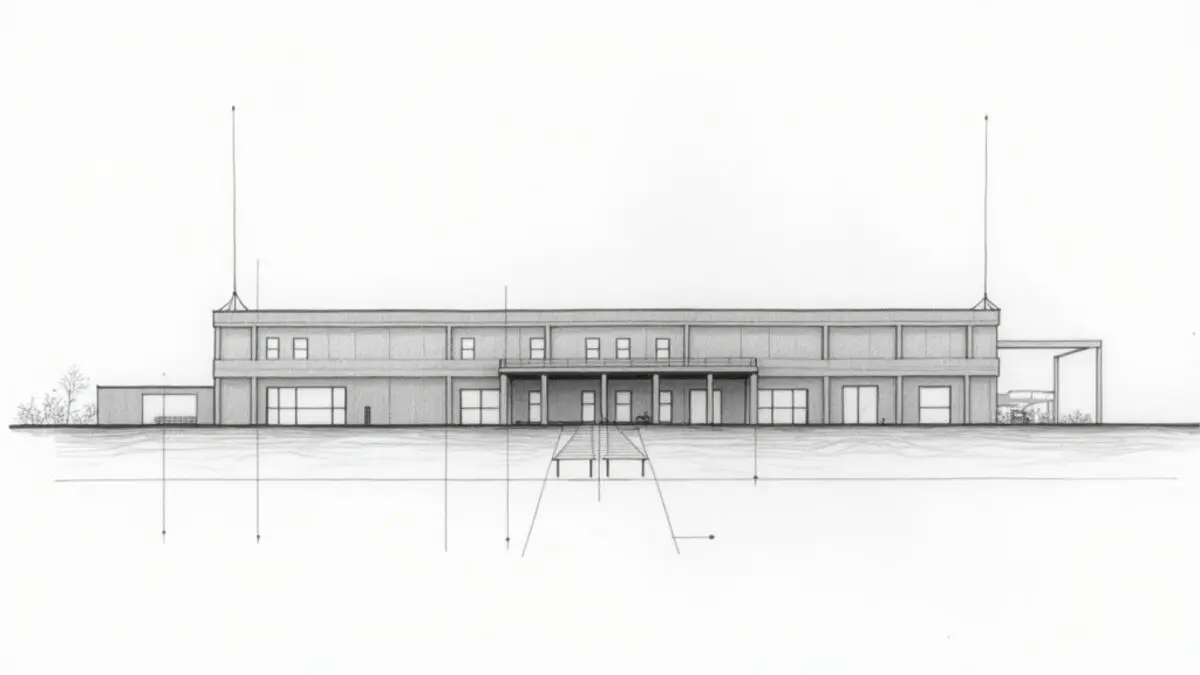
Mr X, owner of a house in Cambrai, sees his peace disturbed by the neighbouring factory. This factory, which has existed for a long time, has modernised. The new techniques have increased noise pollution. The noise far exceeds acceptable thresholds, according to a bailiff's report. Mr X can no longer bear it: he can no longer enjoy his garden, nor even have a normal conversation at home. He decides to sue the factory.
The court of first instance rules in favour of Mr X: the factory is ordered to compensate him for loss of enjoyment (loss of quality of life) and for the depreciation of his property. The factory appeals. The Court of Appeal upholds the judgment, but perhaps reduces the amount. The factory appeals to the Supreme Court.
Before the Supreme Court, the factory advances several arguments: on the one hand, it is located in an industrial zone; on the other hand, Mr X's house was built after the factory. These arguments are rejected. The Supreme Court validates the reasoning of the lower courts: the noise level exceeded acceptable values, regardless of the zone or the anteriority. The factory must pay.
The Reasoning of the Court — Analysed
The Supreme Court relies on the principle of civil liability, enshrined in Article 1240 of the Civil Code (formerly Article 1382): 'Any act of a person which causes damage to another obliges the person by whose fault it occurred to make reparation.' But here, there is no need to prove intentional fault: the abnormal neighbourhood disturbance is sufficient.
The reasoning is as follows: the judges found that the noise level in the workshops 'far exceeded the values considered acceptable'. This is an objective fact. Then, they noted that the building was a family home, built at the same time as the factory's beginnings, and that the nuisance appeared progressively with the factory's expansion. Therefore, the damage is indeed linked to the industrial activity.
The factory could not exonerate itself by invoking the industrial zone: this argument was held to be insufficient. The Court recalls that the abnormal neighbourhood disturbance is assessed in concreto (on a case-by-case basis), without regard to the zoning of the area. This solution has been constant since a landmark decision of 1971 (Civ. 2e, 4 November 1971, No 70-10.871) and has been confirmed since.
Thus, the Supreme Court 'gives a legal basis to its decision': it validates the reasoning of the appeal judges who correctly applied the law. No reversal here, but a classic application of the principle.
What This Means for You — Practically
If you are the owner of a property suffering from excessive nuisance (noise, odours, vibrations, fumes), this decision reassures you: you can claim compensation without having to prove that the neighbour committed a fault. It is enough to show that the disturbance exceeds the ordinary inconveniences of neighbourhood life.
Example with figures: in Valenciennes, a client whose flat overlooked a nightclub obtained €15,000 in damages for loss of enjoyment and €8,000 for the depreciation of his property. The judge held that the noise level, measured at 65 dB in the middle of the night, exceeded the acceptable standard of 30 dB in a residential area.
If you are a tenant, you can act directly against the author of the disturbance (the noisy neighbour) or ask your landlord to put a stop to the nuisance. The owner can also turn against the neighbour for loss of rental value.
For buyers, check before purchasing whether any nuisance is mentioned in the technical diagnostic report. An abnormal disturbance known but not declared may render the seller liable for hidden defects.
Finally, if you are a co-owner, the general meeting may vote for insulation works, but this is not always sufficient. Legal action remains possible.
Four Tips to Avoid This Type of Dispute
- 1. Have the nuisance recorded by a bailiff: At the first signs of disturbance, have a report drawn up with sound level measurements. This document is solid evidence. In Cambrai, such a report costs around €200, but can save you years of litigation.
- 2. Consult the local urban plan (PLU): Before buying or building, check the zoning and permitted activities. If your neighbour is in an industrial zone, expect some nuisance, but this does not exonerate the industrialist from complying with standards.
- 3. Attempt conciliation before suing: Most neighbourhood disputes can be settled amicably. Send a registered letter with acknowledgement of receipt detailing the disturbances and your demands. If nothing changes, contact the conciliator of justice (free of charge).
- 4. Act within the time limits: The civil liability claim is subject to a 5-year limitation period from the day the disturbance manifested itself. Do not delay: if you wait too long, you may lose any right to compensation.
Further Details: Related Case Law and Developments
The Supreme Court had already laid down the principle of abnormal neighbourhood disturbances in a judgment of 4 November 1971 (No 70-10.871). Since then, it has continued to refine it. For example, in a judgment of 19 November 1986 (No 84-16.379), it held that the pre-existence of the industrial activity does not preclude a condemnation if the nuisance worsens.
More recently, case law has clarified that the disturbance must be 'abnormal', i.e. exceeding the ordinary inconveniences of neighbourhood life. This threshold is assessed according to the circumstances of place, time, and the nature of the activities. In practice, judges often retain a noise threshold of more than 5 dB above the regulatory standard, or recurrent odours.
The current trend is towards increased protection of victims. Courts do not hesitate to condemn local authorities (for noise from a waste disposal centre) or individuals (for excessive barking).
Checklist Before Taking Action
- 1. Do I have evidence? Bailiff's reports, witness statements, audio recordings, sound level measurements.
- 2. Is the disturbance abnormal? Compare with the ordinary nuisances of a similar neighbourhood. Temporary construction noise is tolerated; but if it lasts for months, it becomes abnormal.
- 3. Have I attempted an amicable resolution? Registered letter, conciliator of justice. Keep a written record.
- 4. What is the amount of my loss? Assess the loss of enjoyment (how long, what impact) and the property depreciation (get an estate agent's valuation).
- 5. Am I within the time limits? 5 years from the disturbance. If the disturbance is continuous, the time limit runs from its cessation, but it is better to act quickly.
Are you in a similar situation? A first 30-minute consultation with Maître Zakine (€45) can save you months of litigation — and often much more. Book an appointment →
📌 Does this apply to your situation? Maître Cécile Zakine, French real estate lawyer, practises throughout France.
→ Prendre rendez-vous pour une consultation |
→ Browse all our legal articles
