Reference Decision: cc • No. 15-23.846 • 2016-10-27 • View the decision →
Imagine: you buy a plot of land in Istres, hoping to build your house. The seller offers you a lot of four plots, one of which is buildable. You sign, you pay 446,345 euros. But a few months later, you discover that the buildable plot did not belong to the seller. What happens? Is the contract annulled in its entirety? Can you keep the other plots and obtain a partial refund? This is exactly the question that arose in a case decided by the Court of Cassation on 27 October 2016.
This decision is crucial for any property buyer, but also for sellers and notaries. It clarifies a subtle but essential distinction between the annulment of a sale for sale of another's property (Article 1599 of the Civil Code) and the warranty against eviction (Article 1637). In short, when a sold plot does not belong to the seller, the contract is void for that plot, and the buyer can claim restitution of the corresponding price, without having to give up the other purchased assets. But the lower courts had made an error of interpretation, which the Court of Cassation corrected.
How should you react if you find yourself in a similar situation? What are your rights and remedies? This article explains everything, with concrete examples from practice in the jurisdiction of Aix-en-Provence, particularly in Istres and Gardanne.
The Facts: A Story That Happens Every Day
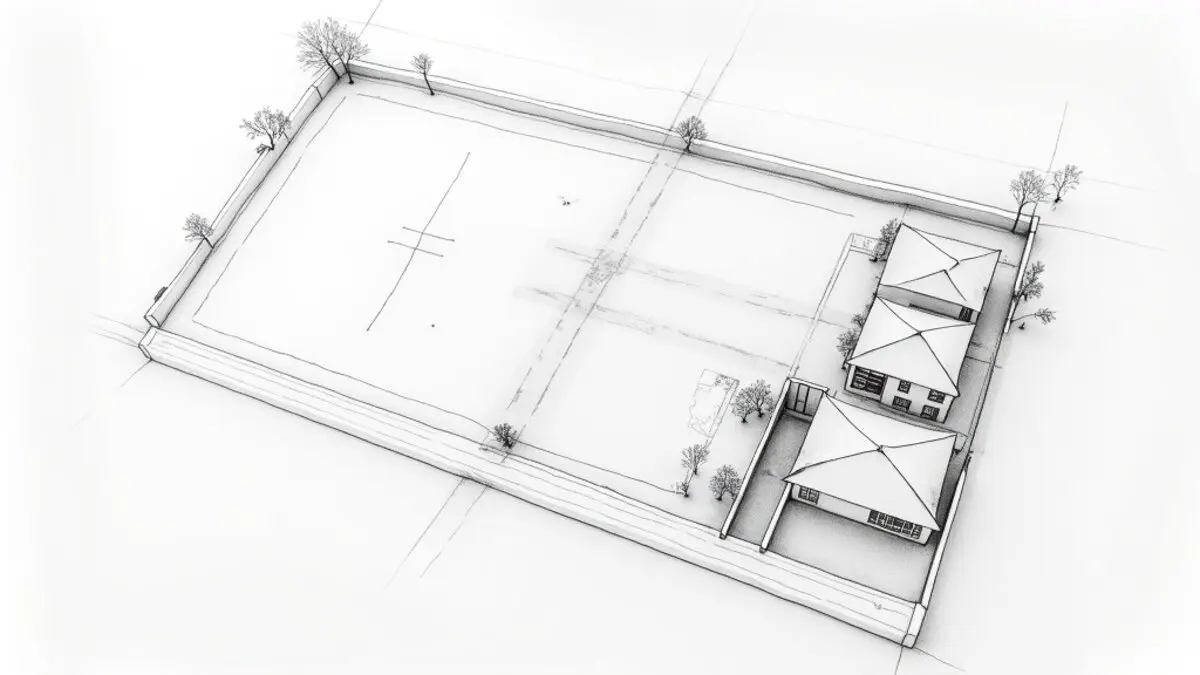
Mr and Mrs X, residents of Istres, wish to acquire land to build their main residence. They find an offer: a set of four plots registered under section AK numbers 1, 2, 3 and 4, located in the commune of Gardanne, for a total price of 446,345 euros. The deed of sale is signed. But they quickly discover that plot no. 4, the only buildable one, does not belong to the seller. The latter was not the owner. What to do? The buyers sue the seller to obtain the annulment of the sale of this plot and restitution of its value.
The Tribunal de Grande Instance of Aix-en-Provence rules in their favour: it annuls the sale of plot no. 4 for sale of another's property (Article 1599 of the Civil Code). The seller appeals. The Court of Appeal of Aix-en-Provence, in a judgment of 11 June 2015, partially reverses the decision. It considers that the sale concerned a single unit and that the buyer, by keeping the other three plots, suffered only a partial eviction. Consequently, it applies Article 1637 of the Civil Code (warranty against eviction) and limits compensation to a fraction of the price, without annulment. Dissatisfied, the buyers appeal to the Court of Cassation.
The Court of Cassation quashes the appeal judgment. It recalls that annulment for sale of another's property is an absolute nullity, distinct from the warranty against eviction. Since the sale of plot no. 4 is annulled, the contract relating to that plot is deemed never to have existed. This is not a partial eviction but a total nullity for that asset. The buyers are entitled to full restitution of the price of that plot, without having to return the others. The case is remitted to the Court of Appeal of Nîmes.
The Reasoning of the Court — Analysed
To understand this decision, one must grasp the difference between two legal mechanisms: nullity for sale of another's property (Article 1599 of the Civil Code) and the warranty against eviction (Article 1637).
Article 1599 provides: "The sale of another's property is void." This nullity is absolute: the seller cannot transfer ownership of a property that does not belong to him. The contract is retroactively annihilated. In contrast, Article 1637 provides that if the buyer is evicted from part of the thing sold, he may demand the rescission of the sale or keep the remainder while obtaining a reduction in price. But this warranty presupposes that the seller was the owner at the time of the sale. If the sale concerns a property that does not belong to him, it is nullity that applies, not the warranty against eviction.
In this case, the Court of Appeal had made an error: it had considered that the sale of the four plots formed a single contract and that the buyer, by keeping the other three plots, was only partially evicted. It had therefore applied Article 1637. But the Court of Cassation recalls that the sale of plot no. 4 was void ab initio (from the outset). It does not matter whether the contract is single or multiple: the nullity of the sale for plot no. 4 is independent. The buyer can therefore obtain restitution of the price of that plot without having to return the others. In other words, the contract is divisible in nature: each plot has its own price.
What few people know is that the Court of Cassation has already ruled on this point. In a judgment of 12 May 2004 (No. 02-17.066), it held that "the sale of another's property is void, and not merely resolvable." The 2016 decision confirms this line and specifies that annulment can be partial, relating only to the property that does not belong to the seller, without affecting the rest of the sale.
What This Changes for You — Concretely
This decision has important practical consequences for buyers, sellers and property professionals.
For buyers: If you buy land or a lot and part of it is not delivered to you because the seller was not the owner, you can demand the annulment of the sale for that part only. You will recover the price corresponding to that part, without having to return the rest. For example, a couple acquires in Gardanne a plot of 1,000 m² consisting of two parcels: one buildable of 500 m² for €150,000, the other non-buildable of 500 m² for €50,000. If the buildable parcel did not belong to the seller, they can obtain annulment of the sale of that parcel and recover €150,000, while keeping the non-buildable parcel. However, beware: the price must be determinable per parcel in the deed.
For sellers: You must be absolutely certain of your right of ownership over each property sold. A sale of another's property exposes you to an action for nullity, with restitution of the price and possibly damages. undefined, I have encountered cases where the seller had inherited a plot without knowing the exact cadastral boundaries, and sold land that encroached on neighbouring property. Result: partial annulment, reimbursement and legal costs.
For notaries: They have a duty to advise and verify. If they fail to check the seller's ownership, they may incur their professional civil liability.
In summary, if you are in this situation, you must act quickly. The limitation period for an action for nullity for sale of another's property is 5 years from the discovery of the nullity (Article 2224 of the Civil Code). Do not wait!
Four Tips to Avoid This Type of Dispute
- Check the seller's title deed: Before signing, ask to see the original deed of ownership or an extract of the notarial deed. Ensure that the seller is the registered owner in the land registry.
- Use a notary: The use of a notary is mandatory for property sales. He checks the chain of ownership and easements. Do not rely solely on an estate agent.
- Insist on a survey: If you buy land, have a survey carried out by a chartered surveyor to know the exact boundaries. This avoids unpleasant surprises regarding encroachments.
- Read the deed of sale carefully: Check that each property is described precisely (plot, area, unit price if several lots). If the price is not allocated, it will be difficult to obtain a partial restitution.
Besoin d'un conseil personnalisé ? Contactez Maître Zakine — première consultation 30 min à 45€.
Further Analysis: Related Case Law and Developments
The decision of 27 October 2016 is part of a consistent line of case law. Notably, the Court of Cassation judgment of 12 May 2004 (No. 02-17.066) established the principle of absolute nullity of the sale of another's property. More recently, a judgment of 20 March 2019 (No. 18-12.034) recalled that this nullity can be invoked by any interested party, not only the buyer.
However, there is a divergence on whether nullity can be partial. Some lower courts tended to annul the sale in its entirety when the contract was indivisible. The 2016 decision clarifies that nullity can be limited to the properties that do not belong to the seller, provided that the price is determinable per property. This solution is more equitable because it avoids penalising the buyer for the seller's error.
For the future, it can be expected that the courts will continue to apply Article 1599 strictly, requiring the seller to provide irrefutable proof of his ownership. Buyers are increasingly well protected.
Summary and Next Steps
FAQ:
Can I obtain partial annulment of a sale if a plot is not transferred to me?
Yes, if that plot did not belong to the seller, you can request nullity for sale of another's property, without having to return the rest of the property.
What should I do if I discover after the sale that the seller was not the owner of part of the land?
Consult immediately a lawyer specialised in property law. You have 5 years from discovery to act.
Can the notary be held liable?
Yes, if he failed to check the seller's ownership. You can hold him liable for breach of his duty to advise.
What amount of damages can I obtain?
In addition to restitution of the price, you can claim damages for the loss suffered (notarial fees, legal costs, disturbance of enjoyment).
Does this decision also apply to the sale of a flat?
Yes, if the seller is not the owner of the sold unit (e.g., a unit in a condominium).
Are you in a similar situation? A first 30-minute consultation with Maître Zakine (€45) could save you months of proceedings — and often much more. Book an appointment →
📌 Does this apply to your situation? Maître Cécile Zakine, French real estate lawyer, practises throughout France.
servitude-droit-passage-avocat/" rel="dofollow">→ Avocat servitudes & foncier |
→ Browse all our legal articles
