Reference decision: cc • No. 78-92.144 • 1980-03-03 • Consult the decision →
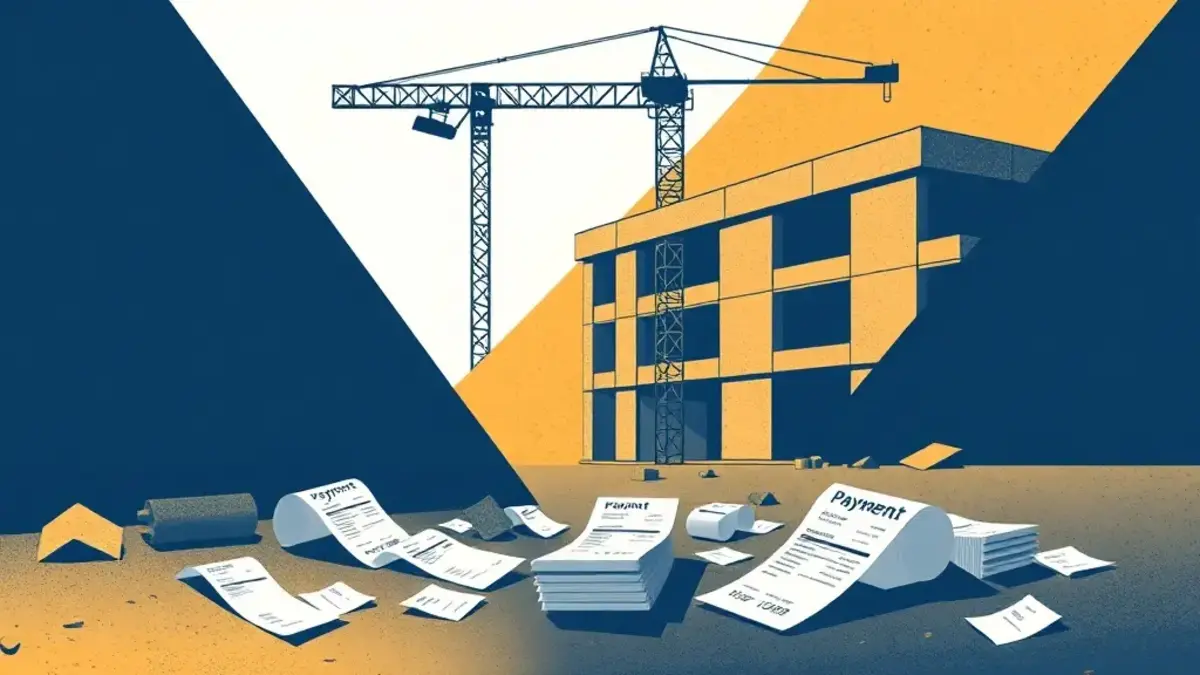
Imagine yourself in Mont-de-Marsan, dreaming of acquiring an apartment in a new development near Parc Jean Rameau. You sign a preliminary sale agreement, you pay a deposit (sums paid as security for performance of the contract), and you serenely await the signing of the authentic deed (final notarial deed). But then the developer uses your funds for other projects, and construction does not progress. What to do? This situation, unfortunately common, finds a clear answer in a 1980 decision of the Court of Cassation (supreme court in civil and criminal matters).
This decision, although dated, remains highly relevant, especially in developing areas like the Mimizan sector, where property developments are flourishing. It reminds us of a fundamental rule: in a sale in future state of completion (sale of a property to be constructed), the seller cannot receive a single penny before signing the final contract. But what exactly does this change for you, as a purchaser, owner, or professional?
In short, this case law (body of judicial decisions) protects the purchaser against risks of misappropriation. It establishes that if the seller collects funds prematurely and misuses them, they commit breach of trust (misappropriation of property held on deposit), and the purchaser can obtain compensation. An essential protection, often unknown, which we will analyse together.
The facts: a story as happens every day
Let's go back to 1972. Mr and Mrs Dupont, a couple of future purchasers, sign a preliminary sale agreement on 25 July for an apartment to be constructed. The seller is a civil property company (SCI, company holding property assets) whose manager, Mr Martin, appears dynamic. The Duponts, confident, make several payments even before signing the authentic deed of sale, as was sometimes done at the time.
But months pass, and the apartment does not materialise. Worried, the Duponts discover that Mr Martin did not deposit their payments into a special account, as required by law to secure the funds. Worse, he used this money for other business. The dream turns into a nightmare: no home, and their savings seem to have vanished. They decide to act and file a complaint for breach of trust against Mr Martin.
The judicial journey is fraught with obstacles. At first instance, the court (court of first instance) convicts Mr Martin criminally, but dismisses (rejects the claim) the Duponts' civil action (claim for damages) because, according to the judges, the preliminary agreement was a sham sale (fictitious contract) and there was novation (replacement of an old contract by a new one). On appeal, the court of appeal confirms this dismissal. But the Duponts do not give up and appeal to the Court of Cassation (appeal to the Court of Cassation to verify correct application of the law).
The Court of Cassation, in its judgment (decision of a court of appeal or the Court of Cassation) of 3 March 1980, quashes (annuls) the appeal court judgment. It considers that the lower court judges (judges of the courts and courts of appeal) did not respond to the Duponts' arguments, who maintained that Mr Martin had misappropriated the sums paid by not placing them in a special account. A twist that changes everything for aggrieved purchasers.
The court's reasoning — analysed
The reasoning of the judges of the Court of Cassation rests on two legal pillars. First, Article 8 of the Law of 3 January 1967 on sales of properties to be constructed. This article strictly prohibits the seller from requiring or accepting any payment, deposit, or bill of exchange (credit instrument) before signing the contract or before the debt becomes due. In other words, not a single euro should change hands too early. This rule aims to protect the purchaser against financial risks.
Secondly, Article 14 of the same law provides that if the seller misappropriates all or part of the sums paid, they are punished with the penalties for breach of trust (Article 408 of the Penal Code, which provides for imprisonment and fines). The Court of Cassation reminds here that this offence (violation of criminal law) can be invoked in the civil action, allowing the purchaser to claim damages (financial compensation for the harm suffered).
In this case, the court of appeal had considered that the preliminary agreement could be a sham sale and that there was novation, which would have released the seller from their obligations. But the Court of Cassation rejects this argument: it emphasises that, whatever the qualification of the contract, if the seller has received payments in violation of Article 8 and has misappropriated them, they incur liability. The lower court judges did not examine this crucial aspect, hence the quashing.
What few people know is that this decision confirms protective case law. It reminds that the 1967 law is mandatory (applies obligatorily) and that judges must scrupulously verify compliance with formalities. undefined, I have encountered cases where purchasers, in Mimizan for example, had paid funds for a second home, and the developer had used the money to finance another construction site. Thanks to this case law, we were able to succeed.
What this changes for you — concretely
If you are a purchaser of a property to be constructed, this decision is your shield. Concretely, you must not pay anything before signing the authentic deed at the notary's. However, be careful: after signing, payments are staggered according to progress of works, but they must be deposited into a special account, separate from the seller's other funds. If the seller asks you for a cheque from the preliminary agreement, refuse: it is illegal. How to react? Demand respect for the law, and if in doubt, consult a solicitor.
For landlord owners (who rent out a property), this decision has an indirect impact. If you invest in new build to rent it out, check that the developer respects these rules, because misappropriation could delay delivery, affecting your rental income. In Mont-de-Marsan, where the rental market is dynamic, a six-month delay on a 70 m² apartment can mean a loss of rent of €4,000 to €6,000 (according to local prices).
Property professionals (developers, agents) must be extra vigilant. Non-compliance exposes them to criminal sanctions (up to 5 years' imprisonment and €375,000 fine for breach of trust) and civil liability. For example, in Mimizan, a developer who misappropriates €50,000 of payments might have to repay this sum plus damages, not to mention loss of reputation. If you are in this situation, you must implement strict fund management procedures.
For co-owners, if your managing agent (manager of the co-ownership) is involved in a sale in future state of completion, ensure they know these rules. Misappropriation could harm the entire co-ownership. In short, this decision reinforces transaction security for all.
Four tips to avoid this type of dispute
- Check the special account: Before any payment, require from the seller the details of the special bank account where your funds will be deposited. This account must be opened in the purchaser's name or in co-ownership (temporary co-ownership), and its balance must correspond to the sums paid.
- Pay nothing before the authentic deed: Resist pressures to pay deposits or instalments at the preliminary agreement stage. The law prohibits it, and it is the first sign of a risk of misappropriation. Wait for signing at the notary's.
- Document everything: Keep all proof of payments (cheques, transfers, receipts) and exchanges with the seller. In a dispute, these documents will be crucial to establish violation of Article 8.
- Consult a professional: Before signing a preliminary agreement, have the contract reviewed by a specialised solicitor. They can identify risky clauses and advise you on compliance with payment rules.
In-depth analysis: related case law and developments
This decision fits into a consistent line of case law. For example, a Court of Cassation judgment of 15 January 1992 (No. 90-85.789) confirmed that the prohibition of premature payments applies even if the purchaser is in bad faith. Similarly, a decision of 10 July 2007 (No. 06-85.456) extended this protection to sales in future state of completion of social housing.
Courts tend to interpret the 1967 law strictly, to the benefit of the purchaser. A recent development concerns online platforms: some developers attempt to circumvent the rule by offering paid "reservations", but judges often equate them with prohibited payments. For the future, with the development of ecological construction and projects in Mont-de-Marsan or Mimizan, this case law remains an essential safeguard against abuses.
Checklist before acting
- If you are a purchaser: 1. Check that the seller does not request payment before the authentic deed. 2. Demand details of the special account. 3. Consult a solicitor if the contract seems unclear. 4. If misappropriation is suspected, file a complaint and initiate civil proceedings quickly.
- If you are a seller: 1. Scrupulously respect Article 8 of the 1967 law. 2. Open a special account from the first payment. 3. Maintain transparent accounting. 4. Train your teams on these legal obligations.
- Frequently asked questions: "Can I pay a deposit?" No, any payment before signing is prohibited. "What to do if I have already paid?" Contact a solicitor to assess recourse options. "Is the preliminary agreement secure?" Yes, but only if no payment is made before the final deed.
Besoin d'un conseil personnalisé ? Contactez Maître Zakine — première consultation 30 min à 45€.
Do you find yourself in a similar situation? A first 30-minute consultation with Maître Zakine (€45) can save you months of proceedings — and often much more. Book an appointment →
