Reference decision: cc • No. 94-19.548 • 1997-01-29 • View the decision →
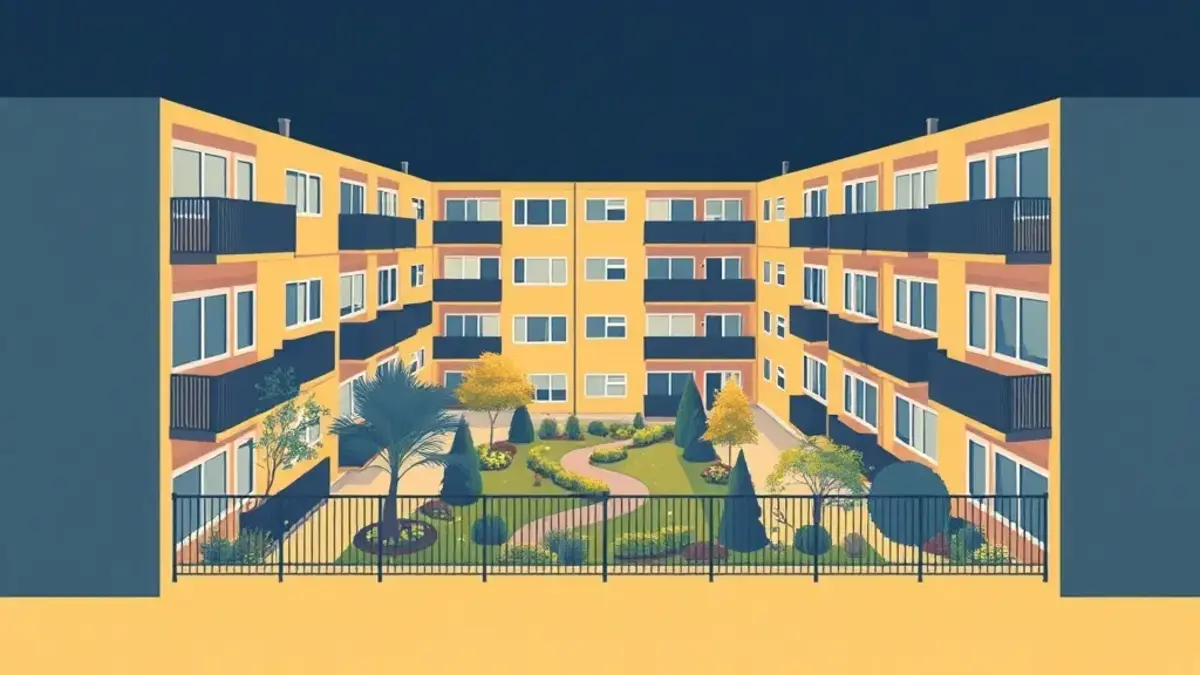
Imagine you own a flat in a residential building in Dax, with a shared garden. You have always believed this garden was yours alone, as you have been using it for years. But one day, another co-owner reminds you that this land is actually common to all. Who is right? This situation, more common than one might think, was settled by the judges in a decision that remains authoritative today.
In the jurisdiction of Mont-de-Marsan, whether in Saint-Paul-lès-Dax or the surrounding villages, old co-ownerships often present complex land peculiarities. Rights to build (authorisation to erect a building) or rights of enjoyment (right to use a property) can be separated from the ownership of the land itself. But what exactly does this change for your daily life as an owner?
The decision of the Court of Cassation of 29 January 1997 provides a clear answer: when you have only acquired a right to build and a right of enjoyment over a piece of land, that land remains a common part (an element belonging to all co-owners). And crucially, only the general meeting (meeting of all co-owners) can decide on a withdrawal from the co-ownership, not the judge. A lesson in law that avoids many neighbourhood disputes.
The facts: a story as it happens every day
The story begins with the Diocesan Association of Créteil, which had acquired a particular unit in a co-ownership. This unit did not include ownership of the land, but only a right to build (the possibility to build on it) and a right of enjoyment (the right to use it). For years, the Association used this land as if it belonged to them outright, perhaps thinking that their right of enjoyment was equivalent to exclusive ownership.
But the other co-owners, grouped in a syndicate, reminded them that the land was actually a common part. The Association then asked the general meeting of 18 January 1989 to allow them to withdraw from the co-ownership for this land, hoping thus to become the sole owner. The meeting refused. What to do in the face of this refusal? The Association chose the judicial route: they summoned the syndicate before the courts to have their withdrawal from the co-ownership pronounced and to annul the decision of the general meeting.
Imagine Mr Dupont, owner in Dax of a commercial premises with an adjoining car park that he believes is his, but which is listed in the co-ownership regulations as a common area. He finds himself in the same situation: a disagreement with his neighbours, a refusal from the meeting, and the temptation to go to court. The Diocesan Association followed this trajectory, hoping that the judges would rule in their favour. The judicial twists and turns led all the way to the Court of Cassation, the highest French court.
The court's reasoning — dissected
The magistrates of the Court of Cassation carefully examined the nature of the rights acquired by the Diocesan Association. They noted a crucial point: the Association had only acquired a unit consisting of a right to build and a right of enjoyment over the land, not ownership of the land itself. In other words, they could build on it and use it, but the soil still belonged to all the co-owners.
From this observation, the court deduced precisely that the land had remained a common part. This reasoning is based on the law of 10 July 1965, which governs the co-ownership of built properties. Article 28 of this law provides that the withdrawal of a common part from the co-ownership falls solely to the general meeting of co-owners. The judges rightly held that this article does not give the judge the power to rule on such a request. In short, if the general meeting refuses a withdrawal, you cannot circumvent this refusal by going to court.
The Court also examined the Association's argument, which criticised the judgment for dismissing their claim. It confirmed that the lower court had legally justified its decision, notably by verifying that the documents provided for in Article 11-3° of the decree of 17 March 1967 (co-ownership regulations and descriptive state of division) were properly respected. This decree imposes strict formalities for general meeting decisions, but here, there was no irregularity. However, be careful: this decision does not create a new rule; it confirms established case law. It reminds us that co-ownership is a collective regime where important decisions, such as the withdrawal of a common part, are taken democratically by the general meeting.
What this changes for you — concretely
If you are a co-owner, this decision has major implications. First, check what you have actually acquired: a title deed may mention a right to build or a right of enjoyment without including ownership of the land. undefined, I have come across cases where owners in Saint-Paul-lès-Dax had bought garages thinking they owned the land, when it was only usage rights. Result: disputes with the syndicate and legal costs that can exceed €5,000.
For a landlord, this means you cannot modify a common piece of land without the agreement of the general meeting. Imagine renting out a shop with a terrace that you believe is private, but which is actually common: your tenant could be prohibited from using it, and you would be responsible. If you are in this situation, you must consult the co-ownership regulations and the descriptive state of division before taking any action. The deadlines for convening a general meeting are at least 21 days, and decisions often require a reinforced majority.
For a purchaser, this decision highlights the importance of legal due diligence before purchase. A notary can help you analyse the rights attached to the unit. Concrete example: in Dax, the purchase of a flat with a garden can hide a common part, limiting your development plans. The costs: a preliminary consultation with a specialised lawyer costs about €200 to €300, much less than a lawsuit that can last 18 months and cost €10,000. How to react? By being vigilant and asking for written clarifications.
Four tips to avoid this type of dispute
- Read your deed of sale and the co-ownership regulations carefully: before buying or modifying a property, check whether you hold ownership of the land or only usage rights. These documents should specify the nature of the private and common parts.
- Consult a professional as soon as you have doubts: a real estate lawyer or a notary can analyse your rights in 30 minutes. In the jurisdiction of Mont-de-Marsan, I recommend doing this before any transaction, especially for old properties where situations are often complex.
- Participate actively in general meetings: if you wish to withdraw a common part, present your request at the general meeting with solid arguments. Prepare a file explaining the benefits for the co-ownership, as a refusal is frequent without justification.
- Avoid hasty legal actions: as this decision shows, taking a case to court for a withdrawal from co-ownership is useless if the general meeting has refused. Prioritise negotiation with the syndicate or mediation, which is cheaper and faster (3 to 6 months).
Deep dive: related case law and developments
This decision is part of consistent case law. Before 1997, similar judgments, such as that of the Paris Court of Appeal in 1990, had already affirmed that rights to build and rights of enjoyment do not transfer ownership of the land. What few people know is that this position has been reinforced by subsequent decisions, such as that of the Court of Cassation in 2005, which specified that even prolonged use does not create exclusive ownership over a common part.
The trend of the courts is clear: they protect the collective nature of co-ownership and respect the autonomy of the general meeting. This means that, for the future, owners will increasingly have to work with majority decisions. A notable evolution is the rise of mediation to resolve these disputes, avoiding lengthy procedures. In the jurisdiction of Mont-de-Marsan, the courts often encourage this approach, especially for disputes between neighbours in Dax or Saint-Paul-lès-Dax.
Checklist before acting
- If you think you own a piece of land outright: 1. Check your deed of sale and the co-ownership regulations. 2. Consult a lawyer for a legal analysis. 3. If it is a common part, present a request to the general meeting with a detailed project.
- If the general meeting has refused your withdrawal request: 1. Do not directly take the case to court. 2. Try mediation with the syndicate. 3. Review your project to make it more acceptable to the co-ownership. 4. In case of deadlock, consider legal action only for other grounds (e.g., procedural defect of the general meeting).
- Before this decision / After: Before, some believed they could circumvent the general meeting via the courts. After, it is clear that only the general meeting can decide on a withdrawal, strengthening co-ownership democracy.
Do you find yourself in a similar situation? A first 30-minute consultation with Maître Zakine (€45) can save you months of procedure — and often much more. Book an appointment →
Useful resources on cecile-zakine.fr
📌 Does this apply to your situation? Maître Cécile Zakine, lawyer in French real estate law, practises throughout France.
→ Avocat copropriété & ASL |
→ Browse all our legal articles
