Reference decision: cc • No. 74-91.389 • 1976-07-01 • View the decision →
Imagine: you are the owner in Delle, in the Territoire de Belfort, and for years you have been storing scrap metal on your land. One day, the administration demands a planning authorisation that you never had. Can you continue your activity? This question was asked by an owner before the Court of Cassation in 1976, and the answer set a precedent. The Court ruled: if the use of the land as a scrap metal deposit existed before the decree of 13 April 1962, and it was legal at the time, no new authorisation is necessary – provided the use is not modified.
This principle, simple as it seems, has concrete consequences for owners, tenants, and real estate professionals. It enshrines the right to continuity of prior uses, a key concept in planning law. But caution: this protection is not absolute. What exactly changes? And above all, how should you react if you are in this situation?
This article explains, step by step, the judges' reasoning, the practical implications, and the precautions to take. Whether you are the owner of a plot in Giromagny or a real estate professional, you will find keys to understand and act.
The facts: a story that happens every day
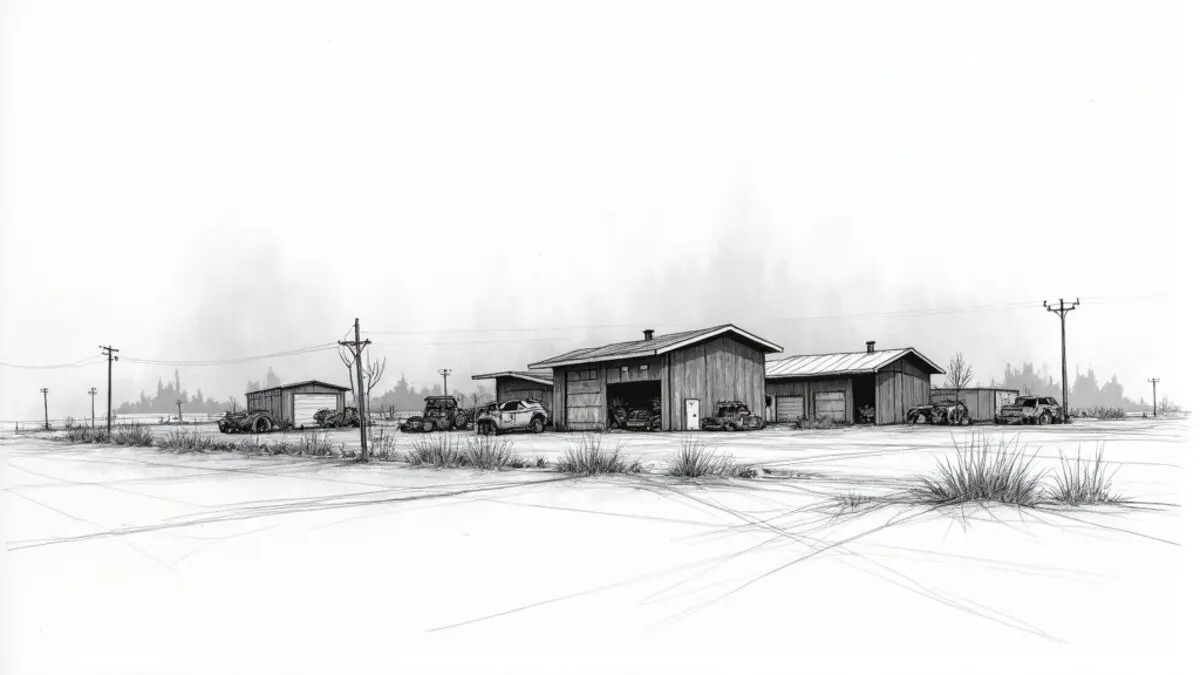
Mr X, an owner in Delle, had been operating a scrap metal deposit on his land since the 1950s. He stored metals, sorted them, and resold them to scrap dealers. Until 1962, no specific regulations governed this activity. But on 13 April 1962, Decree No. 62-461 (now Article R 440-1 of the Planning Code) made the use of land for scrap metal deposit installations subject to prior authorisation by the State. Mr X did not request this authorisation, considering that his activity predated the decree and was therefore acquired.
In 1972, the administration prosecuted him for an offence under the Planning Code, demanding the restoration of the site under penalty. The Belfort Criminal Court convicted him. Mr X appealed. The Besançon Court of Appeal upheld the judgment, holding that the decree applied to everyone, regardless of prior existence. Mr X then appealed to the Court of Cassation. He contested the retroactive application of the law, invoking in particular Article 4 of the Criminal Code (non-retroactivity of criminal laws).
The Court of Cassation, in its judgment of 1 July 1976, ruled in favour of Mr X. It quashed the Court of Appeal's judgment, holding that the 1962 decree did not require an authorisation for uses existing before its entry into force, provided they were lawful at the time. A twist that set a precedent: rights acquired by prior use are preserved, unless the use is extended or significantly modified.
The reasoning of the court — broken down
The Court of Cassation based its decision on a strict interpretation of the decree of 13 April 1962. This text, in Article R 440-1 of the Planning Code, made the use of land for scrap metal deposit installations subject to an authorisation issued in the name of the State. But, the Court held, no provision imposed such an authorisation on the owner who, before the decree came into force, had already used his land for these installations, provided he complied with the legal requirements then in force. In short, the new law does not apply to situations definitively constituted before its adoption.
This reasoning is based on the principle of non-retroactivity of laws (Article 4 of the Criminal Code, now Article 112-1 of the same code). In planning law, this principle is tempered by the concept of acquired rights: once an installation is authorised (or tolerated) and predates a new regulation, it may continue to operate without new authorisation, unless the regulation expressly provides otherwise. But caution: this protection only applies if the use is strictly identical. If the owner extends the area, increases the storage volume, or changes the nature of the deposit, this is a new or extended use, and authorisation becomes necessary.
The Court thus made a subtle distinction between lawful prior use (which benefits from an acquired right) and new, different, or extended use (which is subject to authorisation). What few people know is that this case law applies to other types of installations subject to planning authorisation, such as quarries or wind farms, provided their operation predated the regulations. The judges thus confirmed a protective trend for acquired rights, while leaving room for administrative control over modifications.
What this means for you — in practice
This decision has very practical implications for several profiles:
- For the owner-operator of a scrap metal deposit (or similar installation): if your activity existed before 13 April 1962, you do not need a planning authorisation, provided you have not modified the use. Example: in Giromagny, an owner who stored scrap metal since 1960 may continue without application, but if he doubles the storage area, he will need to seek authorisation.
- For the tenant: if you rent land already used as a scrap metal deposit before 1962, the acquired right benefits the owner. But if you extend the activity, you may be required to regularise. Caution: check your lease and the authorised use.
- For the buyer: when purchasing land with a scrap metal deposit, ask the seller to prove the prior use (photos, invoices, attestations). Without such evidence, the administration may require an authorisation. If you are in this situation, you should have a precise inventory carried out and keep all documents.
- For the neighbour or the municipality: if a pre-existing installation bothers you (nuisances, pollution), know that the acquired right does not prevent actions based on abnormal neighbourhood disturbances (Article 1240 of the Civil Code). Example: a scrap metal deposit in Delle that generates excessive noise can be challenged, even if it benefits from an acquired right.
undefined, I have come across cases where owners thought they were protected, but the administration considered that the activity had been extended. Disputes often turn on proof of the prior state. Timeframes: such a procedure can last 2 to 4 years, with legal and expert fees of €5,000 to €15,000. Prevention is better.
Four tips to avoid this type of dispute
- Gather evidence now: collect old aerial photos (available on the IGN website), scrap metal purchase invoices, neighbour testimonies, notarial deeds mentioning the use. These documents are essential to prove prior use.
- Never modify the use without consulting a lawyer: even a 10% increase may be considered an extension. Before changing the nature or area, seek legal advice.
- Check regulatory changes: planning law evolves. An acquired right may be challenged by a new law (e.g., Coastal Law, Mountain Law). Regularly check your municipality's Local Plan (PLU).
- If inspected, do not sign anything without a lawyer: administration agents may ask you to sign a report acknowledging the offence. You have the right to refuse to sign and to ask for time to consult a lawyer.
- Anticipate disputes with neighbours: even with an acquired right, you can be sued for nuisances. Install noise and dust reduction devices, and keep a log of complaints.
Further reading: related case law and developments
The 1976 decision is part of a protective line of acquired rights. For example, the Court of Cassation held, in a judgment of 28 November 1973 (No. 72-80.051), that a quarry operator opened before the 1970 law on classified installations could continue without authorisation. But caution: since the 2000s, administrative courts have tended to harden their stance. The Conseil d'État, in a judgment of 8 July 2005 (No. 265560), held that an acquired right does not dispense with compliance with new planning rules if the installation causes serious danger. In other words, the current trend is to limit acquired rights when the public interest (safety, environment) is at stake.
For scrap metal deposits, environmental regulations (ICPE) may take precedence over planning law. Since 2010, deposits over 1,000 m³ are subject to prefectural authorisation under the classified installations regime. What this means: even if you benefit from an acquired right in planning law, you must check whether your activity is subject to ICPE regulations. If so, you must regularise. The 1976 case law does not cover this aspect.
Summary and next steps
FAQ:
- Can I continue my scrap metal deposit without authorisation if I operated it before 1962? Yes, provided the use is identical. If you have extended or modified it, an authorisation is necessary.
- What should I do if the administration demands an authorisation? Consult a lawyer specialising in planning law. You will need to prove the prior use and the absence of modification. Meanwhile, do not sign any documents.
- What are the risks if I do not regularise? A fine of €1,200 to €300,000 (Article L480-4 of the Planning Code), restoration under penalty, or even imprisonment in case of repeat offences.
- Can I sell my land with the deposit? Yes, but you must inform the buyer of the existence of the acquired right and any limitations. Otherwise, you could be sued for latent defects.
- Does this case law apply to other types of installations? Yes, the principle is general for all land uses subject to planning authorisation, subject to legislative developments.
Besoin d'un conseil personnalisé ? Contactez Maître Zakine — première consultation 30 min à 45€.
Are you in a similar situation? A first 30-minute consultation with Maître Zakine (€45) can save you months of proceedings — and often much more. Book an appointment →
📌 Does this apply to your situation? Maître Cécile Zakine, French real estate lawyer, practises throughout France.
servitude-droit-passage-avocat/" rel="dofollow">→ Avocat servitudes & foncier |
→ Browse all our legal articles
