Reference decision: cc • No. 70-13.190 • 1971-12-08 • View the decision →
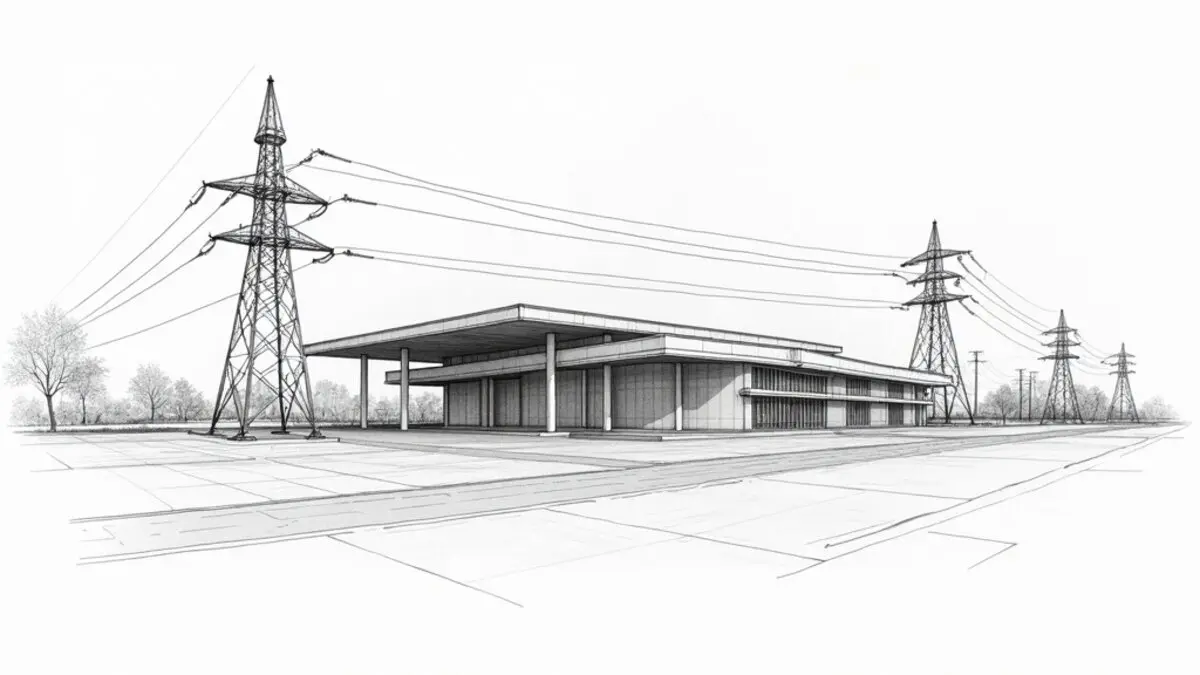
Imagine: you are the owner of a plot of land in Villeneuve-d'Ascq, in the Cousinerie district. You bought it to build your family home. One day, EDF installs a high-voltage line right above it. Your building permit is refused: the land is now in the safety corridor. Your dream collapses, and your land is almost worthless. What can you do? This question was put to the Court of Cassation by an owner in 1971. And the answer is clear: yes, compensation is possible, even if EDF has committed no fault.
But what exactly does this change? Many owners are unaware that they can claim compensation for the depreciation of their land, not just for visible material damage. This decision of the Court of Cassation is a cornerstone of the law on compensation for easements of public utility. It states that the concessionaire (EDF) must repair the damage caused by the installation and operation of its network, even if the owner retains ownership of the land.
In short, if you are in this situation, you are not without remedy. But beware: the conditions are strict. You must prove that the damage is certain, current and direct. And that is not always simple. In this article, we will dissect this historic decision, explain how it applies concretely in Lille, Villeneuve-d'Ascq and elsewhere, and give you advice to avoid or manage this type of dispute.
The facts: a story that happens every day
Mr X, an owner in Lille, owns a building plot in the Wazemmes district. In 1967, he puts his land up for sale to build several houses. A promise of sale is accepted by a developer. But in the meantime, EDF installs a high-voltage line that crosses the land. The developer applies for a building permit, which is refused: the land is in the safety corridor of the power lines (minimum mandatory distance). The sale is cancelled.
Mr X sues EDF for damages. He argues that the power line has made his land unbuildable, and therefore he has lost its market value (the market value of the property). EDF responds that the law of 15 June 1906 (article 12) does not allow the concessionaire to dispossess the owner, and that the owner retains the right to build. But in practice, this right is illusory if construction is prohibited for safety reasons.
The case goes up to the Court of Cassation. The judges must decide: must the concessionaire compensate for the loss of value of land linked to the impossibility of building, even if the owner remains the owner? At first instance, Mr X wins. The Douai Court of Appeal confirms. EDF appeals to the Court of Cassation, but the Court of Cassation dismisses the appeal. It considers that the damage is certain, current and direct: the promise of sale was cancelled because of the refusal of the permit, and a new intercommunal town planning plan also excluded any construction on this land.
The reasoning of the court — dissected
The Court of Cassation relies on article 12 of the law of 15 June 1906 on easements of public utility in matters of electricity. This article provides that the concessionaire (EDF) must repair the damage caused by the installation and operation of its network. But it also specifies that the concessionaire cannot dispossess the owner. In other words, the owner stays at home, but can claim compensation for the damage suffered.
The difficulty is to prove the prejudice (the damage suffered). Here, the Court retains two concrete elements: first, the promise of sale was cancelled because the building permit was refused due to the line. Second, the new town planning plan (under study) also prohibited any construction. Therefore, in the future, the land cannot be built on. The loss of market value is therefore certain and current, not merely hypothetical.
What few people know is that the Court of Cassation also specified that the refusal of the building permit was "manifestly illegal" (because it was based on a town planning plan not yet approved). But that did not change the outcome: the impossibility of building was real. The judgment confirms that the compensation must cover the depreciation of the market value of the land, calculated by comparing the value before and after the installation of the line.
In summary, the reasoning is simple: if the installation of a power line prevents any future construction, the owner suffers certain, current and direct damage. The concessionaire must repair it, even without fault.
What this changes for you — concretely
If you are the owner of land crossed by a power line (high voltage, medium voltage), you can claim compensation for the loss of value of your land, even if you have not lost ownership. The compensation covers the difference between the value of the land free of any easement and its value after installation.
For example, a building plot in Villeneuve-d'Ascq, Madeleine district, was worth €200,000 before the line. Afterwards, it is worth only €50,000 because it is unbuildable. The compensation can reach €150,000. But beware: you must prove that the impossibility of building is definitive. If construction is possible under certain conditions (safety distance), the compensation will be lower.
If you are a buyer, always check for electrical easements before buying. Ask for a certificate of urban planning (official document indicating applicable planning rules). If the land is in a line corridor, negotiate the price.
undefined, I have come across cases where owners in Lille (rue du Faubourg des Postes) have obtained several tens of thousands of euros in compensation. But the procedure can take 2 to 3 years, and often requires a judicial expert (an expert appointed by the court) to assess the damage.
Four tips to avoid this type of dispute
- Check easements before buying: Consult the local town planning plan (PLU) of your municipality (Lille, Villeneuve-d'Ascq, etc.) and ask for a certificate of urban planning. Identify nearby power lines.
- Negotiate an amicable compensation: If EDF installs a line on your land, do not sign anything without advice. Propose a transaction (amicable agreement) with EDF for a lump sum compensation. In general, EDF offers scales, but they are often undervalued.
- Keep all evidence: Before/after photos, correspondence with EDF, refusal of building permit, cancelled promises of sale. Any document showing that the land was buildable before the line.
- Act quickly: The limitation period (time to sue) is 5 years from the installation of the line (article 2224 of the Civil Code). Do not delay.
Besoin d'un conseil personnalisé ? Contactez Maître Zakine — première consultation 30 min à 45€.
Further reading: related case law and developments
This 1971 decision has been confirmed several times. For example, in a judgment of the Court of Cassation of 6 May 1980 (No. 78-15.123), the judges granted compensation for the loss of value of agricultural land crossed by a high-voltage line, even though the owner continued to farm. The loss of value was linked to the hindrance to farming.
More recently, the Court of Cassation extended compensation to disturbance of enjoyment (noise, visual pollution) in a judgment of 12 July 2007 (No. 06-15.254). But beware: the current trend is to limit compensation to material damage only, not aesthetic prejudice. How to react? You must always prove concrete economic damage.
For the future, with the development of renewable energies (wind turbines, solar panels), new easements are appearing. The case law on power lines serves as a model. If you are affected by an easement for cable passage, the same principles apply.
Key points to remember
FAQ
Q: Can I prevent EDF from installing a line on my land?
A: No, it is an easement of public utility. But you are entitled to compensation.
Q: How long to obtain compensation?
A: Amicably, 6 months to 1 year. In court, 2 to 4 years. Amounts vary from €5,000 to several hundred thousand euros.
Q: What to do if my building permit is refused because of a line?
A: Consult a lawyer specialised in property law. You can challenge the refusal (action for excess of power before the administrative court) and/or claim compensation from EDF.
Q: Can the new owner also claim compensation?
A: Yes, if the damage predates the sale, the compensation can be transferred. But you must check the clauses of the preliminary sale agreement.
Q: Is there an official scale?
A: No, each case is unique. The compensation is calculated by a judicial or amicable expert.
Are you in a similar situation? A first 30-minute consultation with Maître Zakine (€45) can save you months of procedure — and often much more. Book an appointment →
📌 Does this apply to your situation? Maître Cécile Zakine, French real estate lawyer, practises throughout France.
servitude-droit-passage-avocat/" rel="dofollow">→ Avocat servitudes & foncier |
→ Browse all our legal articles
