Reference decision : cc • N° 69-11.909 • 1971-01-14 • View the decision →
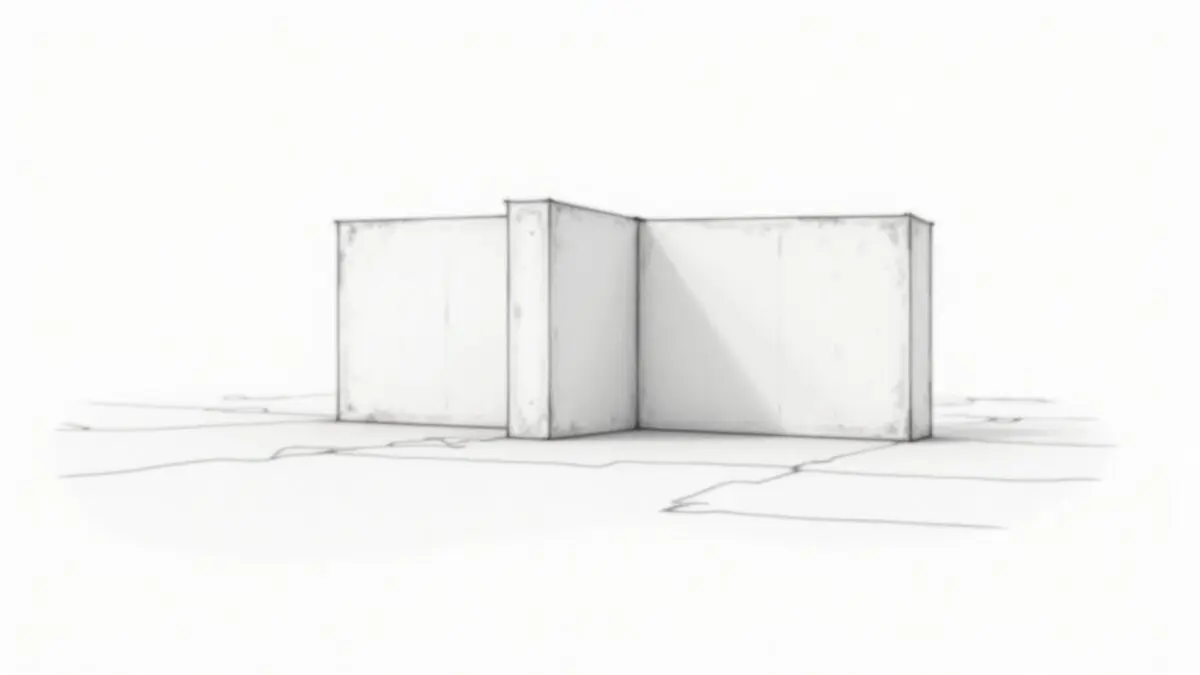
Imagine: you own a villa in Valbonne and decide to build a garage on your land. Your neighbour, owner of an old Provençal farmhouse, tells you that your new building touches the wall separating your two properties. He demands that you pay half the cost of this wall by acquiring joint ownership (mitoyenneté – the shared right of ownership over a dividing wall). Have you ever wondered whether you are really obliged to pay for a wall you do not use? This is the question the French Supreme Court (Cour de cassation) decided in 1971, in a ruling that remains a reference for all owners, particularly within the jurisdiction of Grasse.
This decision, handed down in a case between an individual and the municipality of Saint-Laurent-de-la-Salanque, answers clearly: if your construction neither rests on nor encroaches upon the party wall, and you derive no benefit from it, you are not required to acquire joint ownership. But be careful: judges scrutinise the facts closely. So how can you be sure that your building project does not expose you to a forced purchase of the wall? And what should you do if your neighbour demands payment for half the wall? In this article, we will break down this decision, its practical consequences, and give you advice to avoid disputes, with concrete examples in the Alpes-Maritimes.
What few people know is that joint ownership is often presumed for dividing walls, but this presumption can be rebutted. The 1971 ruling perfectly illustrates this nuance. Follow the guide!
The Facts: a story like many others
In this case, an individual, Mr X, owned a plot of land in Saint-Laurent-de-la-Salanque, in the Pyrénées-Orientales. His land was separated from that of the municipality by a wall. The municipality built a building on its plot. Mr X considered that this building rested on the dividing wall or, at least, used it. He therefore sued the municipality to force it to acquire joint ownership of the wall, i.e., to pay him half its value, as provided for in article 661 of the Civil Code (which requires anyone who uses a party wall to acquire the neighbour's share).
The municipality, for its part, argued that its building was completely independent: it neither rested on nor encroached upon the wall, and it had made no profitable use of it. The lower courts (first instance court and then court of appeal) ruled in favour of the municipality, finding that the building did not touch the wall and that the municipality had derived no benefit from it. Mr X then appealed to the Supreme Court, arguing that joint ownership was presumed and that the municipality was obliged to acquire it as soon as the wall was a party wall.
The Supreme Court dismissed the appeal, upholding the lower courts' decision. It held that, since the building neither rested on nor encroached upon the dividing wall and the owner had made no profitable use of it, he was not required to acquire joint ownership. In short, the presumption of joint ownership is not enough to create an obligation to purchase: the neighbour must have actually used the wall to his benefit.
In other words, just because a wall is a party wall does not mean you must necessarily pay your neighbour if you build next to it. The actual use of the wall is decisive. This case shows how a dispute can arise from a simple construction, and how crucial it is to prove the use of the wall.
The Reasoning of the Court — Deconstructed
To understand this decision, we must go back to the texts. Article 661 of the Civil Code provides that "anyone who wishes to build a building along a party wall is required to acquire joint ownership of it." But this article assumes that the wall is already a party wall, i.e., owned half by each owner. In this case, the question was whether the municipality had to acquire joint ownership of a wall that was not yet a party wall — or rather, was presumed to be a party wall under article 653 of the Civil Code (according to which any wall separating two buildings is presumed to be a party wall, unless proven otherwise).
The lower courts found that the municipality's building neither rested on nor encroached upon the wall. In other words, it did not rely on the wall for its structure and did not encroach upon the thickness of the wall. Moreover, the municipality had made no profitable use of this wall: it had not used it as support, nor to lean a construction against it, nor to fix pipes or fences. Consequently, the judges considered that the municipality was not required to acquire joint ownership, because the obligation to purchase is conditional on effective use of the wall.
The Supreme Court approved this reasoning. It held that the lower courts had sovereignly assessed the facts and that their decision was legally justified. This solution is consistent: it has been confirmed by subsequent rulings (e.g., Civ. 3e, 12 June 1991, No. 89-20.502). However, be careful: if the owner uses the wall, even partially (e.g., by fixing a gutter or using it as a boundary for a paving), the obligation to acquire joint ownership may arise. undefined, I have seen cases where a simple terrace resting on the neighbour's wall was enough to trigger the purchase obligation.
In summary, the 1971 decision does not create a new rule, but it recalls an important principle: joint ownership is not acquired automatically; it depends on the actual use of the wall. The lower courts play a central role in assessing the facts, and their decision is rarely overturned by the Supreme Court.
What This Means for You — Practically
This decision has practical implications for all owners, whether private individuals, developers, or municipalities. Here is what you need to remember:
For the owner who builds: if you build a building along a dividing wall with your neighbour, you are not automatically obliged to buy half of that wall. You will only be required to do so if your construction actually uses the wall (support, encroachment, profitable use). Example: in Le Cannet, an owner builds an underground swimming pool 50 cm from the party wall. No support on the wall, no use. He does not have to pay for joint ownership. On the other hand, if he fixes a fence to the wall, the obligation arises.
For the owner of the wall: if your neighbour builds without using your wall, you cannot demand payment for joint ownership. But you can always offer to sell joint ownership voluntarily, by contract. In this case, the price is freely negotiated. If your neighbour refuses, you cannot force him.
For the purchaser of land: before buying, check whether existing constructions use party walls. If so, the previous owner should have acquired joint ownership; failing that, you could be jointly liable for that obligation. A check by a chartered surveyor (cost: around €500 to €1,000) can avoid surprises.
For co-ownerships and developers: in residential complexes, dividing walls between units or between the co-ownership and the neighbour may or may not be party walls. Before building an extension or car park, check the classification of the wall. An error can lead to unexpected costs of several thousand euros.
In figures: acquiring joint ownership of a wall usually costs half its value, estimated per linear metre. For a wall 10 metres long, the value can be €2,000 to €5,000 depending on materials. Without a purchase obligation, you save this amount.
Four Tips to Avoid This Type of Dispute
- Have a condition survey carried out before any works: before building, have a bailiff (huissier de justice) record the condition of the dividing wall and the absence of support or encroachment (cost: approximately €150-300). This provides solid evidence in case of a dispute.
- Check the cadastral plan and title deed: verify whether the wall is mentioned as a party wall or private. If the title is silent, the presumption of joint ownership applies, but it can be rebutted by contrary evidence (e.g., the wall was built by one owner alone).
- Negotiate a party wall agreement: if you wish to use the wall, it is better to reach a written agreement with the neighbour, fixing the price and maintenance terms. This avoids lawsuits.
- In case of dispute, prefer mediation: before going to court, mediation (cost: €200-500) can resolve the conflict amicably. The courts of Grasse and Cannes offer conventional mediation.
Besoin d'un conseil personnalisé ? Contactez Maître Zakine — première consultation 30 min à 45€.
Further Reading: Related Case Law and Developments
The solution of 1971 has been reaffirmed in several subsequent rulings. For example, the Supreme Court (3e Civ., 12 June 1991, No. 89-20.502) held that an owner who builds without encroaching on or resting on the dividing wall is not required to acquire joint ownership. Similarly, a ruling of 10 December 2003 (No. 02-13.248) specifies that the profitable use must be effective, not merely potential.
However, be careful: recent case law tends to interpret the concept of profitable use broadly. Thus, the mere act of planting shrubs against the wall may be considered use, if it brings an advantage (shade, protection). Within the jurisdiction of the Aix-en-Provence Court of Appeal, on which the Grasse court depends, judges are attentive to the concrete use of the wall. It is therefore advisable not to take risks: in case of doubt, acquire joint ownership or have the absence of use recorded.
Legislative developments have not modified the Civil Code on this point, but notarial practice has evolved: nowadays, deeds of sale often mention the joint ownership of walls to avoid ambiguities.
Frequently Asked Questions
Q: Must I acquire joint ownership if I build a wall against my neighbour's wall?
R: Yes, if your construction rests on or uses the wall. Otherwise, no. But it is prudent to have it recorded by a bailiff.
Q: What should I do if my neighbour demands payment for joint ownership even though my building does not use the wall?
R: Point to the 1971 decision. If he persists, apply to the judicial court (summary proceedings possible).
Q: Can I voluntarily acquire joint ownership even without using the wall?
R: Yes, by contract with the neighbour. The price is free. This can secure neighbourly relations.
Q: What is the time limit to act if my neighbour builds without acquiring joint ownership?
R: The legal action is time-barred after 5 years (article 2224 of the Civil Code) from the construction. After this period, you can no longer demand acquisition.
Q: How can I prove that my wall is a party wall?
R: By the title deed, cadastral plan, or presumptions (e.g., the wall was built at joint expense). In the absence of proof, the presumption of joint ownership applies.
Are you in a similar situation? An initial 30-minute consultation with Maître Zakine (€45) can save you months of proceedings — and often much more. Book an appointment →
📌 Does this apply to your situation? Maître Cécile Zakine, French real estate lawyer, practises throughout France.
→ Avocat servitudes & foncier |
→ Browse all our legal articles
