Reference Decision: cc • No. 91-11.311 • 1992-06-30 • View the decision →
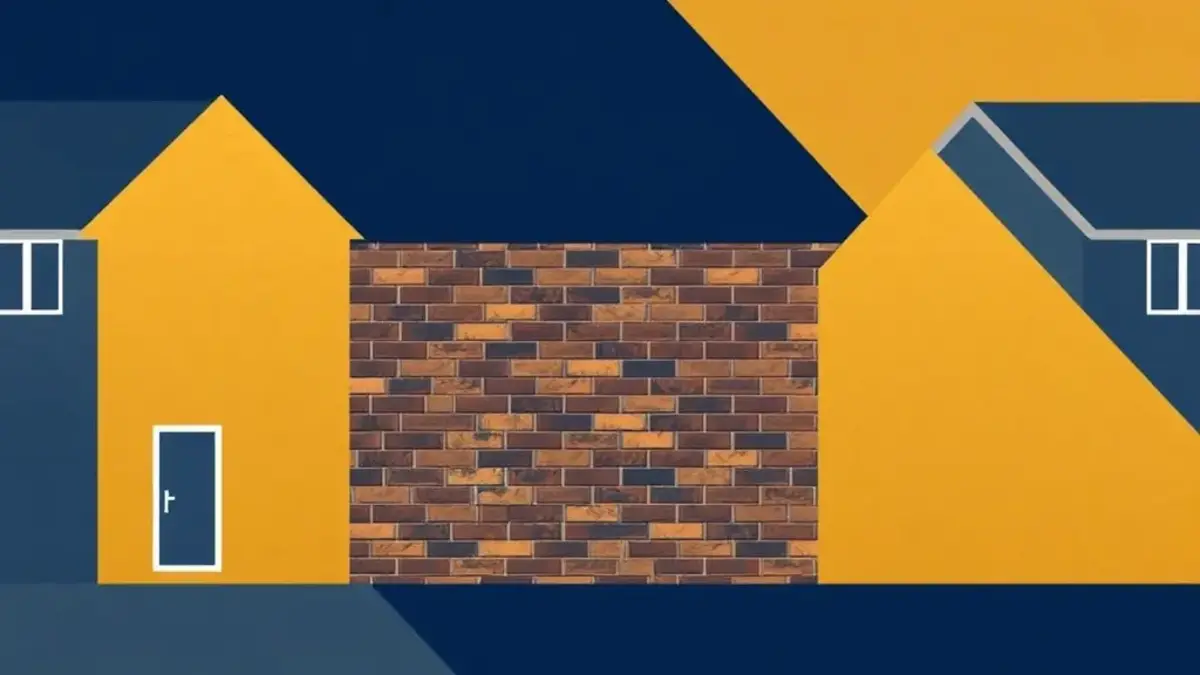
Imagine you own a beautiful bastide (Provençal farmhouse) in Grasse, with a view of the fragrant hills. Your neighbour, without consulting you, builds a boundary wall exactly on the line between your two plots of land. A few months later, they demand you pay half the construction cost, arguing that this wall is now a party wall (i.e., it belongs to both owners). What should you do? Pay under duress or resist?
This situation, much more common than one might think in our region where plots are often sloping and boundaries sometimes unclear, raises a fundamental question: can you force your neighbour into co-ownership of a wall built without their agreement? The answer, given by the Court of Cassation in a landmark ruling, is clear and protective.
But what exactly does this change for you, a property owner in Antibes, a tenant in Grasse, or a real estate professional? This is what we will break down together, starting with a true story that could be yours.
The Facts: A Story as Common as Any
Mr X, owner of a plot of land in Grasse in the Saint-Jacques district, decides to build a 2-metre-high separation wall exactly on the boundary of his property. He does not consult his neighbour, Mr Y, owner of the adjacent plot, believing it is his absolute right. The works last three weeks and cost approximately €8,000.
A few months after completion of the works, Mr X serves a formal demand on Mr Y. He demands €4,000, corresponding to half the construction cost. His argument? This wall, built on the separating boundary, would from the outset have a 'vocation for party wall status' (i.e., it would be intended to belong to both owners). According to him, Mr Y should therefore acquire this party wall status by paying his share.
Mr Y, surprised and displeased, categorically refuses. He was never consulted, does not need this wall which partially blocks his view, and above all, he believes he cannot be forced to become a co-owner of a construction he did not request. The conflict escalates, neighbourly relations deteriorate rapidly.
Mr X then brings the matter before the Grasse Judicial Court. He demands not only payment of the €4,000 but also a judicial declaration establishing the wall's party wall status. At first instance, the judges, receptive to the argument of the 'vocation for party wall status', partially rule in favour of Mr X. But Mr Y appeals, and it is here that the case takes a decisive turn.
The Aix-en-Provence Court of Appeal, and finally the Court of Cassation, will settle this dispute by recalling a fundamental principle of property law. A principle which, as we shall see, protects every property owner against arbitrary impositions.
The Court's Reasoning — Analysed
The Court of Cassation, in its ruling of 30 June 1992, forcefully recalled an essential principle: "The builder of a separating wall cannot compel their neighbour to acquire its party wall status." In other words, the person who builds a wall on the boundary of their land cannot force their neighbour to become a co-owner, even if this wall is erected exactly on the separating line.
This reasoning is based on several legal foundations. First, Article 653 of the French Civil Code which governs the party wall status of walls and ditches. This article provides that party wall status can be acquired in different ways: by title (e.g., a notarial deed), by prescription (prolonged use), or by 'destination du père de famille' (when the wall shows clear signs of being intended for party use). But in all cases, the express or tacit consent of the neighbour is required.
In short, the Court considered that the mere construction of a wall on the boundary does not automatically create a right to claim a debt (a 'créance' is a sum of money owed by one person to another) against the neighbour. Mr X could not, by his sole initiative, create an obligation for Mr Y to pay for half the wall. The 'vocation for party wall status' invoked by Mr X is not sufficient to compel the neighbour to acquire this party wall status.
The magistrates analysed the arguments of both parties. Mr X argued that his wall, being on the boundary, served both properties and therefore naturally had a vocation to be a party wall. Mr Y responded that he had never consented to this construction, did not need it, and that he could not be forced to finance something he did not request.
The Court followed Mr Y's argument. It considered that forcing a neighbour to acquire party wall status would amount to imposing a financial burden on them without their agreement, which would be contrary to the principle of freedom of property. This is not an evolution in case law, but rather a solemn confirmation of an already established principle, which protects property owners against abuse.
Be careful, however: this does not mean the neighbour can never become a co-owner. They can always choose to do so, voluntarily, by paying their share. But it must be their choice, not an obligation imposed by the builder.
What This Means for You — Practically
If you are a landlord in Antibes, this decision protects you. Imagine you rent out a villa in the Garoupe district, and your neighbour builds a party wall without your agreement. You will not have to bear half the costs if you did not consent to this construction. Your tenant cannot be held liable either, as only the owner is concerned by party wall status.
If you are purchasing a property, always check the state of the boundaries. undefined, I have encountered cases where buyers discovered after purchase that their neighbour was demanding payment for half a wall built years earlier. Thanks to this case law, you now know that you can refuse, unless a notarial deed or prescription has established the party wall status.
For co-owners (in a 'copropriété'), the question is different. If the wall separates the co-ownership building from a neighbouring plot, it is for the co-owners' association as a whole to decide whether to acquire the party wall status. But here again, the neighbour cannot impose it. A concrete example: a co-ownership building in Grasse city centre shares a wall with a private property. If the private owner builds a new wall on the boundary, they cannot force the co-ownership to acquire its party wall status.
Practically, the amounts involved are not negligible. A standard boundary wall in our region can cost between €150 and €300 per linear metre, depending on materials. For a 20-metre wall, one easily reaches €4,000 to €6,000. Half of this sum, which your neighbour might claim from you, therefore represents a significant budget.
If you find yourself in this situation, you must first check if there is a written agreement (notarial deed, convention) establishing the party wall status. Then, consult a lawyer lawyer before paying anything. The time limits for contesting such a claim are generally 5 years from the date of construction, but it is better to act quickly.
Four Tips to Avoid This Type of Dispute
- Before any construction on the boundary, discuss with your neighbour and establish a written agreement, even a simple one, specifying who pays what and whether the wall will be a party wall or private. An exchange of emails or a recorded delivery letter may suffice, but a notarial deed is safer.
- Have a boundary survey of your land carried out by a chartered surveyor ('géomètre-expert'). This costs between €1,000 and €2,000 in the Alpes-Maritimes, but it avoids disputes over boundaries. Knowing exactly where the boundary lies is essential to determine if the wall is indeed on your property or straddling both.
- Keep carefully all documents relating to your boundaries: invoices, plans, agreements with neighbours, before/after photos. In 10 years, this evidence could be invaluable to you.
- If your neighbour builds without consulting you, react immediately by sending a recorded delivery letter with proof of receipt to inform them of your disagreement with this construction and your refusal to acquire its party wall status. Do not let months pass, as prolonged silence could be interpreted as tacit consent.
Further Insight: Related Case Law and Developments
This 1992 decision is part of a consistent line of case law. Already in 1985, the Court of Cassation had recalled in a ruling (No. 83-16.589) that "party wall status is not presumed". It must be proven by the person invoking it. This position has been confirmed on several occasions, notably in 2007 (ruling No. 06-11.253).
What few people know is that some earlier decisions had sometimes left room for doubt. In the 1970s, some courts had considered that construction on the boundary created a presumption of party wall status. But the Court of Cassation put an end to this uncertainty, clearly affirming that only the neighbour's consent, express or tacit, can create party wall status.
The trend in the courts today is very protective of property owners who have not consented to the construction. Judges scrupulously verify the existence of an agreement, and in its absence, they systematically dismiss claims for forced acquisition of party wall status.
For the future, this case law seems firmly established. It corresponds to the general evolution of property law, which tends to strengthen the freedom of the property owner and limit impositions from third parties. However, with increasing urban density in cities like Antibes or Grasse, party wall disputes are likely to multiply, making this case law more valuable than ever.
In Practice: What to Do
1. Your neighbour builds a wall on the boundary without consulting you: Send them a recorded delivery letter immediately to inform them of your disagreement with this construction and your refusal to acquire its party wall status. Keep a copy of this letter.
2. Your neighbour demands you pay half the cost of a wall they built: Do not pay immediately. First check if there is a written agreement. Consult a lawyer specialising in property law to assess your position.
3. You wish to build a party wall with your neighbour: Propose a written agreement specifying the sharing of costs, future maintenance, and have it signed by both parties. Even better, have a notarial deed drawn up.
4. You are buying a property with boundary walls: Ask the seller for all documents relating to party wall status. Have your notary check if any agreements exist with the neighbours.
5. A party wall dispute is already underway: Gather all your evidence (photos, email exchanges, invoices) and consult without delay. Proceedings can last 1 to 2 years, but prior mediation can often settle the dispute more quickly.
Do you find yourself in a similar situation? A first 30-minute consultation with Maître Zakine (€45) can save you months of proceedings — and often much more. Book an appointment →
Useful resources on cecile-zakine.fr
- servitude-droit-passage-avocat/" target="_blank" rel="noopener">boundary and party wall disputes in France
- French condominium law lawyer
- French planning permission lawyer
