Reference decision: cc • No. 73-90.897 • 1974-05-16 • View the decision →
Picture the scene: in Menton, an owner decides to extend his storage shed without applying for a new building permit. He thinks his original 1963 authorisation covers everything. But a neighbour, disturbed by the encroachment, takes the matter to court. Result: years of proceedings, legal fees, and the obligation to restore the premises to their original state. A situation every owner dreads, but which rests on a simple question: when is a new building permit required? The decision of the French Supreme Court of 16 May 1974 (No. 73-90.897) provides a clear answer, still relevant today.
The facts: a story like many that happen every day
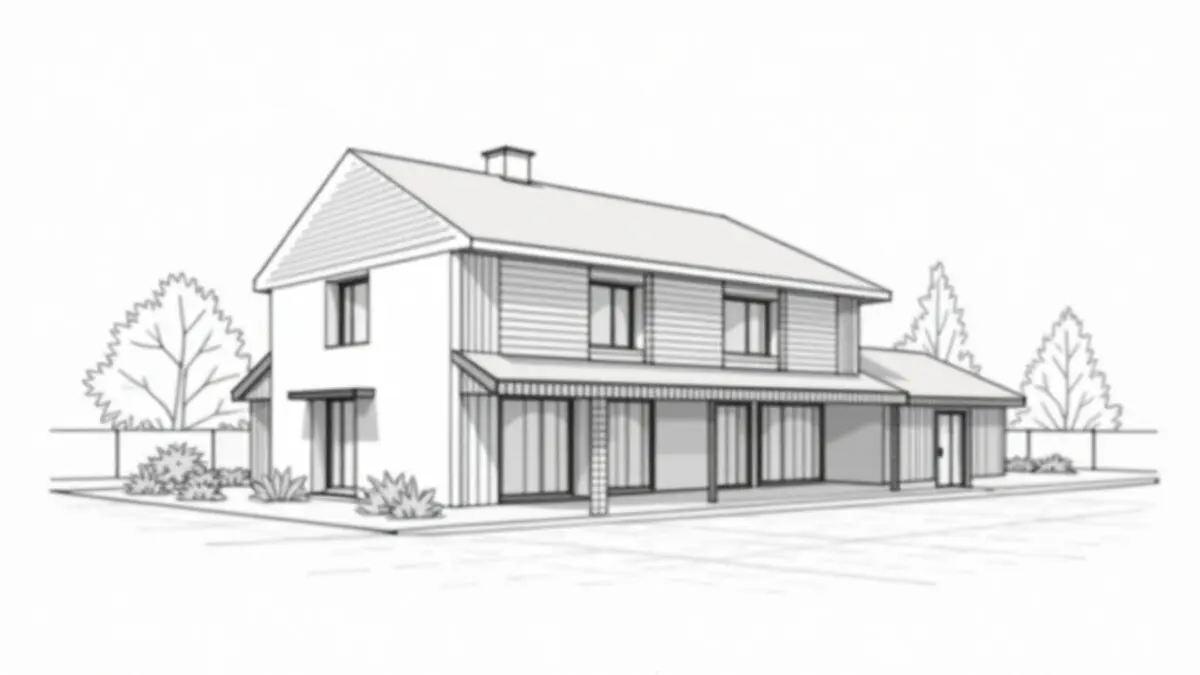
Mr X, an owner in Menton, obtained a regular building permit in 1963 to erect a shed for storage. Years pass, and Mr X decides to modify the building: he extends it, changes its use, or carries out substantial works. The problem? He does not apply for a new building permit. A neighbour, considering that these modifications infringe his rights (view, sunlight, or simply respect for planning rules), sues him. The Tribunal de grande instance of Nice, at first instance, orders Mr X to demolish the unlawful constructions under a penalty payment (i.e., subject to paying a sum of money for each day of delay). Mr X appeals. The Court of Appeal partially confirms: it orders the premises to be brought into conformity with the original permit, within two months. But Mr X appeals to the Supreme Court. He argues that the modifications are not substantial and that his original permit covers them. The Supreme Court dismisses his appeal. It upholds the appeal judgment: as soon as the works undertaken exceed what was authorised by the building permit, they require a new permit. In this case, the works were substantial (extension, change of use), so a new permit was mandatory.
The reasoning of the court — broken down
The Supreme Court relies on Article 1240 of the Civil Code (formerly 1382), which requires compensation for damage caused by one's fault. But above all, it recalls the fundamental principle of planning law: every building must comply with the building permit issued. If the works substantially modify the original project (surface area, volume, use, location), a new permit is necessary. In short, a building permit is not a blank cheque to build anything and everything. The trial judges (the magistrates who hear the case at first instance and on appeal) found that the modifications were substantial: the shed had been extended, and its use (storage) may have changed. Therefore, the construction was unlawful. The Court of Appeal could therefore order demolition or restoration to compliance, under a penalty payment. What few people know: the Supreme Court does not re-examine the facts. It only checks that the trial judges correctly applied the law. Here, they properly justified their decision by noting the substantial nature of the modifications. The solution is consistent with settled case law: since this decision, the courts require a new permit for any notable modification of an authorised project.
What this means for you — concretely
This decision has immediate practical implications for several profiles:
- Landlord owner: If you rent out premises and are considering works (raising, extension), do not forget that the original permit does not cover everything. For example, in Nice, an owner who adds a floor to a rental building without a new permit risks a demolition action by the co-ownership syndicate or neighbours. Costs can reach several tens of thousands of euros, not to mention the penalty payment which can climb to €100 per day.
- Property buyer: Before buying, check the compliance of constructions with the permits issued. If the seller carried out works without a permit, you could inherit the obligation to restore compliance. Consult a notary or lawyer to examine the authorisations.
- Co-owner: If a co-ownership neighbour modifies his private parts (enlargement of a window, creation of a terrace) without respecting the permit, you can take action. Case law allows obtaining demolition under penalty payment. undefined, I have encountered cases where co-owners had to wait several years before obtaining satisfaction, but the penalty payment eventually forced the neighbour to comply.
However, be careful: demolition is not automatic. The judge assesses proportionality. If the works are minor, he may award damages rather than demolition. But for substantial modifications, restoration is the rule.
Four tips to avoid this type of dispute
- 1. Check your permit before any works. If the original project dates from 1963 (as in the case), planning rules have evolved. A new permit is often necessary for any modification of floor area, height, or use. Consult the planning department of your town hall.
- 2. Always formalise modifications with a amending permit. Even for apparently minor changes, an amending permit protects you. The cost of an application (a few hundred euros for an architect) is negligible compared to court proceedings.
- 3. Document the state of the premises before works. Take photos, keep plans and the original permit. This will allow you to prove compliance in case of a challenge.
- 4. If you are a neighbour and notice unlawful construction, act quickly. The demolition action is time-barred after 10 years from completion of the works (Article L. 480-13 of the Planning Code). Do not wait: the longer time passes, the harder it will be to obtain demolition.
Further reading: related case law and developments
This 1974 decision fits into a consistent line: the Supreme Court has always required a new permit for substantial modifications. For example, in a judgment of 7 July 1971 (No. 69-13.123), it had already ruled that the conversion of a garage into a dwelling required a permit. Conversely, in a more recent decision (Civ. 3e, 12 January 2010, No. 08-21.678), the Court specified that non-substantial modifications (change of materials, maintenance works) do not require a new permit. The trend of the courts is therefore to distinguish according to the importance of the works. But the message is clear: when in doubt, apply for a permit. Town halls are increasingly vigilant, and neighbours' appeals are more and more frequent. For the future, with the digitisation of planning permissions, controls will strengthen. Prevention is better than cure.
Summary and next steps
What to remember from this decision?
- A building permit only covers the works expressly authorised.
- Any substantial modification (surface area, volume, use) requires a new permit.
- In case of unlawful construction, the judge may order demolition under penalty payment.
- The time limit to act is 10 years after completion of the works.
Besoin d'un conseil personnalisé ? Contactez Maître Zakine — première consultation 30 min à 45€.
If you are in this situation:
- Identify whether the works are substantial (surface area > 5%, change of use, etc.).
- Consult a lawyer specialised in property law to assess your chances.
- If you are the owner, regularise the situation by filing an amending permit.
- If you are a neighbour, put the owner on formal notice to stop the works or file a permit, then take the matter to court if necessary.
Are you in a similar situation? A first 30-minute consultation with Maître Zakine (€45) can save you months of proceedings — and often much more. Book an appointment →
📌 Does this apply to your situation? Maître Cécile Zakine, French real estate lawyer, practises throughout France.
servitude-droit-passage-avocat/" rel="dofollow">→ Avocat servitudes & foncier |
→ Browse all our legal articles
