Reference decision: cc • N° 72-10.921 • 1973-05-09 • View decision →
Imagine yourself, one morning in Menton, behind the wheel of your car. You stop at an unattended level crossing, like the one on the Route de la Plage. The lights are flashing, the barrier is down. Yet a lorry in front of you drives onto the crossing. The collision with the train is inevitable. You, the owner of a flat that you let on the Promenade des Anglais, wonder: who pays for the damage? And if it were you, the driver, would you be liable even without breaching the Highway Code?
The Court of Cassation answered this question on 9 May 1973. The case concerned a lorry that, at an unattended level crossing, collided with a train. The judges held that the mere act of the driver (the collision) was the exclusive cause of the damage, even without fault on his part. The result: SNCF was discharged from all liability. The driver, or his insurer, had to pay everything.
This little-known decision is nonetheless essential for any owner or driver. It recalls that no-fault liability (Article 1240 of the Civil Code, formerly 1382) can apply in road traffic accidents, especially when a third party (here, SNCF) has committed no error. In Cagnes-sur-Mer, a client recently asked me whether he had to indemnify his tenant after a water damage incident. Same principle: sometimes you are liable for the acts of a thing under your control, even without fault.
The facts: a story that happens every day
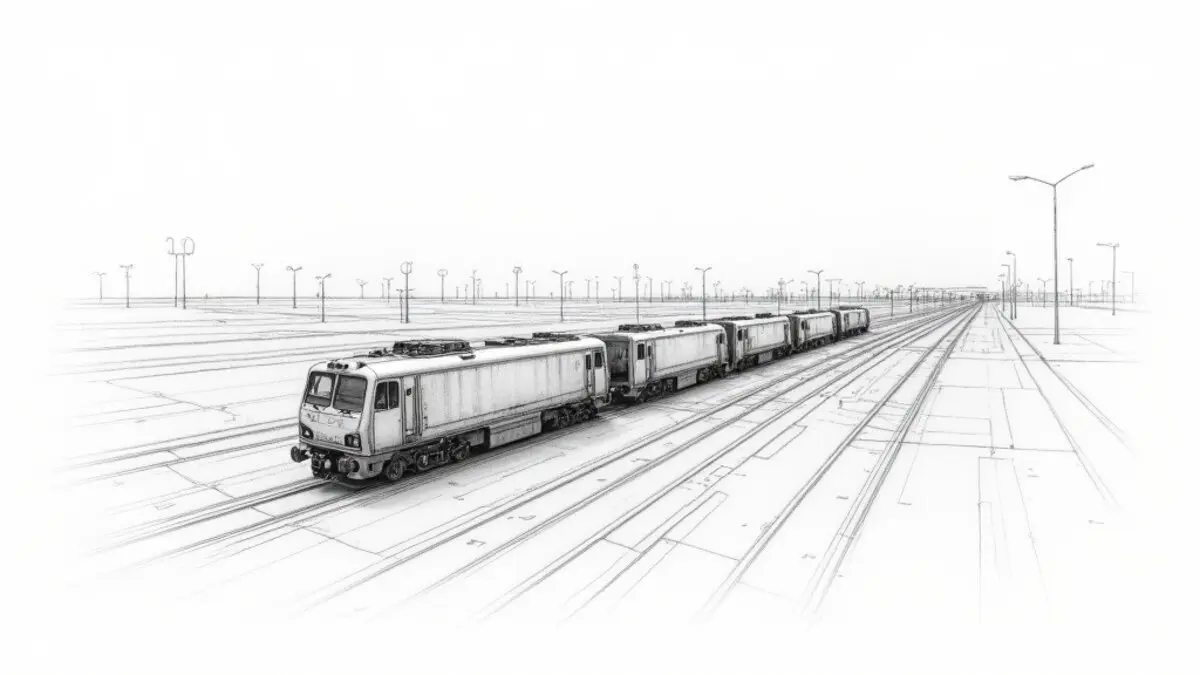
It is the late 1960s. A lorry driver, whom we shall call Mr Dupont, is driving on a country road. He arrives at an unattended level crossing with no barriers or lights. A train is approaching. Mr Dupont either does not see it or underestimates it. The lorry drives onto the crossing and hits the train. The damage is considerable: a damaged locomotive, derailed carriages, and injured passengers. SNCF, which operates the line, files a complaint and claims damages.
The driver, for his part, invokes force majeure (an unforeseeable and irresistible event) or fault on the part of SNCF: the train's warning horn allegedly did not work, or the level crossing was poorly signalled. But the trial judges (the Court of Appeal) are not convinced. They find that the driver saw the train (some passengers heard a warning horn), that he took a risk, and that his mere act of colliding with the train was the exclusive cause of the damage.
SNCF, for its part, committed no fault: the level crossing complied with regulations, and the train driver followed instructions. The Court of Appeal therefore discharged SNCF from all liability, both on the basis of fault (Article 1382 of the Civil Code, now 1240) and on the basis of liability for the act of things (Article 1384, subparagraph 1). The driver, and therefore his insurer, must pay everything. An appeal in cassation was lodged, but the High Court dismissed it: the decision was lawful.
The reasoning of the court — dissected
The core of the reasoning is in two lines: the driver's act was the exclusive cause of the damage, and that act was normally unforeseeable and unavoidable in its consequences by SNCF. What does this mean concretely?
First, the Court of Cassation validates the Court of Appeal's analysis on the basis of no-fault liability. Article 1384, subparagraph 1 of the Civil Code (now 1242) provides that one is liable for damage caused by the act of things under one's control. Here, the lorry is a thing, and its driver is its custodian. Therefore, if the lorry causes damage, the driver is presumed liable, unless he proves a case of force majeure or fault on the part of the victim. However, the Court of Appeal held that SNCF committed no fault, and the driver did not prove force majeure (an unforeseeable and irresistible event).
Second, on the basis of fault (Article 1382, now 1240), the Court of Appeal implicitly excluded any fault on the part of SNCF. The driver argued that the train's warning horn was defective. But the judges noted that passengers had heard a warning horn, and that the lorry driver had been imprudent. In short, the fault was exclusively on the side of the lorry driver.
This decision is neither a revolution nor a reversal. It confirms consistent case law: in traffic accidents involving a train, SNCF is rarely liable if it has complied with safety standards. The driver of the road vehicle is presumed liable for his own act. This is a classic application of liability for the act of things.
What this means for you — in practice
Are you the owner of a lorry or a car? This decision directly concerns you. If you cause an accident at a level crossing, even without a driving fault (e.g., you suffer a medical episode or a sudden mechanical defect), you will be held liable for damage caused to the train, the tracks, and the passengers. Your motor insurance will have to indemnify, but your no-claims bonus will be affected. For example: an accident at a level crossing in Cagnes-sur-Mer could cost €50,000 for locomotive repairs, plus €10,000 for passenger injuries. Without this case law, SNCF would have had to share the burden.
Are you a tenant of a property near a railway line? This does not directly change anything, but if you are a victim of a train accident, you cannot claim against SNCF if the vehicle driver is solely at fault. You will have to claim against his insurance.
Are you a buyer of a property in Menton, near a level crossing? Be aware that liability for accidents may fall on drivers, not on the track manager. This somewhat secures your investment: the proximity of a level crossing does not increase the risk of litigation against SNCF.
If you are in this situation, you must contact your insurer immediately. A lawyer can help you demonstrate any fault on the part of SNCF (e.g., defective signalling), but the case law is strict.
Four tips to avoid this type of dispute
- Scrupulously observe all signage at level crossings. Even if you think the train is far away, never force the crossing. Overconfidence can be costly.
- Check your motor insurance policy. Make sure it covers damage to railway infrastructure. Some policies cap cover for this type of claim.
- In the event of an accident, do not admit liability on the spot. Wait for an expert's opinion. SNCF has its own experts, and reports can be biased.
- Keep all documents relating to the maintenance of your vehicle. If a mechanical defect is involved, you may be able to exonerate yourself by proving a latent defect (non-apparent defect) in the lorry.
Besoin d'un conseil personnalisé ? Contactez Maître Zakine — première consultation 30 min à 45€.
Further reading: related case law and developments
This 1973 decision is part of a consistent line of authority. For example, in a judgment of 4 February 1960 (Bull. civ. II, No. 120), the Court of Cassation already held that the driver of a vehicle colliding with a train at a level crossing is liable on the basis of Article 1384, subparagraph 1. More recently, case law has evolved with the Badinter Law of 1985 (law on road traffic accidents), which facilitates compensation for victims. But for material damage suffered by SNCF, the logic remains the same: the driver is presumed liable.
The courts are increasingly demanding proof of force majeure or fault on the part of SNCF. In 2018, the Lyon Court of Appeal ordered a driver to pay €120,000 to SNCF for an accident at a level crossing, despite the absence of a barrier. The trend is therefore towards confirmation of this case law.
For the future, it can be expected that judges will continue to apply strict no-fault liability, unless SNCF has committed gross negligence (e.g., missing signage, defective maintenance). But the mere fact that the level crossing is unattended is not enough to exonerate the driver.
In practice: what to do
FAQ:
- What should I do if I hit a train at a level crossing? — Immediately contact your insurer and a lawyer specialising in road traffic accident law. Do not discuss the matter with SNCF agents without advice.
- Can I be held liable even if the level crossing was defective? — Yes, because the presumption is against you. You will have to prove the defect in order to attempt to exonerate yourself.
- What are the time limits for bringing a claim against SNCF? — The limitation period for liability claims is 5 years from the date of the damage (Article 2224 of the Civil Code). However, in practice, SNCF will sue you quickly.
- Will my insurance cover everything? — Yes, your third-party motor insurance covers damage caused to others, unless there is a specific exclusion. Check your policy.
- What if I am a passenger and not the driver? — You are a victim. You can obtain compensation from the driver or the guarantee fund. SNCF will not be liable.
Are you in a similar situation? An initial 30-minute consultation with Maître Zakine (€45) can save you months of proceedings — and often much more. Book an appointment →
📌 Does this apply to your situation? Maître Cécile Zakine, French real estate lawyer, practises throughout France.
servitude-droit-passage-avocat/" rel="dofollow">→ Avocat servitudes & foncier |
→ Browse all our legal articles
