Reference decision: cc • N° 11-21.252 • 2013-02-06 • View decision →
Imagine: you are the owner of a property in Biscarrosse, on the Landes coast. Your land, which you own separately (that is, it belongs to you personally, not to your couple), is surrounded on all sides by neighbouring plots. To reach the road, you must cross land that forms part of the community (assets acquired during the marriage) between you and your spouse. No problem, you think: you are at home. But one day, your spouse objects to this passage. And you realise that you have no written right. What to do? The question every owner in this situation asks is: can I demand a passage over the community land?
This decision of the Court of Cassation of 6 February 2013 (No. 11-21.252) answers precisely this question. It says, in essence, that a plot owned separately by one spouse cannot be considered landlocked within the meaning of Article 682 of the Civil Code when it is only separated from the public road by land belonging to the community. In other words, you cannot invoke the legal right of way easement (the right to pass over a neighbour's land to access the public road) if the obstacle is community property. Why? Because, according to the Court, the landlocked situation must result from a factual situation independent of the parties' will. However, the couple controls the community. In short, if you have access to the road via community land, you are not truly landlocked.
But what exactly does this change for you? A lot, as we will see. This decision is a perfect illustration of the subtleties of property law and marriage. It reminds us that the rules on landlocking (Article 682 of the Civil Code) do not apply mechanically: there must be a real impossibility of access, not mere inconvenience. So, how should you react if you are in this situation? This article guides you step by step.
The facts: a story that happens every day
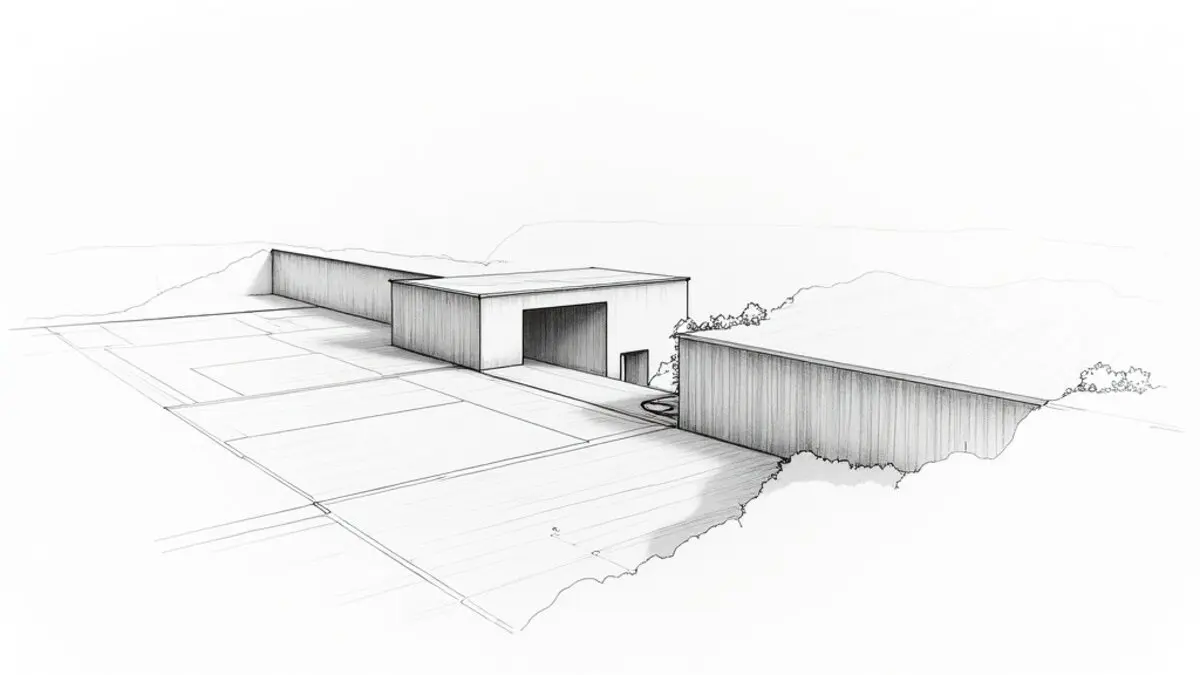
Mr. X, owner in Biscarrosse, owns a plot registered as BC 108 (for simplicity, let's say a building plot). This plot is surrounded by several plots: to the north, plot BC 109, which belongs to the community between Mr. X and his wife; to the east, plots BC 334 and BC 107, which belong to third parties. To access the Carnac road (the public highway), Mr. X must cross plot BC 109, the community land. But his wife refuses to let him pass. Mr. X then sues his neighbours (owners of plots BC 334 and BC 107) as well as his wife to obtain a right of way easement (a right to pass over their land) invoking landlocking.
The first instance court (the tribunal de grande instance, now the tribunal judiciaire) rules in his favour. The judges consider that plot BC 108 is landlocked because it has no direct access to the public highway. But the court of appeal (the court that re-examines the case) reverses this judgment: it says that Mr. X cannot rely on landlocking, because plot BC 109 forms part of the community. In other words, Mr. X already has a possible access via the community property, even if his wife opposes it. The Court of Cassation, seized by Mr. X, confirms the court of appeal's decision. The case therefore had a twist: after an initial success, Mr. X lost on appeal and in cassation. What few people know is that the Court of Cassation does not re-examine the facts: it only checks whether the law has been correctly applied. Here, it validates the reasoning of the lower courts.
The reasoning of the court — analysed
To understand this decision, we must return to Article 682 of the Civil Code. This text provides that "the owner whose land is landlocked and who has no access to the public highway may claim a passage over his neighbours' land to exploit his land". But note: this legal easement (the right of way imposed by law) presupposes a genuine landlocking, i.e., a total lack of access. However, in our case, Mr. X's land is not totally isolated: it is separated from the road by land belonging to the community. The Court of Cassation specifies that "a plot owned separately by a spouse cannot be regarded as landlocked when it is only separated from the public road by land belonging to the community". In other words, since the couple owns the community land, Mr. X has a right of use over that property (subject to opposition from his spouse, but that is a different debate). Landlocking must be a factual situation, not a choice or family arrangement.
The Court relies on Article 682 but also on the rules of the matrimonial property regime (the assets of the spouses). In French law, spouses may have separate property (acquired before marriage or by gift/inheritance) and community property (acquired during marriage). A spouse cannot invoke landlocking against community property, because he is co-owner of that property. The reasoning is logical: you cannot say you are trapped in your home if the exit goes through your own garden (even if that garden is shared with your spouse). The decision confirms consistent case law: the right of way easement for landlocking is a subsidiary right, which only applies if the owner has no means of accessing the public highway through his own property.
The arguments of the parties were as follows: Mr. X argued that access via the community was impossible due to his wife's refusal. But the Court replies that this refusal does not create landlocking in the legal sense; it relates to family law and marital disputes, not to easement law. The defendants (the neighbours) argued that Mr. X had possible access, so no landlocking. The Court agrees with them. undefined that if you are in a similar situation, you must first resolve the conflict with your spouse (by agreement, gift, or divorce) before considering action against the neighbours.
What this changes for you — concretely
This decision has important practical implications, depending on your profile.
Landlord owner: If you rent out property that forms part of the community, and your spouse refuses to allow tenants to pass, you cannot claim a right of way easement over neighbouring land. You must first resolve the issue between spouses. For example, in Capbreton, an owner owns a flat as separate property but access to the beach is via a communal path. If his spouse blocks access, he will have to negotiate or apply to the family court, not the land court.
Purchaser: Before buying land, check whether it is landlocked or not. If access passes through property belonging to the vendor's community, be aware that the legal easement will not apply if the vendor is in conflict with his spouse. Request a notarial certificate guaranteeing the passage. A concrete example: in Biscarrosse, a 500 m² building plot is worth around €150,000. Without guaranteed access, its value drops by 30 to 50%. Better to prevent.
Co-owner: In a condominium, the problem may arise if a unit belongs separately to a co-owner and the common parts are held by the community. But generally, the condominium rules provide for access. Check them.
If you are in this situation, you should: 1) Clearly identify the nature of the assets (separate or community) with the help of a notary. 2) In case of conflict, attempt family mediation. 3) Consider divorce proceedings or liquidation of the matrimonial property regime to obtain exclusive enjoyment of the community property. 4) If no amicable solution, apply to the family court for temporary passage authorisation. Timeframes vary: 6 months to 2 years for proceedings, costs of €2,000 to €5,000 depending on complexity.
Four tips to avoid this type of dispute
- Have a notary draw up an inventory of separate and community property: Before any purchase or construction, precisely determine which assets are separate and which are community. This will avoid confusion in the event of a conflict.
- Draft a passage agreement between spouses: If you use community land to access your separate property, have your spouse sign a written authorisation (private or notarial deed) specifying the conditions of passage. This can be included in a marriage contract.
- Do not buy land without guaranteed access: Require the vendor to provide evidence of a right of way either by a conventional easement (notarial deed) or by a certificate of non-landlocking. A surveyor can help you verify.
- In case of conflict, favour mediation: Before engaging in costly court proceedings, try family mediation. The average cost is €150 to €300 per session, and it can resolve the problem in a few weeks.
Further reading: related case law and developments
This decision is part of a consistent line of case law. For example, in a judgment of 3 November 2011 (No. 10-23.789), the Court of Cassation had already ruled that the owner of a plot cannot invoke landlocking if access to the public highway is possible via another of his plots, even if that access is less convenient. Similarly, the judgment of 6 February 2013 extends this principle to community property. The trend is clear: the legal right of way easement is interpreted strictly. It only aims to remedy a factual situation, not to resolve family or contractual difficulties.
For the future, it can be expected that the courts will continue to refuse the qualification of landlocking when the owner has a legal link with the land separating him from the public highway (co-ownership, community, joint ownership). This means that property professionals must be particularly vigilant in transactions involving married couples. Legislative change is unlikely, as the law on matrimonial property regimes and easements is well established.
Key points to remember
FAQ:
- Can I claim a passage over my spouse's land if my separate property is landlocked? No, if the land forms part of the community, you cannot invoke landlocking. You must resolve the conflict within the marriage.
- What if my spouse refuses passage? Apply to the family court for a temporary passage order, or initiate divorce proceedings to obtain exclusive enjoyment of the community property.
- How long does it take to obtain a judicial right of way? Allow 6 to 18 months for summary proceedings (urgent) or 1 to 2 years for proceedings on the merits.
- Can I sell my property if it has no guaranteed access? Yes, but you must inform the buyer of the risk. The property value will be reduced. Better to regularise before sale.
- Can a notary help me avoid this problem? Yes, by drafting a conventional easement or advising on the matrimonial property regime.
Besoin d'un conseil personnalisé ? Contactez Maître Zakine — première consultation 30 min à 45€.
Are you in a similar situation? A first 30-minute consultation with Maître Zakine (€45) can save you months of proceedings — and often much more. Book an appointment →
📌 Does this apply to your situation? Maître Cécile Zakine, French real estate lawyer, practises throughout France.
servitude-droit-passage-avocat/" rel="dofollow">→ Avocat servitudes & foncier |
→ Browse all our legal articles
