Reference decision: cc • No. 04-11.279 • 2005-03-17 • View the decision →
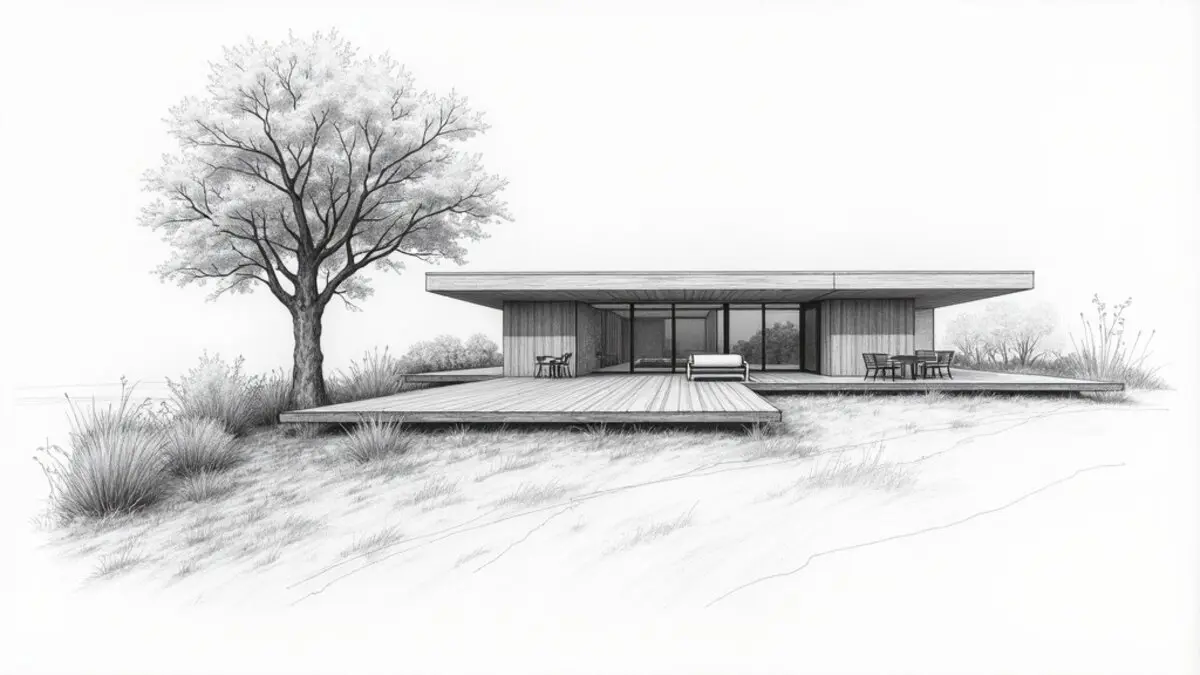
You are a tenant on the first floor of a building in Thann, and the neighbour's magnificent cedar tree has grown so much that it now completely blocks your view of the Vosges. You politely ask him to prune it, but he refuses, arguing that you are only a tenant and have no standing to act. Mistake: the Cour de cassation ruled on this in 2005. What does the law say? Who can act? And above all, how much does it cost? This article explains everything step by step.
The principle that no one may cause a neighbourhood disturbance to another is a cornerstone of French law. But how far does it extend? Does it apply to tenants, occupants without title, co-owners? The decision of 17 March 2005 of the Cour de cassation (No. 04-11.279) provides a clear answer: yes, regardless of the basis of occupation. A tenant can perfectly well sue his neighbour for a tree that blocks his view. This should reassure many residents of Cernay and elsewhere.
In this article, I tell you the facts, I analyse the judges' reasoning, and I give you practical advice to avoid or manage this type of dispute. Because yes, a tree can be a source of conflict, but also of law.
The facts: a story that happens every day
Mr and Mrs Y., owners of a building in Thann, have a tenant on the first floor. This tenant, whom I will call Mr X., enjoys an apartment with a view… until one day a tree planted in the Y's garden becomes so bushy that it completely blocks the living room window. Mr X. can see nothing but branches. He asks his landlords to prune it, but they refuse: 'You are only a tenant; you have no right to complain about our tree!'
Mr X. then decides to sue the Y's before the tribunal d'instance (now tribunal de proximité) for abnormal neighbourhood disturbance. He seeks an order for the owners to prune the tree and to pay him damages for the loss of view suffered over several months. The Y's contest: according to them, a neighbourhood disturbance can only be invoked by an owner, not by a mere occupant.
The tribunal ruled in favour of Mr X. at first instance. The Y's appealed, but the court of appeal upheld the judgment. They then appealed to the Cour de cassation. On 17 March 2005, the Cour de cassation dismissed their appeal and upheld the lower court's decision. It held that 'the principle that no one may cause a neighbourhood disturbance to another applies to all occupants of a building in co-ownership, whatever the basis of their occupation.' In other words, whether you are an owner, tenant, or even an occupant without title, you can take action against a neighbour who causes you an abnormal disturbance.
The reasoning of the court — analysed
The Cour de cassation relies on a general principle of law: Article 1240 of the Civil Code (formerly 1382), which provides that 'any act of a person which causes damage to another obliges the person by whose fault it occurred to make reparation.' In neighbourhood matters, this principle translates into the prohibition of causing an abnormal disturbance to one's neighbour. The particularity of this case is that the claimant was not an owner but a tenant.
The judges of the Cour de cassation recall that this principle is a matter of public policy and protects any person suffering harm, regardless of their basis of occupation. They reject the Y's argument that only the owner can act. Why? Because the disturbance directly affects the occupant's enjoyment of the dwelling, whoever they are. If the view is blocked, it is the tenant who suffers daily, not the owner who lives elsewhere.
This is a confirmation of precedent: the Cour de cassation had already ruled in this sense (e.g., Civ. 3e, 4 July 1972), but it reaffirms it strongly here. There is no reversal, but a welcome clarification. The Y's arguments were therefore legally unfounded. The Court did not examine the merits of the disturbance (did the tree really obstruct the view?), as that was for the lower courts to assess. It merely validated the principle that the action was admissible.
What this means for you — practically
If you are a tenant in Cernay and the neighbour's fig tree deprives you of light, you can sue them in court without waiting for your landlord's consent. However, be careful: you must prove that the disturbance is abnormal. A mere inconvenience (a bit of shade) is not enough. There must be actual harm: loss of view, excessive darkening, falling branches, etc.
For landlord owners, this decision means that you can be directly sued by your tenant, even if you do not live on the premises. In the Thann case, the Y's had to pay for the pruning and damages. Estimated cost: between €300 and €1,500 for pruning, plus €500 to €2,000 in damages depending on the duration of the disturbance. Not to mention legal fees (allow €1,500 to €3,000 for a first instance procedure).
For co-owners, the rule is the same: a co-owner can take action against another, even if the disturbance originates from a common area (e.g., a tree planted in the communal garden). But be careful: you must first contact the syndic before going to court.
In practice, if you are in this situation, you should: 1) gather evidence (photos, videos, bailiff's report), 2) send a registered letter to the neighbour requesting an amicable solution, 3) if nothing happens, file a claim with the tribunal judiciaire (or the tribunal de proximité if the dispute is under €10,000). The average time to obtain a decision is 6 to 12 months.
Four tips to avoid this type of dispute
- Before planting, inform yourself about species and their growth. A tree that reaches 10 metres in height can quickly become a nuisance. Consult a landscaper or check with the town hall about planting distances (often 2 metres from the property boundary).
- If you are a tenant, report any disturbance to your landlord in writing. A registered letter with acknowledgement of receipt creates a record. If the landlord does not react, you can act alone, but it is preferable to inform them.
- Consider mediation or conciliation. Before going to court, try an amicable agreement. The cost of mediation (around €200 to €400) is much lower than that of a trial. You can also contact the free conciliateur de justice.
- Call in an expert if in doubt. If the disturbance is disputed, a bailiff's report (€150-250) or a judicial expert's report (€800-2,000) can make a difference. This avoids errors of assessment.
Further reading: related case law and developments
This decision is part of a consistent line: the Cour de cassation has always protected occupants, regardless of their title. Thus, in a judgment of 9 July 2003 (No. 01-17.340), it had already ruled that a tenant could sue his landlord for neighbourhood disturbance due to noise nuisance. Similarly, on 14 January 2016 (No. 14-29.348), it extended this right to the occupant without title (someone who remains on the premises after the end of the lease).
The trend is therefore towards broadening protection. Courts are increasingly sensitive to the rights of occupants, even those with precarious status. This means that in the future, it will be even more difficult for an owner to rely on the occupant's lack of title to refuse to act.
On the other hand, be careful: the disturbance must be 'abnormal'. Judges assess this on a case-by-case basis. A tree that provides shade in summer is not necessarily a disturbance. But if it blocks the view all year round, then yes. Recent case law (Civ. 3e, 12 February 2020, No. 18-26.167) specifies that the disturbance must exceed the normal inconveniences of neighbourhood life. A threshold not to be overlooked.
Summary and next steps
FAQ:
- Q: Can I take action against my neighbour if I am a tenant? A: Yes, since this 2005 decision, you have the same right as the owner to sue for abnormal neighbourhood disturbance.
- Q: What if my neighbour refuses to prune their tree? A: Send a registered letter, then contact the conciliateur de justice. As a last resort, sue them in court. You can claim damages and an order for pruning under penalty.
- Q: What is the time limit to act? A: The action for neighbourhood disturbance is subject to a 5-year limitation period from the day you became aware of the disturbance. But act quickly: the longer the disturbance lasts, the greater the harm.
- Q: How much does a procedure cost? A: Allow €1,500 to €3,000 in legal fees for a simple procedure, plus bailiff's fees (€150-250). If you win, the neighbour may be ordered to reimburse part of them.
- Q: What if the tree is on a common area of the co-ownership? A: You must first contact the syndic. If the syndic does nothing, you can sue the syndicat des copropriétaires in court.
Are you in a similar situation? A 30-minute initial consultation with Maître Zakine (€45) can save you months of procedure — and often much more. Book an appointment →
📌 Does this apply to your situation? Maître Cécile Zakine, French real estate lawyer, practises throughout France.
→ Avocat copropriété & ASL |
→ Browse all our legal articles
