Reference decision: cc • N° 64-12.087 • 1966-01-31 • View the decision →
Imagine: you have just bought a house in Altkirch, in the Haut-Rhin, to enjoy the peace of the countryside. But for a few weeks now, incessant noise has been preventing you from dining peacefully: a pack of dogs barks every evening, sometimes for hours. Have you ever wondered how far your right to silence goes?
Two owners asked this question to the courts in 1966. And the answer from the French Court of Cassation is still relevant today: nuisances that exceed the normal inconveniences of neighbourhood must be compensated. Today, we analyse this landmark decision.
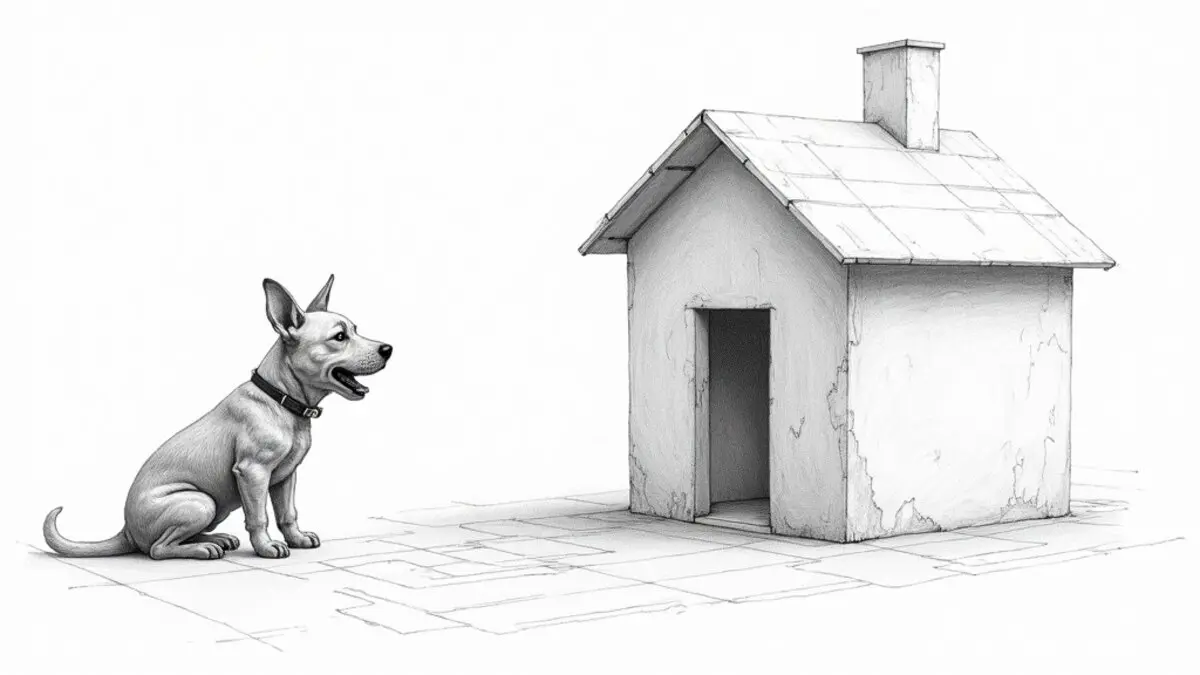
The Animal Protection Association ran a dog shelter in Kingersheim, a neighbouring commune of Mulhouse. The incessant barking of 60 to 80 dogs, especially at meal times, led the neighbours to seek compensation. The Court of Cassation upheld their claim, establishing a principle that still guides the courts.
The facts: a story like many that happen every day
In 1964, two residents of Altkirch, Mr Saramito and Mr Lafeuillouse, were exasperated. For several years, an animal shelter, run by the Animal Protection Association in the neighbouring commune of Kingersheim, generated infernal noise. The dogs, by the dozen, barked all day long, but especially at midday and in the evening, at meal times. “Outdoor life is disturbed when a chorus of 60 to 80 dogs starts up,” the judges later noted.
The two neighbours brought legal proceedings against the association. They sought damages for the harm suffered: noise nuisance, stress, inability to enjoy their garden, reduced quality of life. The association, for its part, defended itself by invoking its public utility mission: saving stray animals, caring for them, housing them. It argued that the barking was a normal neighbourhood inconvenience in a rural area.
The court of first instance ruled in favour of the neighbours. The association appealed. The Colmar Court of Appeal upheld the judgment: it held that the harm “exceeded the measure of neighbourhood obligations”. The association then appealed to the Court of Cassation. But the Court of Cassation dismissed its appeal in 1966, upholding the reasoning of the trial judges.
The reasoning of the court — analysed
The decision is based on a fundamental principle of French law: Article 1240 of the Civil Code (formerly 1382), which provides that “any act of man, which causes damage to another, obliges the person by whose fault it occurred to repair it”. In short: if you cause a disturbance to your neighbour, you must compensate them, provided that the disturbance exceeds what is normally tolerable.
The judges had to decide a central question: does the barking of 60 to 80 dogs constitute an abnormal neighbourhood disturbance? To answer this, they examined several concrete elements:
- Intensity: “a din”, “a chorus of dogs”, “outdoor life is disturbed”. The terms are strong.
- Frequency: the barking occurs mainly at the times of the two main meals, i.e. when the neighbours are at home and want to relax.
- Number of animals: 60 to 80 dogs, that's a pack, not a pet.
The Court of Appeal also noted that the association, although pursuing a laudable goal (animal protection), was not exempt from its neighbourhood obligations. Having a social mission does not give the right to harm others without limit.
By dismissing the appeal, the Court of Cassation confirmed that the assessment of the abnormal nature of the disturbance is within the sovereign power of the trial judges. In other words, it is for each court to decide, on a case-by-case basis, whether the nuisances exceed the norm.
What this means for you — in practice
This 1966 decision is still applied today. Here is what it implies for different profiles:
For landlord owners: if your tenant houses a large number of animals (shelter, breeding, etc.) and the neighbours complain, you could be held liable as the owner. Check the lease: a clause prohibiting animals or limiting their number can protect you. Example: in Kingersheim, an owner had to pay €5,000 in damages to neighbours for night-time barking, after his tenant opened an undeclared shelter.
For tenants: you have the right to peaceful enjoyment of your home. If your neighbours have noisy animals, you can put them on notice to stop the nuisances, then take legal action. Be careful: keep evidence (recordings, witness statements, bailiff's report).
For buyers: before buying a house, find out about the neighbours' activities. An animal shelter, a kennel, a training school can be sources of nuisance. Ask the seller to inform you (legal obligation) and, if in doubt, use the suspensive condition.
For co-owners: the co-ownership rules often prohibit annoying animals. If a co-owner has several dogs that bark, the syndic can take action. The costs are then shared among all co-owners.
Four tips to avoid this type of dispute
- Anticipate nuisances: before setting up a shelter or breeding facility, check the planning rules (distance from dwellings, building permit). In Altkirch, a shelter project was refused because it was too close to a housing estate.
- Insulate your animals: if you have several dogs, invest in suitable sound insulation (vegetation fence, noise barrier). This can reduce nuisances and the risk of complaints.
- Dialogue first: 80% of neighbourhood conflicts are resolved amicably. Propose a compromise (times of outings, reduction in the number of animals). If that fails, mediation can be useful.
- Keep evidence: in case of disturbance, keep a log of the nuisances (dates, times, duration), record (with caution), have it recorded by a bailiff. These elements are crucial in court.
Further reading: related case law and developments
Since 1966, the concept of abnormal neighbourhood disturbance has been clarified by several decisions. For example, in 1971, the Court of Cassation ruled that olfactory nuisances (pig farm odours) can also constitute a disturbance exceeding the norm. More recently, in 2019, the Court of Cassation recalled that the disturbance must be “exceptional” to be compensated (Civ. 3e, 4 Sept. 2019, No. 18-20.411).
The trend is towards increased protection of the neighbour, but with a case-by-case assessment. Judges take into account the duration, intensity, frequency, and even the particular sensitivity of the victim (e.g., an elderly person).
For professionals (breeders, shelters), it is advisable to comply with acoustic standards (decree of 30 August 2006) and to take out civil liability insurance. Because even if the activity is authorised, excessive nuisances can lead to convictions.
Summary and next steps
FAQ:
Q: Can I claim damages for dog barking?
A: Yes, if the barking is frequent, intense and has been going on for some time. You must prove the harm (stress, loss of sleep, etc.).
Q: What if my neighbour refuses to reduce the nuisances?
A: Send them a registered letter with acknowledgement of receipt (formal notice). If nothing changes, apply to the judicial court (formerly the district court) for abnormal neighbourhood disturbance.
Q: Is there a time limit to take action?
A: Yes, the civil liability action is time-barred after 5 years from the day on which the right holder knew or should have known the facts (Article 2224 of the Civil Code).
Q: Can an animal shelter be closed for nuisances?
A: Yes, if the nuisances are serious and persistent, the judge may order the cessation of the activity, or even the closure of the shelter. But this is an exceptional measure.
Q: How much does a legal action cost?
A: Lawyer's fees vary: a 30-minute consultation costs about €45. For a full procedure, expect between €1,500 and €5,000, depending on complexity. Court costs (bailiff, expert) are additional.
Are you in a similar situation? A first 30-minute consultation with Maître Zakine (€45) can save you months of procedure — and often much more. Book an appointment →
📌 Does this apply to your situation? Maître Cécile Zakine, French real estate lawyer, practises throughout France.
→ Prendre rendez-vous pour une consultation |
→ Browse all our legal articles
