Leading decision: cc • No. 92-18.669 • 1994-06-22 • View the decision →
You live in Cognin, a peaceful small commune at the foot of the Bauges, and your neighbour has turned his yard into a car park for his vans. Coming and going from 6 a.m., the noise of doors slamming, engines running… Enough to make you lose your peace of mind. You wonder: "Can I have this car park prohibited?" The answer is not so simple. The Court of Cassation, in a judgment of 22 June 1994, recalls a fundamental principle: not every neighbourhood disturbance is actionable. The nuisances must exceed what one is normally obliged to put up with between neighbours. In other words, your right to tranquillity has limits.
In this case, a company used its yard as a car park for its employees and customers. An exasperated neighbour sued the company to stop the disturbance. The trial judges ruled in her favour, simply prohibiting the use of the yard as a car park. But the company appealed to the Court of Cassation. And the High Court quashed the decision: the Court of Appeal had not verified whether the nuisances exceeded the normal inconveniences of neighbourhood. A simple bailiff's report mentioning noise and coming and going was not enough.
This decision, handed down nearly thirty years ago, remains extremely relevant today. Whether you are an owner in La Motte-Servolex or a tenant in Chambéry, you must understand what constitutes an abnormal neighbourhood disturbance and how to prove it. That is what we will break down together.
The facts: a story like countless others
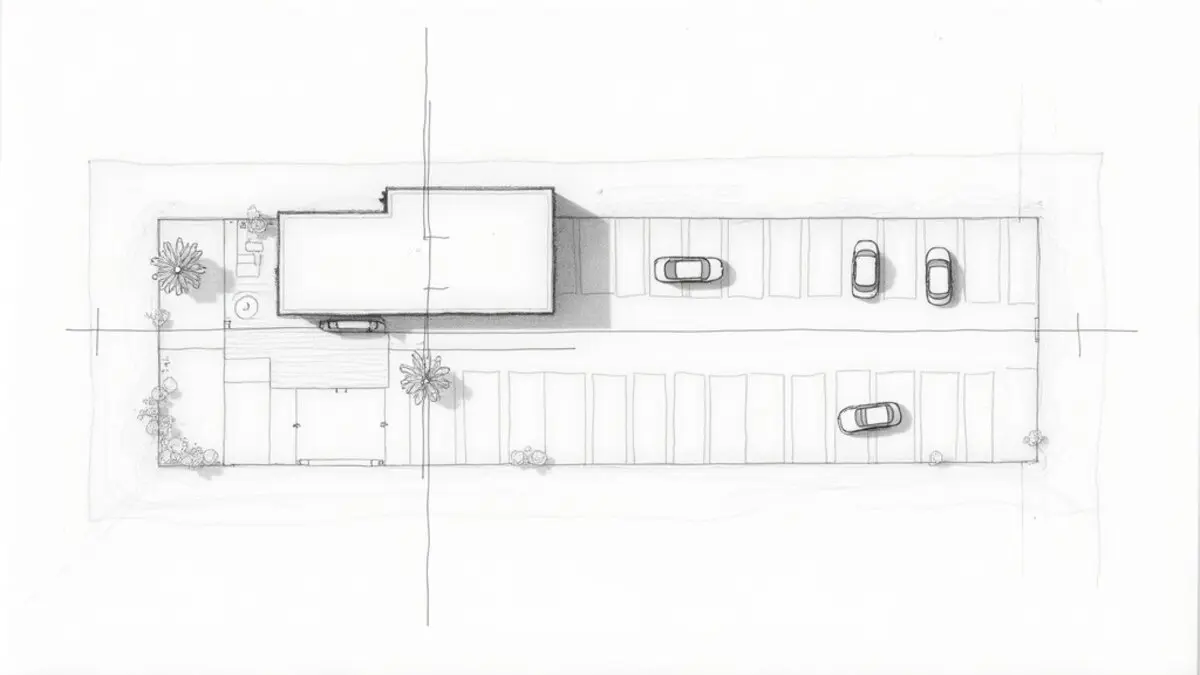
Imagine a small residential street in Cognin. On one side, individual houses with gardens; on the other, a company, "La Felletinoise", which owns a building with an inner courtyard. So far, nothing unusual. But one day, the company decides to use this courtyard as a car park for its employees and customers. Result: constant coming and going, engines running, doors slamming, sometimes even horns honking. In short, the usual calm of the neighbourhood is shattered.
Miss X., owner of a flat overlooking this courtyard, has had enough. She has a bailiff's report drawn up on 29 June 19.., which records the noise and activity generated by the car park. Relying on this report, she sues the company in court to stop what she considers to be an abnormal neighbourhood disturbance. The first-instance judges rule in her favour: they prohibit the company from using its courtyard as a car park, without further ado.
The company La Felletinoise appeals. But the Court of Appeal upholds the decision: the disturbance is established, the prohibition is maintained. The company then appeals to the Court of Cassation. Its argument is simple: the Court of Appeal did not examine whether the nuisances exceeded the normal inconveniences of neighbourhood. It merely relied on the bailiff's report to find that the disturbance existed, without characterising it as abnormal. However, in law, not every disturbance gives rise to redress. It must be excessive.
The Court of Cassation agrees. In a very clear judgment, it quashes the decision of the lower courts. Why? Because the mere fact of using a courtyard as a car park is not in itself an abnormal disturbance. It must be demonstrated that the actual nuisances (noise, coming and going, odours) exceed what can reasonably be expected in a neighbourhood. And that, the Court of Appeal had not done. The case is therefore remitted to another Court of Appeal for a fresh decision, after correctly applying the law.
The reasoning of the court — explained
The core of the judgment rests on Article 9 of the Law of 31 December 1912 (now codified in Article 1240 of the Civil Code), which provides that any act of a person which causes damage to another obliges the person by whose fault it occurred to make reparation. But in matters of neighbourhood disturbances, case law has added a condition: the disturbance must be abnormal, i.e., exceed the ordinary inconveniences of neighbourhood.
What is a normal inconvenience? It is what every owner or occupier must put up with without being able to complain: the noise of a lawnmower on a Saturday morning, the occasional barking of a dog, the occasional smoke from a chimney. On the other hand, continuous noise from 6 a.m. to 10 p.m., daily foul odours, incessant coming and going of lorries… this may constitute an abnormal disturbance.
In the case at hand, the Court of Appeal had merely noted that the car park generated noise and coming and going. But it had not compared these nuisances to what can be expected in a residential area. Nor had it assessed their intensity, frequency, or duration. In short, it had not characterised the abnormality of the disturbance. The Court of Cassation therefore quashed its decision for "lack of legal basis": it had not provided the legal and factual elements necessary to justify its decision.
This judgment is a confirmation of the constant case law on abnormal neighbourhood disturbances. There is no revolution here, but a useful reminder: judges must justify their decision on the abnormality of the disturbance. Without this, their decision may be quashed. For the parties, this means that a simple bailiff's report listing nuisances is not enough. It must be demonstrated why these nuisances are excessive in relation to the local situation.
Note that the Court of Cassation also ruled on the admissibility of the appeal lodged by the syndicate of co-owners represented by its managing agent, even without mention of the latter's name. This has no bearing on the merits, but illustrates the procedural rigour expected.
What this means for you — in practice
If you are an owner in La Motte-Servolex and your neighbour installs a car park in his courtyard, you are not without recourse. But you must prove that the nuisances are abnormal. Let's take a concrete example: you live in a semi-detached house. Your neighbour rents his courtyard to a delivery company that keeps its engines running from 5 a.m. to 11 p.m., seven days a week. The average noise level is 65 decibels inside your bedroom. You have statements from three other neighbours, a bailiff's report, and an acoustic report. In this case, the abnormality is clear. You can claim damages and an injunction prohibiting the car park under penalty.
But if the car park is only used by a few employees, from 9 a.m. to 6 p.m. on weekdays, with moderate noise, you are likely to lose. The judges will consider this to be part of the normal inconveniences of life in society. You will have to put up with it.
For tenants: if you suffer from neighbourhood disturbances, you should first contact your landlord. It is the landlord who has the obligation to ensure your peaceful enjoyment of the premises. He can take action against the offending neighbour. In the meantime, you can ask for a reduction in rent or damages.
For buyers: before purchasing a property, check for potential nuisances. Inquire about urban planning projects in Cognin or La Motte-Servolex. A neighbouring car park may be harmless today, but could become a nightmare tomorrow if its use changes. Do not hesitate to consult the local urban plan (PLU).
For co-owners: if the disturbance comes from another co-owner (e.g., abusive use of common parts), the managing agent can take action. But a decision of the general meeting is required, except in an emergency.
Finally, note that the time limit for taking action is 5 years from the manifestation of the disturbance (Article 2224 of the Civil Code). After this period, you are time-barred. Do not delay.
Four tips to avoid this type of dispute
- Record the nuisances in writing: keep a logbook of the disturbances (dates, times, duration, nature). This will be valuable evidence for your lawyer.
- Have them recorded by a bailiff: a bailiff's report costs between €150 and €400 depending on complexity, but it has strong probative value in court. It is better to have several reports at different times.
- Measure objectively: for noise, call in an acoustic consultant (around €500). For odours, a specialised consultancy. These technical reports are often decisive.
- Prioritise conciliation: before suing, try an amicable settlement. Send a recorded delivery letter to your neighbour, then refer the matter to the justice conciliator (free of charge). Many disputes are resolved without a trial.
Further reading: related case law and developments
The 1994 judgment is part of a consistent line. For example, the Court of Cassation held in 2005 (Civ. 3e, 8 June 2005, No. 04-12.212) that the use of a courtyard as a car park by customers of a bar did not constitute an abnormal disturbance in the absence of proof of excessive nuisances. Conversely, in a 2010 judgment (Civ. 3e, 23 June 2010, No. 09-14.003), it upheld the prohibition of an unauthorised car park generating repeated night-time noise.
The current trend is towards a strict control of abnormality. Judges do not hesitate to reject claims if the evidence is insufficient. Moreover, the concept of "normal inconvenience" is assessed according to the local situation (dense urban area or countryside). In Cognin, the tolerance threshold will be higher than in the heart of Chambéry.
For the future, we can expect greater consideration of environmental criteria (noise, pollution). The "Engagement et proximité" Law of 2019 strengthened the powers of the mayor to combat neighbourhood disturbances, but without changing the substance of civil law.
In practice: what to do
- Identify the nuisances precisely: nature (noise, odours, vibrations), times, frequency, duration.
- Gather evidence: neighbour statements, bailiff's reports, technical reports, photos, videos.
- Attempt an amicable settlement: recorded delivery letter, then justice conciliator.
- Consult a lawyer: to assess your chances and bring legal action if necessary. The cost of proceedings ranges from €1,500 to €5,000 depending on complexity.
- Act within 5 years: do not let the disturbance become entrenched without reacting.
Are you in a similar situation? A first 30-minute consultation with Maître Zakine (€45) can save you months of proceedings — and often much more. Book an appointment →
📌 Does this apply to your situation? Maître Cécile Zakine, French real estate lawyer, practises throughout France.
→ Prendre rendez-vous pour une consultation |
→ Browse all our legal articles
