Reference decision: cc • No. 15-20.044 • 2016-10-20 • View decision →
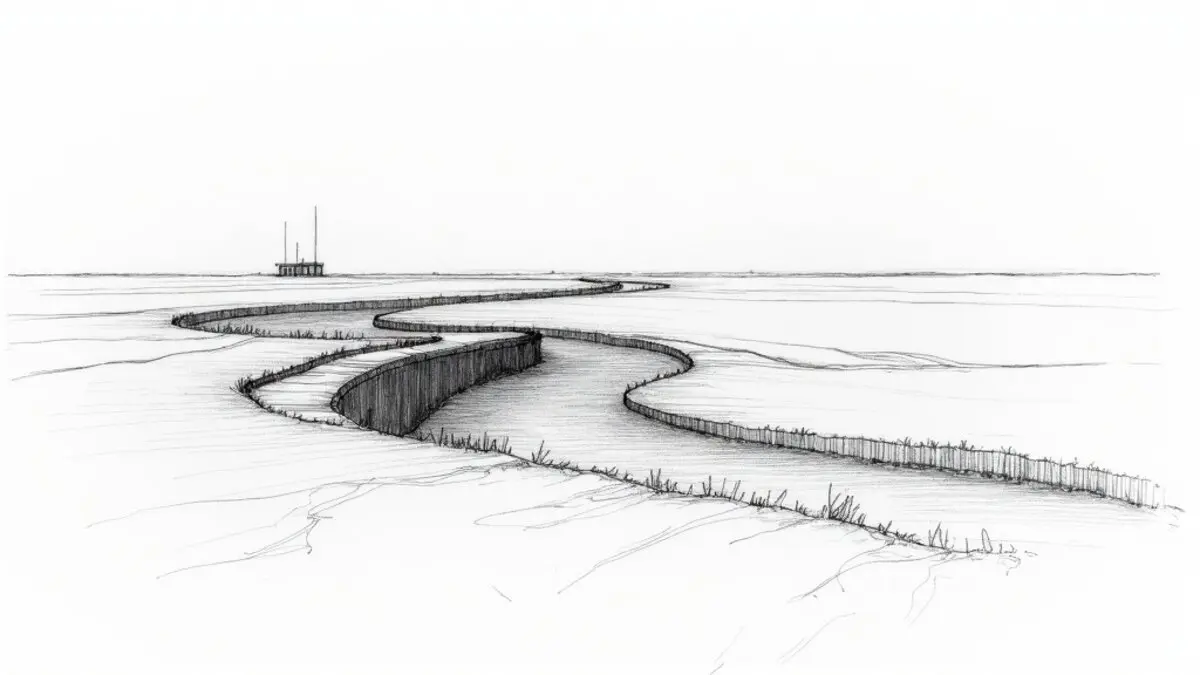
Imagine for a moment: you are the owner of a water mill in the Bobigny area. For generations, your family has used a mill race (an artificial channel) that entirely diverts a river to turn the mill wheel. You think this mill race belongs to you, as do its banks. But one day, a neighbour contests your right, asserting that the land of the mill race is registered in his name. Who is right? This question, more common than one might think, was decided by the Court of Cassation in a judgment of 20 October 2016. And the answer may surprise many owners.
In law, Article 546 of the Civil Code provides that ownership of a thing, whether movable or immovable, gives a right to everything it produces and to everything that is accessorily united to it. This is called accession. But this rule has its limits, especially when it comes to artificial channels such as mill races. The question put to the Court was this: can the owner of a mill become owner of the mill race and its banks (the strips of land along the channel) by accession, on the ground that these elements are essential to the operation of the mill?
The answer is no. The Court of Cassation confirmed that ownership of the mill race and its banks cannot be acquired by accession on the basis of Article 546 of the Civil Code, when the mill race collects all the waters of a river and the course of the river has been completely diverted by this channel. In other words, if the mill race is an artificial structure that captures the entire flow of the river, it is no longer a mere accessory of the mill, but an independent construction that can only belong to the mill owner if he has acquired ownership by another means (for example, by a title deed or by prescription). This decision is crucial for all mill owners, but also for any riparian owner faced with a diverted watercourse.
The facts: a story that happens every day
The case begins in a small village in the Paris region, between Bobigny and Pontoise. A couple, Mr and Mrs X, own a water mill fed by a mill race. This mill race, dug several centuries ago, diverts the entire waters of the neighbouring river for several hundred metres. Mr and Mrs X consider that this mill race and the banks (the strips of land on each side) belong to them, as they are inseparable from the mill. But a neighbour, Mr Y, maintains that these lands are registered under a plot that belongs to him, and that he is the owner. The conflict erupts when Mr Y carries out works on the bank, preventing access to the mill race.
Mr and Mrs X sue Mr Y before the Tribunal de Grande Instance of Bobigny, claiming ownership of the mill race and its banks on the basis of accession. They argue that the mill race is a necessary accessory to the mill and that, consequently, they are its owners by virtue of Article 546 of the Civil Code. The tribunal finds in their favour at first instance, considering that the mill race forms an integral part of the mill. Mr Y appeals.
The Paris Court of Appeal reverses the judgment. It finds that the mill race collects all the waters of the river, whose course has been completely diverted by this channel. Consequently, it deduces that ownership of the mill race and its banks cannot be acquired by accession. The mill race is not a mere accessory of the mill: it is an artificial structure that modifies the natural course of the water. Mr and Mrs X appeal to the Court of Cassation.
The Court of Cassation dismisses their appeal. It validates the reasoning of the Court of Appeal: when the mill race completely diverts the watercourse, it is no longer an accessory of the mill, but an independent construction. Ownership of the mill race and its banks cannot therefore be acquired by accession. This decision perfectly illustrates the limits of Article 546 of the Civil Code.
The reasoning of the court — analysed
To understand this decision, we must return to Article 546 of the Civil Code. This text provides that "ownership of a thing, whether movable or immovable, gives a right to everything it produces and to everything that is accessorily united to it, either naturally or artificially." This principle of accession allows, for example, the owner of land to become owner of the buildings he erects on it, or of the trees that grow there. But this principle only applies if the accessory thing is truly "united" to the principal thing. In the case of a mill race that diverts the entire river, the accessory link gives way to physical reality: the mill race is a distinct structure that radically modifies the watercourse.
The Court of Appeal, upheld by the Court of Cassation, considered that the mill race could not be considered an accessory of the mill, because it collects all the waters of the river. In other words, the mill race is not a simple water supply channel: it is the new bed of the river. Therefore, ownership of the bed and banks (the mill race banks) cannot be acquired by accession to the mill, because the mill owner does not own the river itself. The river is a public domain asset (owned by the State or local authorities), and its bed belongs to the State unless proven otherwise.
This reasoning is based on a fundamental distinction: between an accessory of a building and a structure that modifies the public domain. The mill race, by completely diverting the watercourse, creates a situation where the mill owner has no title to the land of the mill race. He cannot invoke accession, because accession presupposes that the accessory thing is united to the principal thing without changing its nature. Here, the mill race changes the nature of the river. However, note that this solution only applies if the mill race captures all the water. If the mill race only takes part of the flow, the reasoning could be different.
In short, the Court of Cassation reminds us that accession is not an automatic means of acquiring ownership of an artificial structure. It must be shown that this structure is truly accessory to the principal property. Otherwise, the owner must prove a title of ownership (deed of sale, thirty-year prescription, etc.) to claim the mill race and its banks.
What this changes for you — concretely
This decision has important practical implications for several categories of people.
For owners of mills or hydraulic structures: If you own a mill fed by a mill race that diverts an entire river, you cannot rely on accession to claim ownership of the mill race and its banks. You must check your title deeds: is the mill race mentioned in the purchase deed? If not, you may try to acquire it by thirty-year prescription (continuous, peaceful, public and unequivocal possession for 30 years). In Pontoise, for example, a mill owner had to prove that he had maintained the mill race for more than 30 years to claim ownership. undefined, I have encountered cases where owners lost their mill race for lack of title, even though they had used it for decades.
For riparian owners: If a mill race crosses your land, you might be its owner if the mill race is registered on your plot. Beware of encroachments: a mill owner who uses your land without title may be considered a possessor in bad faith. You may demand the removal of the mill race or an occupation indemnity. But be vigilant: if the mill race has been used for more than 30 years, the mill owner may have acquired ownership by prescription.
For potential buyers: Before buying a mill or a property with a mill race, have a notary or lawyer check whether the mill race is included in the sale. Request a survey and consult the land registry. If the mill race is not mentioned, negotiate a price reduction or require regularisation. Without title, you could lose access to water, which significantly devalues the property. The cost of proceedings can reach €5,000 to €15,000, not including expert fees.
If you are in this situation, you must act quickly. The thirty-year prescription may work in your favour if you can prove continuous possession. But it is preferable to regularise the situation by a notarial deed.
Four tips to avoid this type of dispute
- Check your title deeds. Before any acquisition, ensure that the mill race and its banks are expressly mentioned in the deed of sale. If not, request a rectification or a supplementary deed.
- Consult the land registry. The cadastral plan shows the plots. If the mill race is registered under a separate plot, check who owns it. A surveyor can help you precisely define the boundaries.
- Maintain the mill race visibly and continuously. If you use the mill race without being the owner, regular maintenance (cleaning, repairs) may constitute possession that could lead to prescription. However, note that possession must be peaceful and unequivocal.
- If in doubt, consult a lawyer lawyer. A property law professional can analyse your situation and advise you on the best strategy (title, prescription, settlement). Do not delay: neighbour disputes can escalate quickly.
Besoin d'un conseil personnalisé ? Contactez Maître Zakine — première consultation 30 min à 45€.
Further reading: related case law and developments
This decision is part of a consistent line of case law from the Court of Cassation. Already, in a judgment of 3 May 2006 (No. 04-17.704), the Court had ruled that the owner of a mill could not acquire by accession the ownership of a tailrace that returned the water to the river, since this channel was a distinct structure. More recently, in a judgment of 12 July 2018 (No. 17-22.114), it specified that accession does not apply to structures that substantially modify the watercourse.
The trend is therefore clear: judges are reluctant to extend accession to hydraulic structures that affect the fluvial public domain. This position protects the rights of riparian owners and the State, but it complicates the situation for owners of historic mills. For the future, we can expect courts to require clear title deeds and to be increasingly strict on prescription. If you are a mill owner, it is urgent to regularise your situation.
What you must absolutely remember
- Accession (Article 546 of the Civil Code) does not automatically allow you to acquire ownership of a mill race that diverts an entire river. This principle is now firmly established.
- To be owner of a mill race, you must have a title (deed of sale) or prove thirty-year possession. Without this, you risk losing the mill race and access to water.
- Check the land registry and your notarial deeds. If the mill race is not mentioned, act quickly to regularise.
- In case of dispute, consult a lawyer. Court costs can be high, but a preventive 30-minute consultation (€45) can save you years of conflict.
- Do not wait: the thirty-year prescription runs faster than you think. If you have used the mill race for 30 years, you may be able to claim ownership, but you must act before the registered owner opposes you.
Are you in a similar situation? A first 30-minute consultation with Maître Zakine (€45) can save you months of proceedings — and often much more. Book an appointment →
📌 Does this apply to your situation? Maître Cécile Zakine, French real estate lawyer, practises throughout France.
servitude-droit-passage-avocat/" rel="dofollow">→ Avocat servitudes & foncier |
→ Browse all our legal articles
