Reference decision: cc • No. 75-14.456 • 1977-03-09 • View the decision →
Imagine: you have just bought a house in Barentin, with a nice communal courtyard. You dream of building an underground garage to park your car safely. But the deed of sale mentions a "non aedificandi easement" (prohibition on building) on this courtyard. Can you dig a basement without violating this clause? The question is more common than one might think, and it has already been decided by the French Supreme Court in 1977.
This decision, often overlooked, provides a nuanced answer: it all depends on the intention of the parties when creating the easement. If the deed only refers to the surface, the subsoil may be free. So, how do you know if your project is allowed? This article deciphers the judges' reasoning and gives you the keys to avoid a dispute.
Whether you are an owner, buyer or property professional, understanding this case law will save you a lot of trouble. Because a misinterpreted easement can block a project or trigger a costly lawsuit. Follow the guide.
The facts: a story that happens every day
The case began in Rouen, but could just as easily have taken place in Dieppe or Barentin. Two neighbouring owners, Mr A and Mr B, were bound by a notarial deed dating back several decades. This deed divided a plot of land into two lots and established between them "a non aedificandi easement zone in a communal courtyard", intended to ensure sufficient ventilation and sunlight for the buildings. In short, it was forbidden to build anything on the surface of this courtyard.
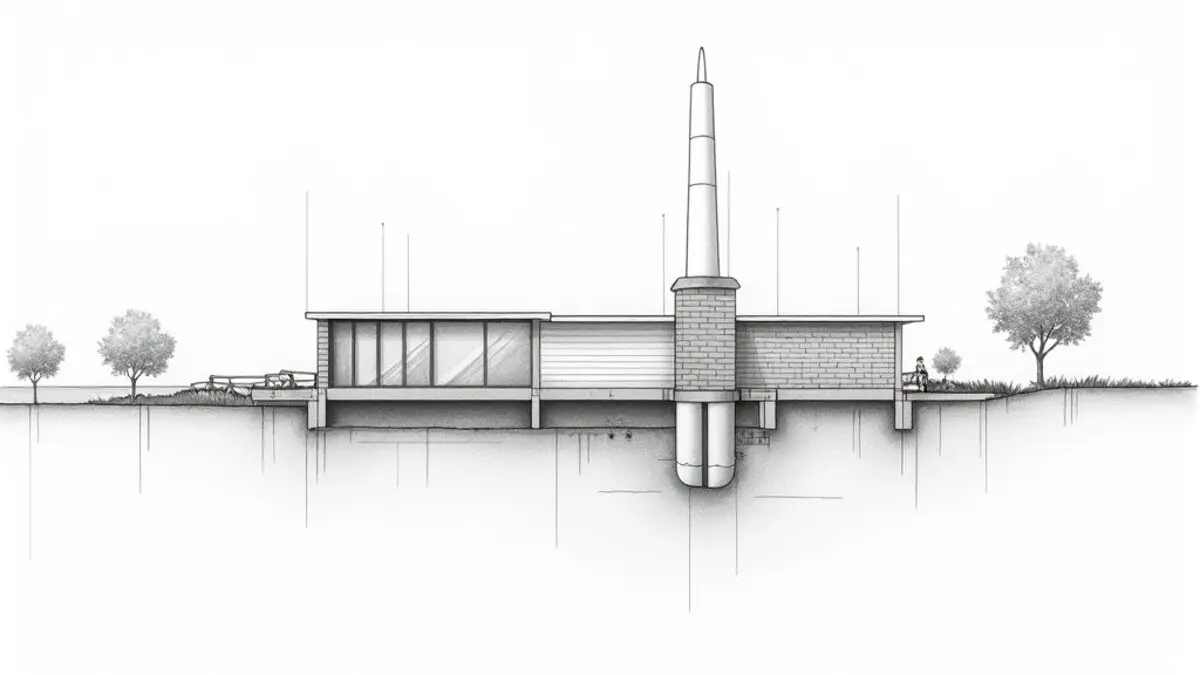
Years later, Mr A decided to build underground garages under this communal courtyard. He constructed access ramps and low protective walls on the surface. Mr B, his neighbour, strongly opposed this: according to him, the easement prohibited any construction, even underground, because the ramps and walls encroached on the courtyard. The conflict was brought before the court.
At first instance, the court ruled in favour of Mr A: the underground garages did not violate the easement. Mr B appealed. The Rouen Court of Appeal upheld the judgment: it considered that the parties to the deed did not intend to prohibit the use of the subsoil, and that the ramps and walls did not affect the easement. Mr B then appealed to the Supreme Court.
The French Supreme Court, in a decision of 9 March 1977 (No. 75-14.456), dismissed the appeal. It validated the reasoning of the Court of Appeal: it is a question of interpreting the intention of the parties, and the trial judges had sovereignly determined that the easement only concerned the surface. Underground construction was therefore allowed.
The court's reasoning — broken down
To understand this decision, we need to revisit the rules governing easements. An easement is a charge imposed on a piece of land (the servient tenement) for the use or benefit of another piece of land (the dominant tenement). It can be created by contract, will, or by law. In this case, it was a conventional easement, established by the deed dividing the land.
The legal basis is Article 686 of the French Civil Code (old, but still in force in its version applicable to conventional easements). This article provides that owners may create on their properties such easements as they see fit, provided they are not contrary to public policy. The "non aedificandi" easement is therefore perfectly valid.
The core of the dispute concerned the scope of this easement: does it only prohibit building on the surface, or also underground? The French Supreme Court answered by recalling that it is the intention of the parties that prevails. The trial judges (Court of Appeal) analysed the deed and concluded that the parties did not intend to prohibit the use of the subsoil. Why? Because the stated objective was to ensure "sufficient ventilation and sunlight" for the buildings. However, underground constructions do not compromise surface ventilation or sunlight. The Court of Appeal therefore exercised its sovereign power of interpretation.
The judges also examined the surface structures (access ramps and low walls). They considered that they did not affect the easement, because they were necessary for the use of the subsoil and remained of limited size. The decision does not create an absolute rule: each case depends on the precise terms of the deed and the intention of the parties.
This solution is neither a development nor a reversal: it is consistent with the established case law that conventional easements are strictly interpreted. An easement cannot be extended beyond what was provided for. Thus, if the deed only mentions the surface, the subsoil is free, unless there is a clause to the contrary.
What this means for you — practically
If you own land burdened by a non aedificandi easement, this decision opens up possibilities: you can consider underground constructions, provided you strictly comply with the terms of the deed. For example, in Dieppe, a client was able to build a cellar under his communal courtyard without breaching the easement, because the deed only referred to the surface. He simply had to ensure that the access points (hatches, stairs) did not protrude above ground level.
For a buyer, this is a point of vigilance: before buying a property burdened by an easement, have the deed examined by a lawyer or notary. Ask yourself whether the subsoil is included or not. If you are planning underground works, make sure the easement does not explicitly prohibit them. Otherwise, you could be sued by the benefiting neighbour.
For a co-owner, be careful: if the easement is recorded in the co-ownership regulations, it may be more restrictive. Courts often interpret clauses strictly, but better safe than sorry. If in doubt, a quick consultation (€45 with Maître Zakine) can save you much higher procedural costs (expect €3,000 to €10,000 on average for an easement dispute).
In practice, if you are in this situation, you should: (1) read the deed word for word, (2) check if the subsoil is mentioned, (3) if not, consult a professional to confirm that your project is compliant. And above all, do not start work before obtaining legal advice: an unhappy neighbour could obtain an interim order to suspend the works.
Four tips to avoid this type of dispute
- Consult the deed of sale or division: before any project, re-read the clauses relating to easements carefully. If the subsoil is not mentioned, you can in principle use it freely, but have it confirmed by an expert.
- Seek an amicable interpretation: if the neighbour benefiting from the easement challenges your project, try to negotiate a written agreement. For example, offer to limit the visual impact or share the use of the subsoil. An agreement is better than a lawsuit.
- Call on a chartered surveyor: to precisely delineate the area of the easement and the footprint of your works. A certified plan can avoid later disputes.
- Include a safeguard clause in your deeds: if you sell or buy a property burdened by an easement, have it specified in the deed that the subsoil is free from any restriction. This protects you and reassures the buyer.
Further reading: related case law and developments
This 1977 decision is part of a line of decisions that strictly interpret non aedificandi easements. For example, the French Supreme Court ruled, in a decision of 18 May 1982 (No. 80-16.987), that an easement prohibiting "building" did not prevent the installation of an in-ground swimming pool, because it is not a building in the legal sense. Similarly, a decision of 12 July 2000 (No. 98-18.456) validated the construction of an underground car park under a courtyard burdened by a right of view easement, on the grounds that it did not affect the view.
The trend of the courts is therefore clear: conventional easements are strictly interpreted. If the deed does not explicitly mention the subsoil, it is free. However, beware of legal easements (such as a right of way) which may have a different scope. For the future, if you create an easement, remember to specify whether it extends to the subsoil or not, to avoid any ambiguity.
Checklist before acting
- Have I correctly identified the easement? Check the title deed, the co-ownership regulations or the subdivision title. The easement must be mentioned.
- Is the subsoil explicitly prohibited? If the deed speaks of "building" without further precision, the subsoil is generally free. If the deed prohibits "any construction, even underground", you are bound.
- Have I informed the benefiting neighbour? Even if you believe you are within your rights, inform the neighbour by registered letter with acknowledgement of receipt. This helps avoid a surprise dispute.
- Have I consulted a specialist lawyer? Prior legal advice costs less than a lawsuit. Maître Cécile Zakine, doctor of law, offers consultations remotely or at her office.
Besoin d'un conseil personnalisé ? Contactez Maître Zakine — première consultation 30 min à 45€.
Are you in a similar situation? A first 30-minute consultation with Maître Zakine (€45) can save you months of proceedings — and often much more. Book an appointment →
📌 Does this apply to your situation? Maître Cécile Zakine, French real estate lawyer, practises throughout France.
servitude-droit-passage-avocat/" rel="dofollow">→ Avocat servitudes & foncier |
→ Browse all our legal articles
