Reference decision: cc • No. 66-12.151 • 1968-05-10 • View decision →
You have just bought a house in Chamalières, with a small garden. The notary read you the deed, you signed, everything is fine. But one morning, your neighbour starts building a wall along the boundary line. This wall will deprive you of the view of the Auvergne volcanoes and the sunlight in your living room. You wonder: does he have the right? The clause in the sale deed simply mentioned that the fence had to be openwork due to the smallness of the space. Is that enough to prevent him from building? This is exactly the question the Court of Cassation decided in 1968. And the answer is clear: yes, such a clause can create a non aedificandi easement (prohibition to build) for the benefit of the land sold.
This decision, little known to the general public, is nevertheless of capital importance for any owner of a property enjoying a view, light or air coming from the neighbouring land. It reminds us that the intention of the parties, expressed in a sale deed, can create real rights (rights attached to the land) even if the clause does not use the magic words 'easement'. So, what to do if you are in this situation? Before taking out the jackhammer or calling your lawyer, let's delve into the Court's reasoning.
The facts: a story that happens every day
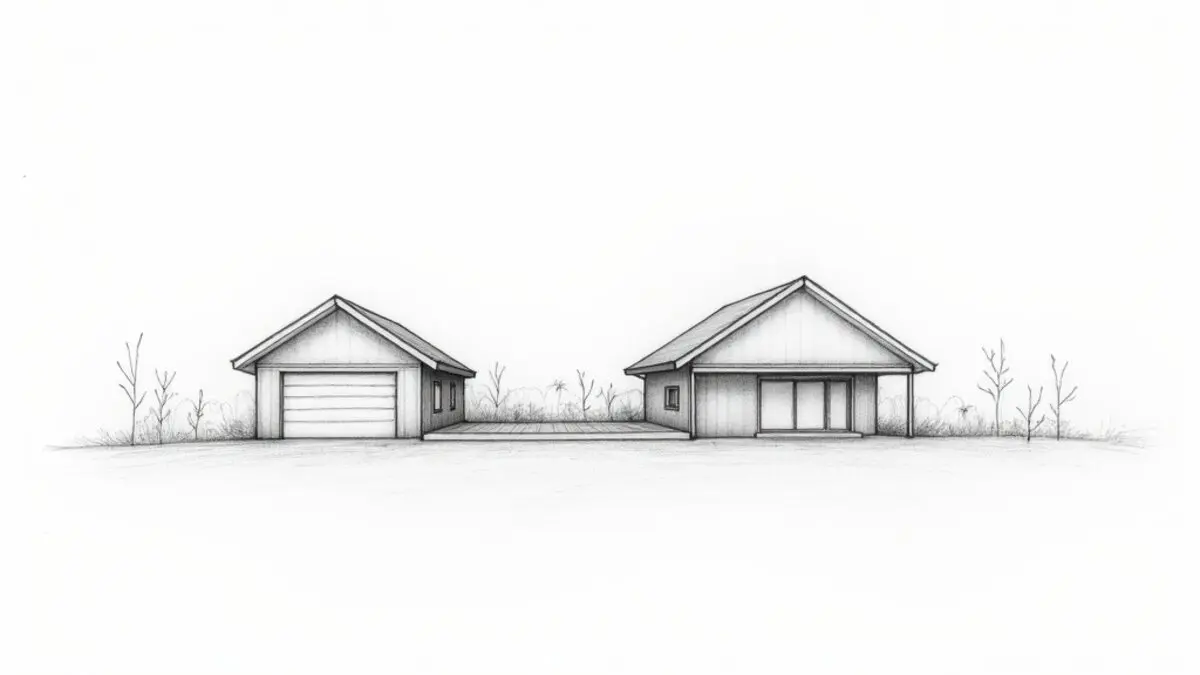
Picture the scene: in 1968, in Chamalières (now a chic suburb of Clermont-Ferrand), an owner sells half a garden. The sale deed specifies that, given the smallness of the space, the fence must be openwork (i.e. a grille or bars allowing light and view to pass through). The seller keeps the other half. A few years later, the buyer of the half sold decides to build a solid wall on the boundary. The owner of the neighbouring land (the original seller or his successor in title) opposes this. He sues the builder in court to have a non aedificandi easement recognised on the neighbour's land, prohibiting any construction that would harm his view, air and light.
The first judges rule in favour of the claimant. The builder appeals, but the court of appeal upholds the decision. He then appeals to the Court of Cassation, arguing that the clause did not create an easement but only a personal obligation (an undertaking between the parties, which does not pass to successive buyers). The Court of Cassation dismisses the appeal: in its view, it was by a sovereign interpretation (final and not reviewable by the Court) that the trial judges considered that the clause manifested the intention of the parties to establish a real easement, attached to the land and enforceable against all. A twist: the Court specifies that the appealed judgment is reasoned and that it recognised the existence of the easement based on the advantages of view, air and light that the clause aimed to protect.
The reasoning of the court — dissected
The Court of Cassation does not retry the case. It only verifies that the trial judges respected the rules. Here, it validates their reasoning: to create an easement, there must be a dominant tenement (the one benefiting from the easement) and a servient tenement (the one suffering it). The clause stipulated an openwork fence, which necessarily implies that the servient tenement cannot build a wall that would obstruct the view. The judges inferred the existence of a non aedificandi easement, based on Article 686 of the Civil Code (which allows the creation of easements by agreement, provided they are not contrary to public policy).
The legal basis is simple: Article 686 provides that 'owners may establish over their properties, or in favour of their properties, such easements as they see fit, provided that the services established are not contrary to public policy'. Here, the clause in the sale deed expressed a clear intention: to guarantee to the land sold the advantages of air, view and light coming from the neighbouring plot. The judges interpreted this clause as creating a real easement, and not a mere personal obligation.
The judgment is a confirmation of previous case law: the courts have always accepted that the intention of the parties, even implicit, can create an easement if it is clearly expressed. This is a pragmatic evolution: one cannot hide behind technical terms to deny what was intended. The builder's arguments (absence of the word 'easement', personal nature of the obligation) were dismissed: the essential point is the intention to create a real right, which passes with the land.
What this means for you — concretely
If you are the owner of a land benefiting from a view or light coming from the neighbour, this decision protects you. You can oppose any construction that would harm these advantages, provided that the sale deed (or an earlier deed) contains a similar clause. For example, if your deed mentions that the neighbouring land must remain unbuilt to preserve your view, you can demand compliance with this easement. Caution: if the clause is too vague, the judges might not find a real easement.
If you are a buyer of a land burdened with such a clause, you must check before buying. A concrete example: in Beaumont, a client bought a buildable plot, but the neighbour's sale deed contained an openwork fence clause. He wanted to build a garage on the boundary: the neighbour sued him, and the court prohibited any construction exceeding 1.80 m in height. Cost of the trial: about €8,000 in lawyers' fees, plus damages. Moral: read the deeds of neighbouring lands before buying, or have them examined by a notary.
For co-owners, the issue can arise in housing estates or residential complexes. A co-ownership regulation may impose reciprocal view easements. If a co-owner builds a veranda that blocks another's view, the latter can act on the basis of the easement. Time limit: 30 years to bring an action for recognition of an easement, but it is better to react as soon as work begins.
Four tips to avoid this type of dispute
- Consult the sale deeds of neighbouring plots before buying. You can ask your notary to check if there are clauses creating easements. Do not rely solely on the cadastral plan.
- In case of an ambiguous clause, have it clarified by notarial deed. If the deed mentions an openwork fence, add a sentence stating that it is a non aedificandi easement in favour of the dominant tenement.
- Before building on the boundary, inform your neighbour and obtain his written consent. A simple exchange of emails can avoid a lawsuit. If your neighbour refuses, you will know there is a risk.
- If you are sued, do not neglect your defence. The non aedificandi easement is a real right that binds you even if you were unaware of it. Early consultation with a specialised lawyer can save you considerable sums.
Further reading: related case law and developments
This 1968 decision is part of a consistent line of authority. Already in 1956, the Court of Cassation had accepted that a clause prohibiting building in a housing estate created a real easement (Civ. 3e, 10 May 1956). More recently, in 2015, the Court reiterated that the interpretation of obscure clauses is within the sovereign power of the trial judges (Civ. 3e, 12 March 2015, No. 14-10.123). The trend is therefore favourable to the protection of view and light advantages, even in the absence of technical terms. However, caution: if the clause is too imprecise, judges may refuse to recognise an easement. Thus, a mere mention of 'beautiful view' in a deed is not sufficient. A clear intention to create a real right is required.
Checklist before acting
FAQ: 5 practical questions
- Q: Can I build a boundary wall if my deed says nothing? A: Yes, unless an easement exists on your land. Check your neighbours' deeds.
- Q: What to do if my neighbour builds a wall that deprives me of a view? A: Gather the sale deeds, take photos, and consult a lawyer to apply for an interim order (urgency) or full proceedings.
- Q: Is there a time limit to act? A: Yes, 30 years for continuous and apparent easements (such as a view). But if construction is ongoing, act quickly.
- Q: Does the easement apply if I bought after the clause was created? A: Yes, the real easement runs with the land, regardless of the owner.
- Q: How much does a lawsuit to enforce an easement cost? A: Between €3,000 and €10,000 depending on complexity, plus possible expert fees.
Besoin d'un conseil personnalisé ? Contactez Maître Zakine — première consultation 30 min à 45€.
Are you in a similar situation? A 30-minute initial consultation with Maître Zakine (€45) can save you months of proceedings — and often much more. Book an appointment →
📌 Does this apply to your situation? Maître Cécile Zakine, French real estate lawyer, practises throughout France.
servitude-droit-passage-avocat/" rel="dofollow">→ Avocat servitudes & foncier |
→ Browse all our legal articles
