Reference decision: cc • No. 71-12.910 • 1972-10-11 • View decision →
Imagine yourself in Fleury-les-Aubrais, in a quiet cul-de-sac lined with houses with gardens. You bought your house for the peace and quiet, so that your children could play in the street safely. One morning, your neighbour, Mr Z, starts building work. Nothing out of the ordinary, you think. But then he builds 20 garages instead of the 18 authorised by his planning permission. And these garages open onto the narrow right of way that serves your property. Now it is no longer a few cars passing, but a continuous flow of users using this right of way reserved for bourgeois use. Can the nuisance be remedied? The Court of Cassation, in a judgment of 11 October 1972, answers in the affirmative, and its decision still sheds light on the rights of neighbours faced with abuses of enjoyment.
This decision, made more than fifty years ago, has not aged a day. It sets out a simple principle: a breach of planning permission is not just a matter of planning law; it can constitute an abnormal neighbourhood nuisance if it aggravates easements or the use of common property. For neighbouring owners, this is a powerful legal weapon. For builders, a warning: every square metre counts, every extra garage can cost dear.
So what exactly happened in this case? What rights do aggrieved neighbours have? And above all, how can you avoid ending up in such a situation, whether you are in Orléans, Lyon or Marseille? Let us dive into the details.
The facts: a story like many that happen every day
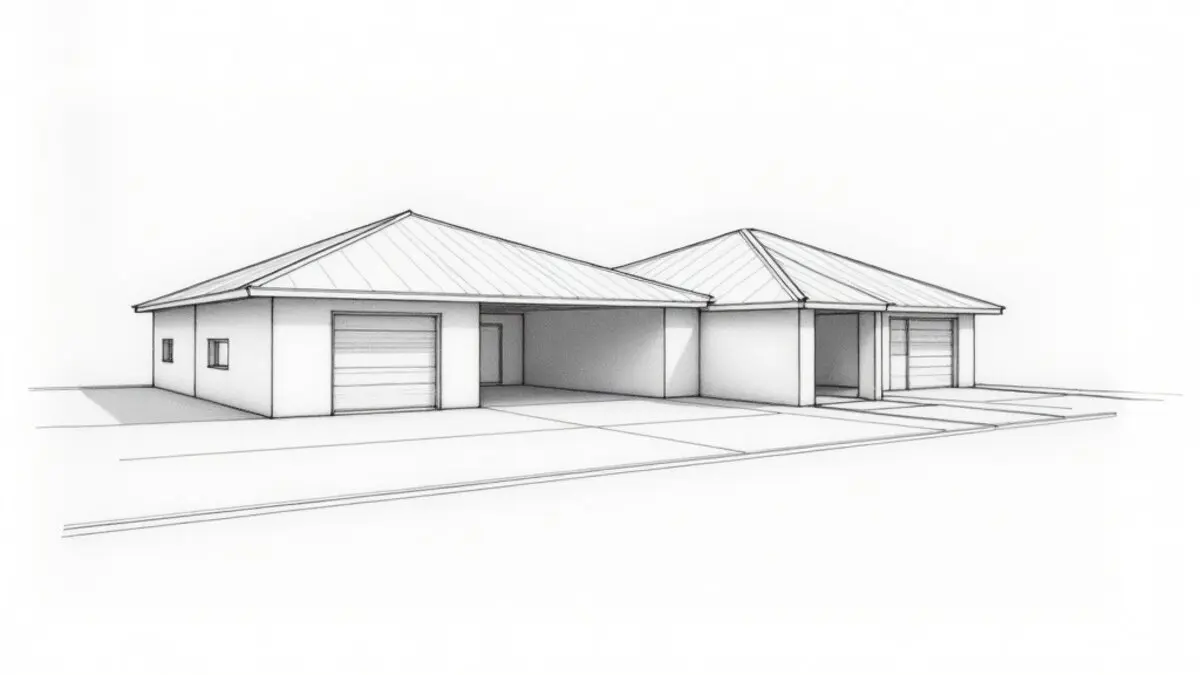
Mr Z owns a plot of land in Fleury-les-Aubrais, bordering a private right of way that serves several pleasure villas. This narrow right of way is reserved for local residents for bourgeois use: walks, access to gardens, very moderate traffic. Mr Z obtains planning permission to build 18 garages. But, for reasons we can guess (profitability, convenience), he builds 20. Two garages too many.
The owners of the neighbouring houses, also bordering the same right of way, soon notice the nuisance. The constant coming and going of cars from the garage tenants becomes incessant. The right of way, not designed for such traffic, deteriorates. The peace and quiet of the place is compromised. They sue Mr Z for compensation for the neighbourhood nuisance.
In the Court of Appeal, the neighbours lose. The appeal judges consider that the breach of planning permission (2 extra garages) caused no appreciable damage, nor any inconvenience exceeding the normal inconveniences of neighbourhood. For them, two extra garages are not the end of the world. But the neighbours do not see it that way. They appeal to the Court of Cassation.
The Court of Cassation, in its judgment of 11 October 1972, quashes the appeal decision. It considers that the lower court judges distorted the terms of the dispute. Indeed, the neighbours' action was not based on the damage resulting from the breach itself (the two garages), but on the neighbourhood nuisance caused by the increased traffic on the right of way. However, this nuisance existed regardless of the number of garages: even with 18 garages, the right of way could have been saturated. The important point was the abuse of enjoyment committed by Mr Z, the neighbouring owner, in using the right of way beyond its normal purpose.
The reasoning of the court — broken down
To understand the judgment, one must grasp the fundamental distinction between two legal bases: the breach of planning permission (public law) and the abnormal neighbourhood nuisance (private law). The Court of Appeal had confused the two, requiring that the breach cause direct damage to compensate the neighbours. The Court of Cassation sets the record straight.
The basis adopted is that of abuse of enjoyment and neighbourhood nuisance, rooted in Article 1240 of the Civil Code (formerly 1382): “Any act of a person which causes damage to another obliges the person by whose fault it occurred to make reparation.” But note: in neighbourhood matters, fault is not necessary; an abnormal nuisance, i.e. one exceeding the ordinary inconveniences of neighbourhood, is sufficient. Here, Mr Z committed an abuse of enjoyment by using the private right of way beyond its purpose (bourgeois use) and by allowing the users of 20 garages to circulate on it.
The Court of Cassation clarifies that the breach of planning permission is not the cause of the nuisance, but a revealing factor. The nuisance stems from the excessive use of the right of way. It does not matter that the breach is minor (2 garages): if the right of way is not designed to support additional traffic, there is a nuisance. The appeal judges should have examined whether the use of the right of way by the 20 garages (or even 18) constituted an abnormal nuisance. By focusing on the number of unauthorised garages, they distorted the claim.
This judgment confirms constant case law: neighbourhood nuisance is assessed in concreto, according to local circumstances. A right of way in Orléans does not have the same capacity as a Parisian avenue. Here, the right of way was narrow, reserved for bourgeois use. The arrival of 20 extra cars (even authorised) could suffice to create a nuisance. The Court of Cassation does not rule on the merits, but refers the case to another Court of Appeal for a proper decision.
What this means for you — practically
This decision has major practical implications for owners, tenants and co-owners. Here is what to remember, illustrated with concrete examples.
For neighbouring owners: if your neighbour builds in breach (e.g. an extra garage, a terrace too large, an extra storey), you can act not on the basis of the planning breach, but on that of neighbourhood nuisance. No need to wait for the authorities to intervene. You can claim damages for the inconvenience suffered (noise, obstructed view, loss of privacy). Example in Orléans: an owner of a house in Rue du Faubourg Bannier obtains €5,000 in compensation after his neighbour built a garden shed converted into a studio, increasing comings and goings.
For builders and developers: even a minor breach can cost you dear. Do not tell yourself “two extra garages, no one will notice”. Neighbours can sue you and obtain damages, or even demolition of the unlawful constructions (if the nuisance is serious). In Fleury-les-Aubrais, a developer who built 5 flats instead of 4 had to pay €15,000 to each of the three neighbours, plus the costs of reinstatement.
For tenants: you too can act if the neighbourhood nuisance directly affects you (noise, smells, access difficulties). You can claim a rent reduction or damages from the landlord who tolerates the activity, or directly from the troublesome neighbour. Be careful to prove the damage (witness statements, bailiff's reports).
Limitation periods and amounts: the action for neighbourhood nuisance is barred by 5 years from the manifestation of the nuisance (Article 2224 of the Civil Code). The amounts awarded vary from €1,000 to several tens of thousands of euros depending on the severity. For moderate inconvenience (noise, traffic), expect €2,000 to €5,000. For loss of view or sunlight, €10,000 to €30,000.
Four tips to avoid this type of dispute
- Check your neighbour's planning permission: before buying a property or starting works, consult the planning permission displayed at the town hall. Compare it with the actual construction. If you notice a discrepancy, take photos and note the dates. A simple bailiff's report (around €200) can be used as evidence.
- Document the nuisance: keep a log of the nuisances (dates, times, descriptions). Record videos, gather witness statements from neighbours. The more evidence you have, the stronger your case. Do not hesitate to call a judicial officer for a report (allow €250 to €400).
- First try an amicable solution: before going to court, send a registered letter to your neighbour explaining the nuisance and asking them to stop. Propose mediation. In 70% of cases, an agreement is possible without a trial. In Orléans, a mediation centre offers sessions at €50 per hour.
- Consult a specialist lawyer at the first signs: do not let the situation escalate. A lawyer will advise you on the strategy (interim proceedings to stop the nuisance quickly, or substantive proceedings for damages). A 30-minute consultation can save you months of litigation.
Besoin d'un conseil personnalisé ? Contactez Maître Zakine — première consultation 30 min à 45€.
Further reading: related case law and developments
The 1972 judgment is part of a consistent line of the Court of Cassation. For example, the judgment of 19 November 1986 (no. 84-16.738) held that the construction of a swimming pool on the property boundary, without authorisation, constituted an abnormal neighbourhood nuisance due to the direct views created. More recently, the judgment of 4 July 2019 (no. 18-18.194) reiterated that neighbourhood nuisance does not require fault: an excessive imbalance between the rights of neighbouring owners is sufficient.
Courts are tending to provide greater protection to neighbours. Judges do not hesitate to order the demolition of unlawful constructions, even old ones, if the nuisance persists. However, they take into account the good faith of the builder and the age of the works. If you are a victim, act quickly: the longer you wait, the more the nuisance may be considered accepted.
For the future, case law may evolve towards a more objective assessment of nuisance, with precise criteria (number of passages, noise level, etc.). In the meantime, the rule remains: any inconvenience exceeding the normal inconveniences of neighbourhood gives a right to compensation.
What you absolutely need to remember
Here is a checklist of 5 actions to take if you are faced with a neighbourhood nuisance related to a breach of planning permission:
- Identify the nuisance: is it noise, loss of view, excessive traffic? Note each incident.
- Check the planning permission: go to the town hall, compare with the actual construction. Take photos.
- Gather evidence: witness statements, bailiff's reports, sound recordings (with caution).
- Send a formal notice: send a registered letter with acknowledgement of receipt to your neighbour, detailing the nuisance and demanding its cessation within 15 days.
- Consult a lawyer: if there is no response or the nuisance continues, a lawyer specialising in property law (such as Maître Zakine) will help you bring interim or substantive proceedings.
In summary: even a small breach can create a big nuisance. Do not wait for the situation to worsen. The courts are on your side if you prove the abnormal nature of the inconvenience.
Are you in a similar situation? A first 30-minute consultation with Maître Zakine (€45) can save you months of litigation — and often much more. Book an appointment →
📌 Does this apply to your situation? Maître Cécile Zakine, French real estate lawyer, practises throughout France.
servitude-droit-passage-avocat/" rel="dofollow">→ Avocat servitudes & foncier |
→ Browse all our legal articles
