Reference Decision: cc • No. 16-24.190 • 2017-12-07 • View the decision →
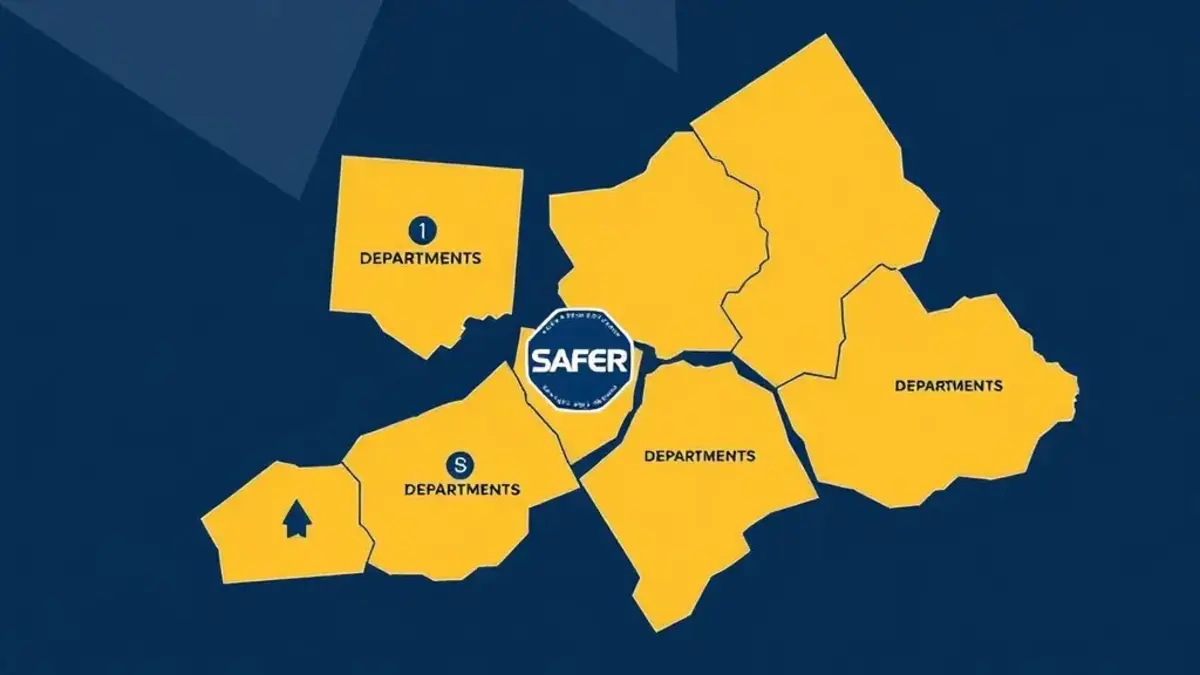
Imagine you own a vast 5-hectare plot in Mandelieu, between the hills and the sea. You decide to sell it to fund a life project. But here's the catch: your plot extends across two departments, Alpes-Maritimes and Var. You sign a preliminary sale agreement with a buyer, and suddenly, you receive two pre-emption notifications (right of first refusal): one from the SAFER of Alpes-Maritimes, the other from the SAFER of Var. Panic ensues! Who should buy? At what price? And most importantly, will your sale fall through?
This situation, far from theoretical, occurs regularly on the French Riviera where agricultural or natural land often crosses departmental boundaries. undefined in Grasse, I have encountered several owners facing this legal puzzle. The question that troubles them all: when the sale price is not apportioned between the parts located in each department, can SAFERs act separately and create an inextricable situation?
The Court of Cassation, in its decision of 7 December 2017, provides a clear and reassuring answer. It specifies the modalities for exercising the SAFER pre-emption right in this particular context. But what exactly does this change for you, as an owner, buyer, or real estate professional? Let's delve into the details of this decision that significantly simplifies complex land transactions.
The Facts: A Story as Common as Any
Mr. Dubois, owner of an 8-hectare wine estate in Cagnes-sur-Mer, decides to sell his property. The land, inherited from his family, extends across two departments: the majority (6 hectares) is in Alpes-Maritimes, while a 2-hectare plot is in Var. He signs a preliminary sale agreement with a property developer for €1.2 million, without detailing in the deed the apportionment of the price between the two parts of the land.
A few weeks later, Mr. Dubois receives two registered letters. The first comes from the SAFER of Alpes-Maritimes, which declares it is exercising its pre-emption right on the part located in its department. The second comes from the SAFER of Var, which does the same for the Var plot. Each proposes a price calculated proportionally to the surface area, but Mr. Dubois finds himself with two potential buyers for a single property! The developer, meanwhile, threatens legal action for breach of the preliminary sale agreement.
The disagreement escalates. Mr. Dubois contests the validity of these separate pre-emptions, arguing that the sale concerned an indivisible property. The two SAFERs maintain their position, believing they can act independently since their intervention perimeters are distinct. The case goes to court, then to the court of appeal, before landing before the Court of Cassation. The legal twists and turns last nearly three years, during which Mr. Dubois can neither sell nor normally exploit his land.
The Court's Reasoning — Analysed
The judges of the Court of Cassation analysed this situation through the lens of Article L143-1 of the Rural and Maritime Fishing Code, which governs the SAFER pre-emption right. This article provides that SAFERs can pre-empt agricultural or natural properties within their intervention perimeter, defined by prefectoral order. But what happens when the property extends across several perimeters?
The court recalled a fundamental principle: when the initial sale deed does not separate the price according to the location of the plots, the property must be considered indivisible. In other words, it cannot be artificially divided. The judges thus rejected the SAFERs' argument that they wanted to act separately, as this would have led to dividing a single operation into several distinct transactions, against the parties' will.
The solution adopted is twofold and pragmatic. First option: the concerned SAFERs can exercise their pre-emption right jointly, in solidarity, by pre-empting the entire property. They then apportion the price among themselves, proportionally to the value of the parts located in each department. Second option: one SAFER can delegate its competence to the other, which will then pre-empt the whole. In both cases, the seller deals with a single interlocutor and receives a global price, as initially intended.
This reasoning constitutes a confirmation of prior case law rather than a revolution. It aligns with the logic of protecting sellers and simplifying procedures. The judges particularly emphasised the need to preserve the legal certainty of transactions: how could an owner anticipate the actions of multiple SAFERs if the price is not apportioned? The decision thus ends years of uncertainty for owners of cross-border land.
What This Changes for You — Practically
If you own land located in multiple departments, this decision protects you considerably. You no longer risk finding yourself with multiple imposed buyers for a single property. Practically, when you sell without apportioning the price, SAFERs must organise among themselves to present you with only one pre-emption offer. This simplifies negotiations and secures your transaction.
Take a numerical example in Cagnes-sur-Mer. You sell a 10,000 m² plot straddling Alpes-Maritimes and Var for €800,000. The SAFER of Alpes-Maritimes estimates the Azur part is worth €600,000 (i.e., 75%), the Var part €200,000 (25%). Before this decision, you might have received two separate offers, creating a confusing situation. Now, the two SAFERs must make you a single offer of €800,000, then apportion the amount among themselves according to their valuation. You indeed receive your €800,000 in one go.
For buyers, the situation is also clarified. If you have signed a preliminary purchase agreement and a SAFER pre-empts, you now know that the pre-emption will cover the entire property, not just a part. This reduces the risk of disputes over the validity of the pre-emption. For real estate professionals, notaries in particular, this decision facilitates deed drafting: there is no need to complicate price apportionment when the property is manifestly indivisible.
Be careful, however: this protection only applies if the price is not apportioned in the deed. If you explicitly detail "Alpes-Maritimes part: €600,000, Var part: €200,000", SAFERs could theoretically act separately. But is this really in your interest? undefined, I systematically advise against apportioning when the property forms a coherent whole, precisely to benefit from this case law protection.
Four Tips to Avoid This Type of Dispute
- Consult a specialised lawyer before selling cross-border land: A preliminary 30-minute analysis (€45 in my office) can save you months of proceedings. We will check if your land is subject to SAFER pre-emption rights and advise you on the strategy to adopt.
- Avoid artificially apportioning the price in the sale deed: When your land forms an indivisible whole (same crop, same access, same use), mention a global price. This simplicity protects you in case of multiple pre-emptions.
- Anticipate pre-emption deadlines: SAFERs have two months to exercise their right after notification of the sale. Plan your schedule accordingly, especially if you have urgent property projects.
- Document the functional unity of your land: Aerial photos, plans, certificates of continuous agricultural exploitation... All these elements can demonstrate that your property is indivisible, strengthening your position against SAFERs.
Besoin d'un conseil personnalisé ? Contactez Maître Zakine — première consultation 30 min à 45€.
In-Depth Analysis: Related Case Law and Developments
This decision fits into a coherent line of case law. Already in 2010, the Court of Cassation (judgment No. 09-10.045) had affirmed that SAFERs must exercise their pre-emption right "in respect of the unity of the operation". Another judgment in 2014 (No. 13-20.789) had specified that price apportionment should not be artificial. The 2017 decision thus consolidates this orientation, applying it specifically to the case of multi-departmental land.
What few people know is that this case law also benefits SAFERs themselves. By avoiding separate pre-emptions that create inextricable situations, it reduces disputes and speeds up procedures. Some SAFERs have even modified their internal practices to better coordinate their actions on cross-border cases.
For the future, this trend should continue. Courts increasingly favour pragmatic solutions that preserve transaction security. With growing urbanisation and land pressure on the French Riviera, cases of land straddling multiple departments will likely multiply. This decision provides a stable legal framework to address them.
Frequently Asked Questions
Q: My land is 95% in Alpes-Maritimes and 5% in Var. Can SAFERs still pre-empt jointly?
A: Yes, absolutely. The proportion does not matter. As soon as a part, even minimal, is in another department and the price is not apportioned, the joint pre-emption mechanism applies.
Q: I want to sell quickly. Can I bypass pre-emption by apportioning the price?
A: Technically yes, but it's risky. An artificial apportionment could be contested by SAFERs or the buyer. Moreover, you lose the protection of the case law. It's better to anticipate pre-emption deadlines.
Q: Do SAFERs have an obligation to coordinate among themselves?
A: Yes, since this decision. If they want to pre-empt, they must either act jointly or mutually delegate their competence. They can no longer impose two parallel procedures on you.
Q: How long does a pre-emption procedure last?
A: Allow at least 4 to 6 months between notification of the sale and the final signing of the deed with the SAFER. In case of dispute, it can exceed 2 years.
Q: Can I negotiate the price with SAFERs?
A: Yes, to some extent. If you believe their offer is undervalued, you can contest it before the joint tribunal for agricultural tenancies. But the room for manoeuvre is limited.
Do you find yourself in a similar situation? A first 30-minute consultation with Maître Zakine (€45) can save you months of proceedings — and often much more. Book an appointment →
